Li Yunqi, Bowen Deborah J, Yu Joon-Ho
Institute for Public Health Genetics, University of Washington, Seattle, WA, USA.
Center for Genetic Epidemiology, Keck School of Medicine, University of Southern California, Los Angeles, CA, USA.
BMC Med Ethics. 2025 Jul 19;26(1):99. doi: 10.1186/s12910-025-01170-z.
International collaboration on genetic/genomic studies has expanded dramatically. Informed consent remains a cornerstone for protecting participant autonomy. Over the past few decades, guidelines, recommendations, and theoretical discussions have been published on the informed consent process in cross-cultural contexts, particularly in Africa. These resources suggest best practices-ranging from assessing participant comprehension to engaging local communities. However, it remains unclear how well the current practices address the full range of informed consent challenges encountered by the stakeholders.
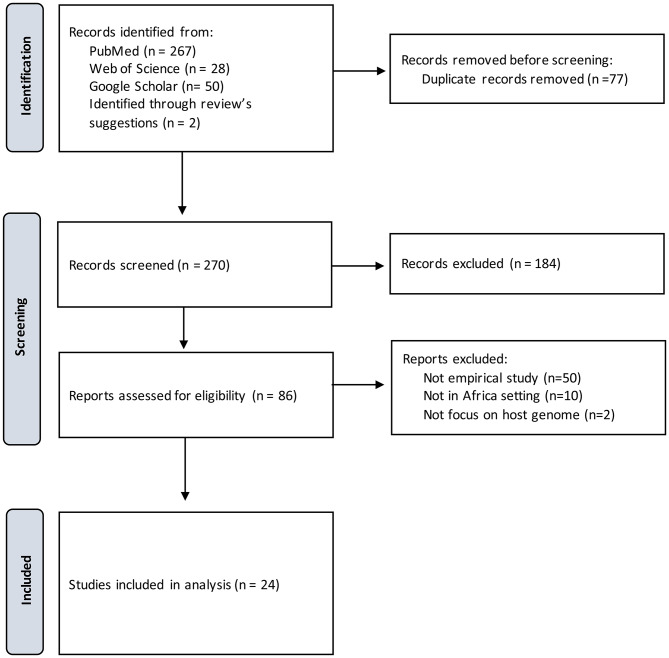
We performed a systematic literature review of empirical studies that explored stakeholders' perspectives, primarily research participants and researchers, on informed consent in the context of international genetic/genomic research in countries of Africa. We followed the PRISMA guideline and used thematic analysis for data synthesis and analysis.
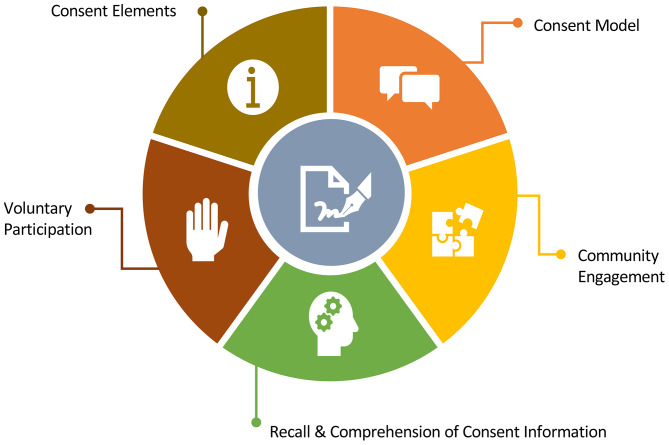
Twenty-four relevant articles were identified and reviewed for five bioethical issues: (1) comprehension of consent information, (2) voluntary participation, (3) consent elements, (4) consent model, and (5) community engagement. Different levels of understanding and recall over different consent elements, and multiple factors associated with comprehension were observed. Voluntary participation could be influenced by misconception, monetary and healthcare compensation, and previously established trust with the research team. Many participants show less interest in certain consent elements, such as biobanking, data sharing, and future use, but more in the section on benefits. Returning results had potential advantages in building trust between participants and the research team; however, the most appropriate way to return results is under discussion. There was also conversation over consent models (broad, tired, and dynamic) on their balance between autonomy and practicality. Finally, many articles ascertained the value of community engagement and encouraged researchers to consider local cultural beliefs, social stigma, and decision-making habits when designing the consent process.
We observed an increased interest in the ethical conduct of the informed consent process under international genetics/genomics studies in recent decades. Awareness and attention to these issues are needed to develop more appropriate consent strategies that could further safeguard the rights and welfare of local participants and support the smooth conduct of research.
遗传/基因组研究的国际合作已大幅扩展。知情同意仍然是保护参与者自主权的基石。在过去几十年中,已发表了关于跨文化背景下,特别是非洲的知情同意过程的指南、建议和理论讨论。这些资源提出了最佳实践,从评估参与者的理解到让当地社区参与。然而,目前的实践在多大程度上应对利益相关者遇到的各种知情同意挑战仍不清楚。
我们对实证研究进行了系统的文献综述,这些研究探讨了非洲国家国际遗传/基因组研究背景下,利益相关者(主要是研究参与者和研究人员)对知情同意的看法。我们遵循PRISMA指南,并使用主题分析进行数据综合和分析。
共识别并审查了24篇相关文章,涉及五个生物伦理问题:(1)同意信息的理解,(2)自愿参与,(3)同意要素,(4)同意模式,以及(5)社区参与。观察到对不同同意要素的理解和记忆程度不同,以及与理解相关的多个因素。自愿参与可能受到误解、金钱和医疗补偿以及先前与研究团队建立的信任的影响。许多参与者对某些同意要素(如生物样本库、数据共享和未来使用)兴趣较小,但对利益部分兴趣较大。反馈结果在建立参与者与研究团队之间的信任方面具有潜在优势;然而,反馈结果的最合适方式仍在讨论中。关于同意模式(宽泛、疲惫和动态)在自主性和实用性之间的平衡也有讨论。最后,许多文章确定了社区参与的价值,并鼓励研究人员在设计同意过程时考虑当地文化信仰、社会耻辱感和决策习惯。
我们观察到近几十年来,国际遗传/基因组研究中对知情同意过程的道德行为的兴趣有所增加。需要提高对这些问题的认识和关注,以制定更合适的同意策略,从而进一步保障当地参与者的权利和福利,并支持研究的顺利进行。