Wharton Benjamin R, Stokes Daniel J, Johnson Alexander J, Girardi Nicholas G, Manfre Miranda G, Keeter Carson, Shinsako Kevin K, McCarty Eric C, Bravman Jonathan T, Frank Rachel M
Department of Orthopaedic Surgery, University of Colorado School of Medicine, Aurora, Colorado, U.S.A.
Department of Orthopaedic Surgery and Sports Medicine, St. Luke's University Health Network, Phillipsburg, New Jersey, U.S.A.
Arthrosc Sports Med Rehabil. 2025 Jan 27;7(3):101097. doi: 10.1016/j.asmr.2025.101097. eCollection 2025 Jun.
To analyze patient perceptions of social media (SM) content posted by orthopaedic surgeons across the United States.
The SM posts of 20 professional orthopaedic surgeons with at least 500 followers and 1 post in the month before this study were reviewed and categorized. A validated survey was written to assess respondents' SM usage practices and perceptions of these categories. The survey was administered to patients in the clinics of 13 geographically diverse orthopaedic surgeons via QR code. Patient responses were analyzed for differences in SM use and perceptions of SM content types.
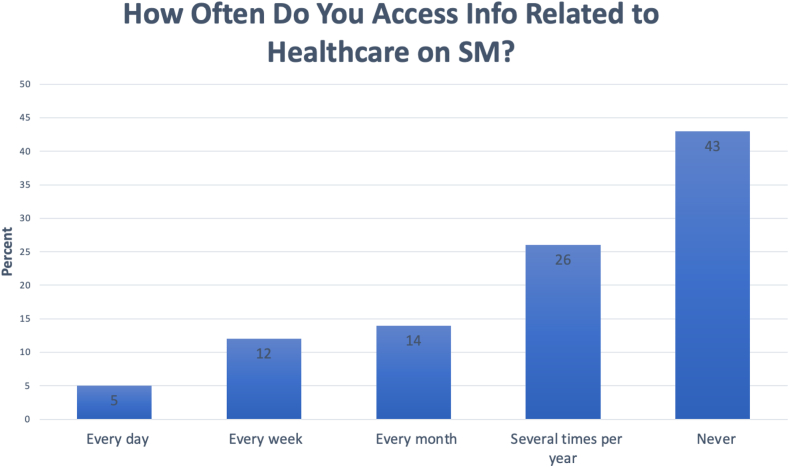
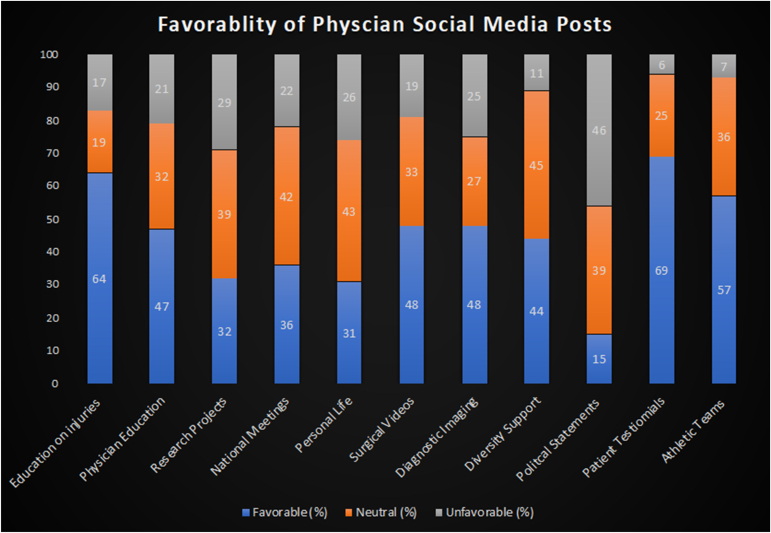
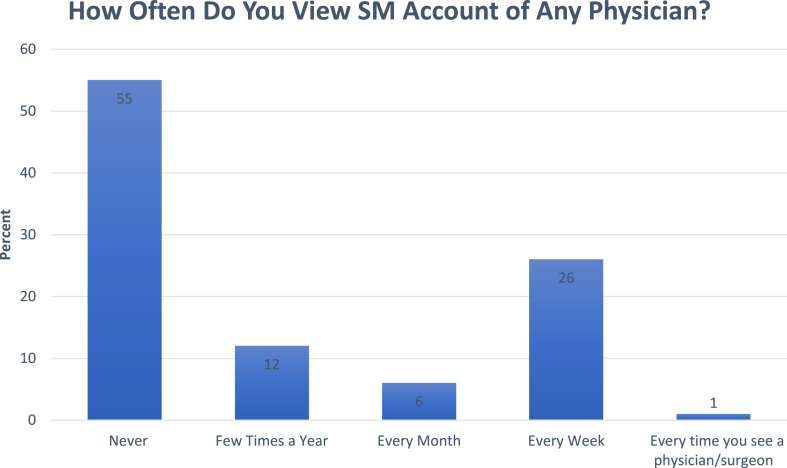
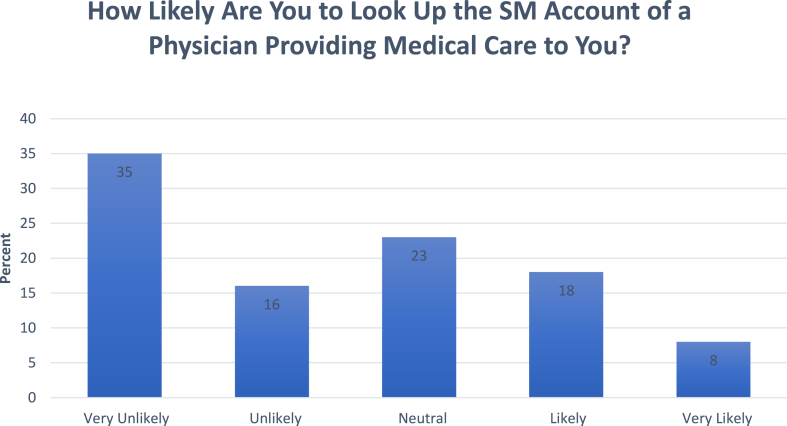
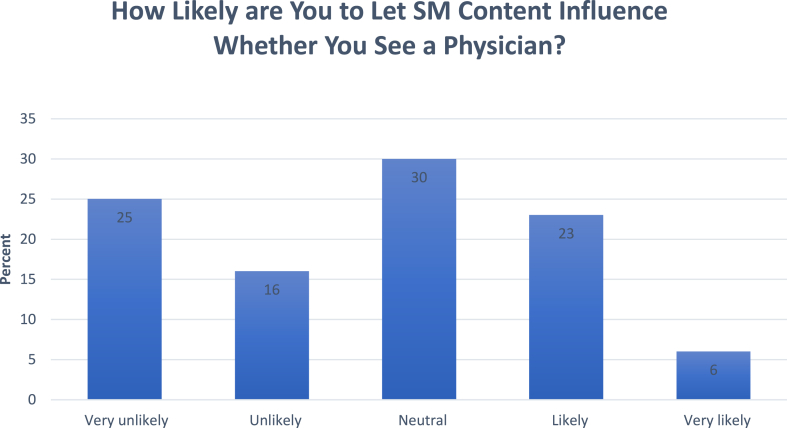
There were 636 patient surveys completed in full. SM use was high across all age groups. In 31% of patients, SM was used to seek information related to their health care at least once per month, 45% of patients reported visiting the SM account of any physician at least a few times a year, and 29% of patients indicated that SM content is likely or very likely to influence their selection of which physician from whom to obtain care. Respondents held consistently positive views of posts providing patient education on common injuries, discussing sports team coverage, and detailing patient testimonials. Patients held consistently neutral views of posts educating colleagues, discussing physicians' attendance and presentations at national research meetings, displaying aspects of surgeons' personal lives, highlighting cases, such as radiographs, or magnetic resonance imaging, or other diagnostic imaging, and supporting marginalized groups. Finally, physicians vocalizing their political positions on SM was found to be perceived negatively.
In this study, 57% of patients used SM within the last year to access health care-related information. Respondents perceived SM content focused on patient education, patient testimonials, and physician coverage of athletic teams most favorably. The most widely used patient platforms include Facebook, followed by Instagram, Snapchat, TikTok, Twitter, and then LinkedIn.
The information from this study clarifies how patients use SM and what types of SM posts are more likely to be viewed positively, negatively, and which illicit a polarized response. This information can help further guide physicians across the United States who use social media to interact effectively with patients.
分析患者对美国骨科医生发布的社交媒体(SM)内容的看法。
对20名拥有至少500名关注者且在本研究前一个月发布过1条帖子的专业骨科医生的SM帖子进行审查和分类。编写了一份经过验证的调查问卷,以评估受访者的SM使用习惯以及对这些类别的看法。通过二维码将该调查问卷发放给13名地理位置不同的骨科医生诊所中的患者。分析患者的回答,以了解SM使用情况以及对SM内容类型看法的差异。
共完整完成了636份患者调查问卷。所有年龄组的SM使用率都很高。31%的患者每月至少使用一次SM来获取与医疗保健相关的信息,45%的患者报告每年至少访问几次任何医生的SM账户,29%的患者表示SM内容很可能或极有可能影响他们选择就医的医生。受访者对提供常见损伤患者教育、讨论运动队报道以及详细介绍患者推荐的帖子一直持积极看法。患者对教育同行、讨论医生参加全国性研究会议及发表演讲、展示外科医生个人生活方面、突出病例(如X光片、磁共振成像或其他诊断成像)以及支持边缘化群体的帖子一直持中立看法。最后,发现医生在SM上表达其政治立场会被负面看待。
在本研究中,57%的患者在过去一年中使用SM获取医疗保健相关信息。受访者对专注于患者教育、患者推荐以及医生对运动队报道的SM内容评价最高。使用最广泛的患者平台包括Facebook,其次是Instagram、Snapchat、TikTok、Twitter,然后是LinkedIn。
本研究的信息阐明了患者如何使用SM,以及哪些类型的SM帖子更有可能被积极、消极看待,哪些会引发两极分化的反应。这些信息可以帮助进一步指导美国使用社交媒体与患者有效互动的医生。