Fabrizio Thomas P, Kandeil Ahmed, Harrington Walter N, Jones Jeremy C, Jeevan Trushar, Andreev Konstantin, Seiler Patrick, Fogo Jonathan, Davis Morgan L, Crumpton Jeri Carol, Franks John, DeBeauchamp Jennifer, Vogel Peter, Daniels C Scanlon, Poulson Rebecca L, Bowman Andrew S, Govorkova Elena A, Webby Richard J
Department of Host-Microbe Interactions, St. Jude Children's Research Hospital, Memphis, TN, USA.
Center of Scientific Excellence for Influenza Viruses, National Research Centre, Giza, Egypt.
Nat Commun. 2025 Jul 23;16(1):6771. doi: 10.1038/s41467-025-61757-3.
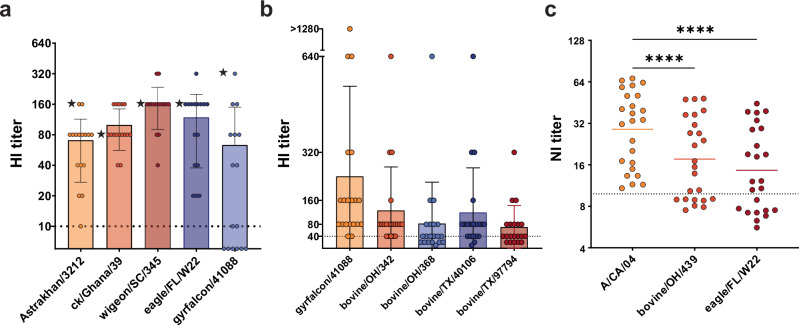
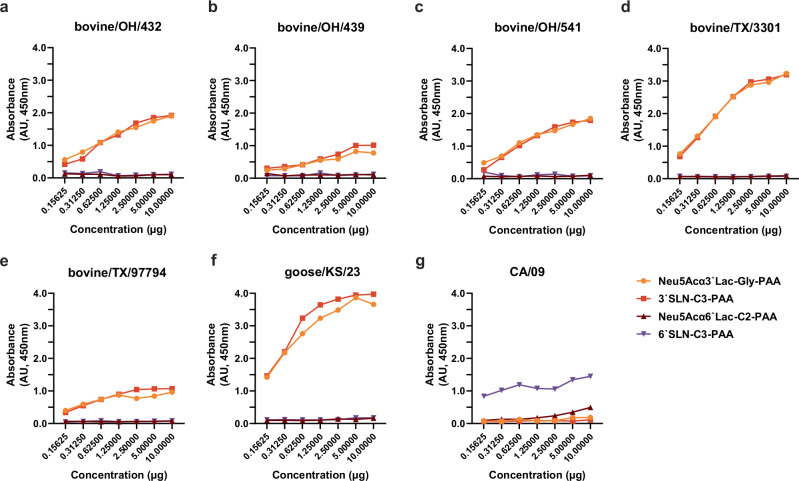
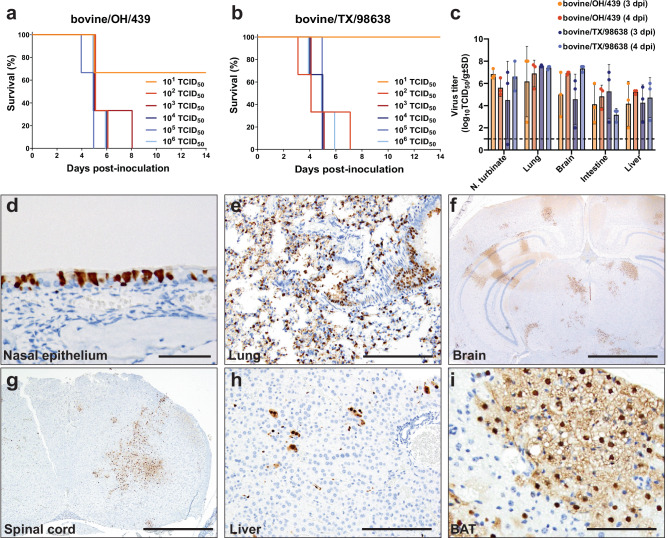
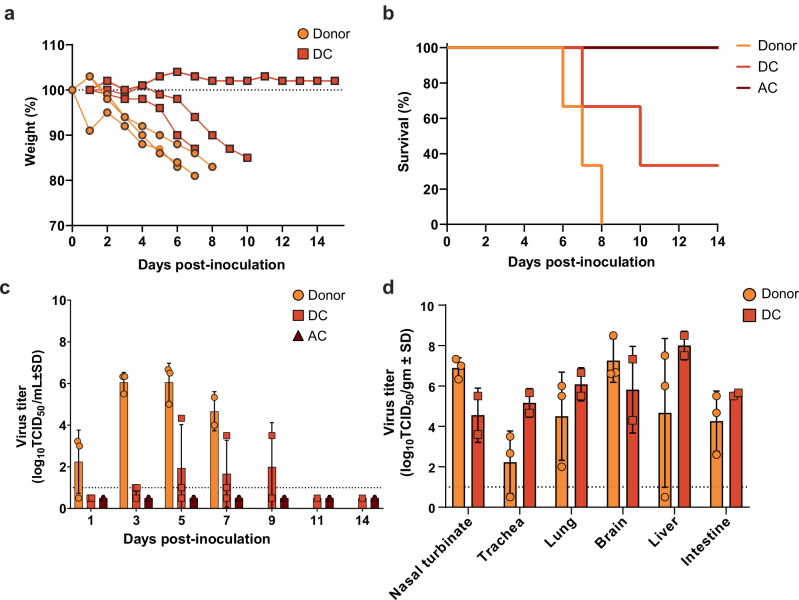
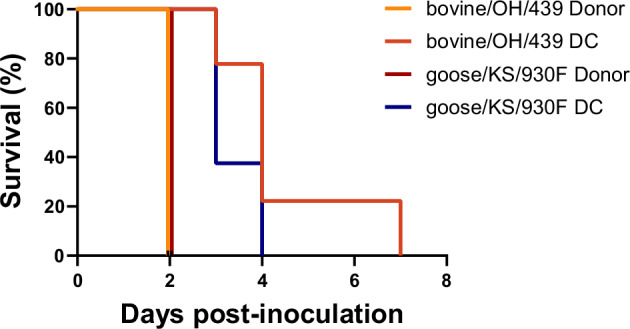
In March 2024, clade 2.3.4.4b highly pathogenic avian influenza A(H5N1) viruses were first detected in U.S. dairy cattle. Similar viruses have since caused 70 zoonotic human infections. To assess changes to zoonotic potential, we characterized A(H5N1) clade 2.3.4.4b viruses isolated from cows' milk and birds. Bovine-derived viruses are lethal in mice and ferrets and transmit to direct but not airborne contact ferrets. All viruses replicate in human bronchial epithelial cells despite preferentially binding avian virus-like receptors. The bovine-derived viruses remain susceptible to FDA-approved antivirals, and they are inhibited by sera from ferrets vaccinated with WHO-recommended candidate vaccine viruses (CVV) or human sera from clade 2.3.4.4c vaccinees. While 2.3.4.4b viruses induce severe disease in mammalian models, they retain many avian virus-like characteristics. Combined, we conclude that the risk of contemporary bovine-derived viruses to humans not in contact with affected animals is low. However, heightened vigilance remains essential to promptly detect and respond to any changes.
2024年3月,2.3.4.4b分支高致病性甲型禽流感病毒(H5N1)首次在美国奶牛中被检测到。自那时起,类似病毒已导致70例人兽共患的人类感染病例。为评估人兽共患潜力的变化,我们对从牛奶和鸟类中分离出的甲型禽流感病毒(H5N1)2.3.4.4b分支病毒进行了特征描述。源自牛的病毒对小鼠和雪貂具有致死性,并可通过直接接触传播给雪貂,但不能通过空气传播。尽管所有病毒优先结合禽病毒样受体,但它们都能在人支气管上皮细胞中复制。源自牛的病毒对美国食品药品监督管理局(FDA)批准的抗病毒药物仍敏感,并且受到接种了世界卫生组织(WHO)推荐的候选疫苗病毒(CVV)的雪貂血清或2.3.4.4c分支疫苗接种者的人血清的抑制。虽然2.3.4.4b分支病毒在哺乳动物模型中会引发严重疾病,但它们仍保留许多禽病毒样特征。综合来看,我们得出结论,当代源自牛的病毒对未接触受感染动物的人类的风险较低。然而,保持高度警惕对于及时发现并应对任何变化仍然至关重要。