Sheng Yaping, Ma Shengjie, Zhou Qi, Xu Jiancheng
Department of Laboratory Medicine, Center of Infectious Diseases and Pathogen Biology, The First Hospital of Jilin University, Changchun, Jilin, China.
Department of Gastrocolorectal Surgery, General Surgery Center, The First Hospital of Jilin University, Changchun, Jilin, China.
Front Immunol. 2025 Jul 10;16:1618883. doi: 10.3389/fimmu.2025.1618883. eCollection 2025.
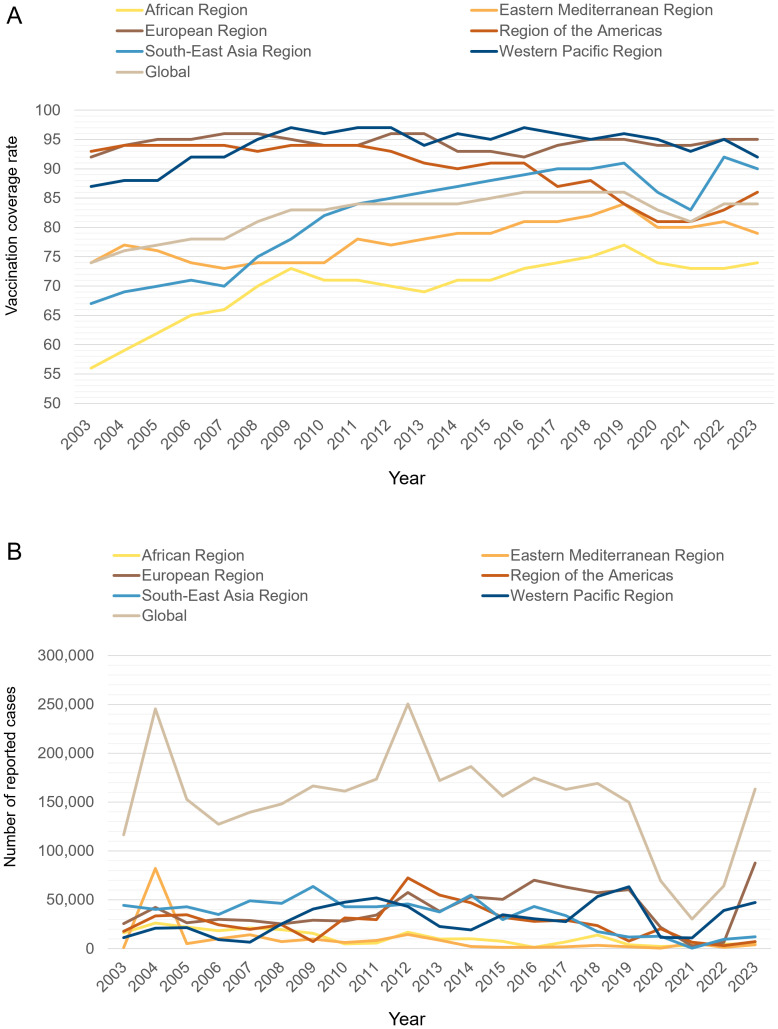
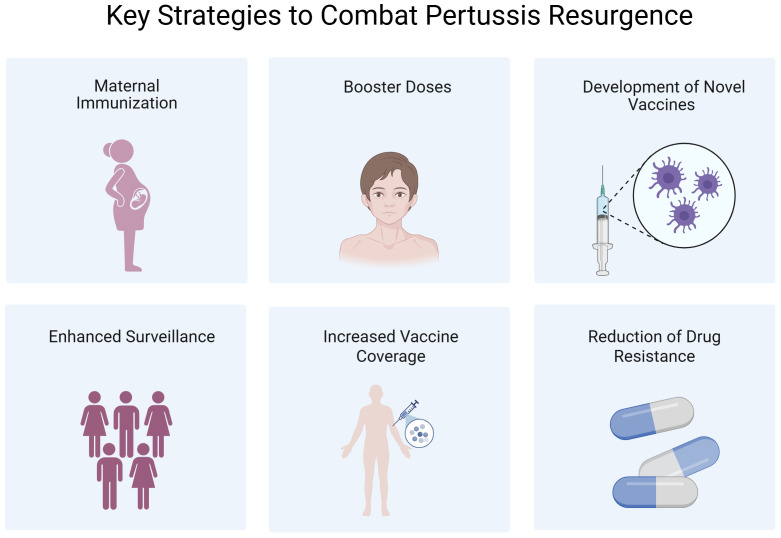
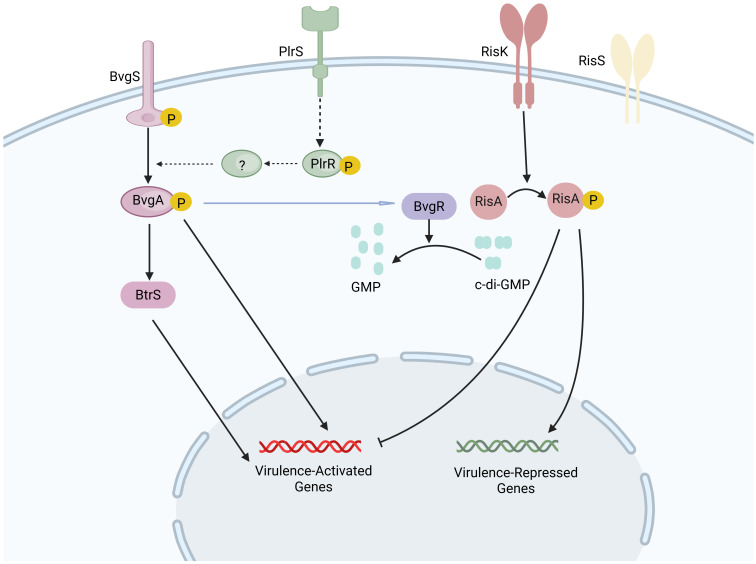
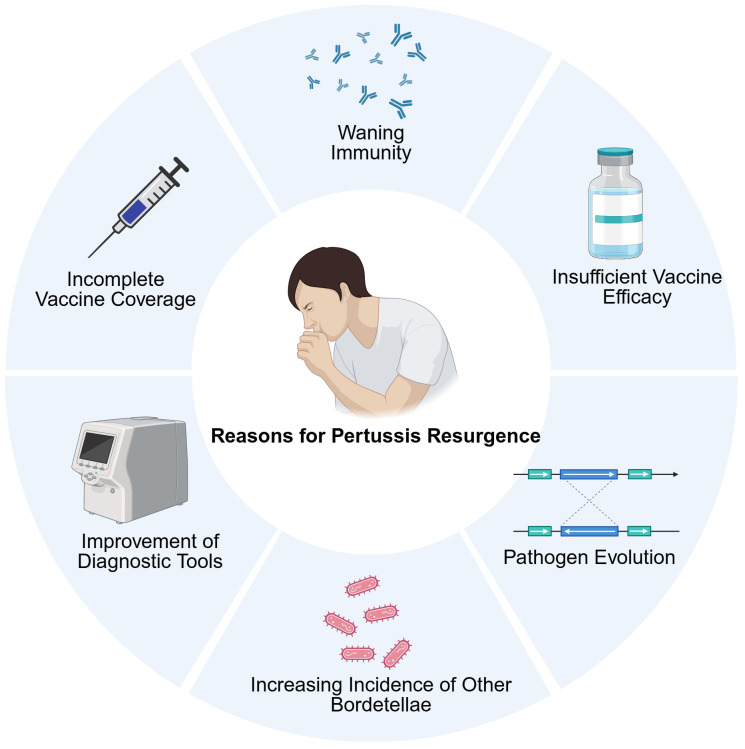
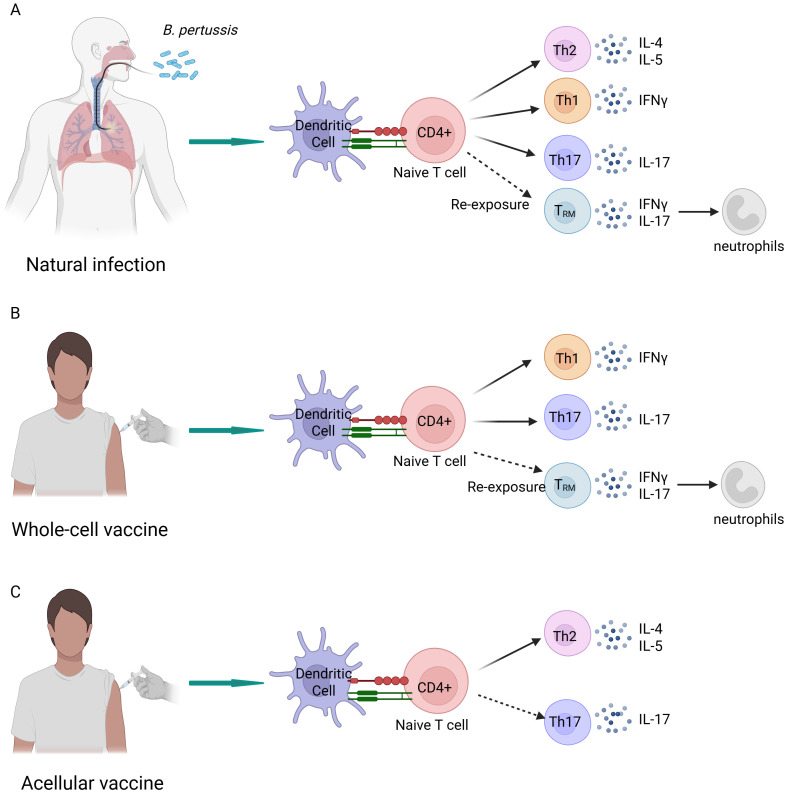
Pertussis, also known as whooping cough, is a highly contagious acute respiratory infection primarily caused by . Although this disease can occur at any age, infants and young children remain the most vulnerable to severe illness and mortality. Moreover, epidemiological trends indicate a notable shift in the incidence of pertussis over time, with an increasing number of reported cases in adolescents and adults. During the 1950s, the widespread implementation of whole-cell pertussis (wP) vaccines significantly reduced the incidence and mortality associated with pertussis. Despite their effectiveness, the frequent adverse reactions linked to wP vaccines prompted a shift towards the utilization of acellular pertussis (aP) vaccines, which have a lower reactogenicity. However, over the past two decades, several countries with a high coverage of aP vaccines have experienced a notable rise in the incidence of pertussis, a phenomenon called pertussis resurgence. The causes of this resurgence are multifactorial and highly complex. Notably, the peak incidence of pertussis has shifted from the infant population to adolescents and adults, who now serve as the primary sources of infection in infants. Such a shift raises critical concerns regarding the current and future control of pertussis. The lack of comprehensive understanding of its pathogenesis is a significant contributing factor to this public health challenge. Although extensive research on the pathogenesis of pertussis has been conducted, it remains an issue without appropriate animal models that effectively replicate the symptomatology commonly observed in human cases. This review provides an overview of epidemiology and recent pathogenesis advances. It further analyzes the potential causes and contributing elements responsible for the resurgence of pertussis. Lastly, the review proposes evidence-based strategies aimed at enhancing public awareness and implementing effective measures to prevent the risk of unexpected outbreaks.
百日咳,又称小儿咳嗽,是一种高度传染性的急性呼吸道感染,主要由……引起。虽然这种疾病可发生于任何年龄,但婴幼儿仍然最易患重病和死亡。此外,流行病学趋势表明,百日咳发病率随时间有显著变化,青少年和成人报告病例数不断增加。20世纪50年代,全细胞百日咳(wP)疫苗的广泛使用显著降低了与百日咳相关的发病率和死亡率。尽管其有效,但与wP疫苗相关的频繁不良反应促使转向使用反应原性较低的无细胞百日咳(aP)疫苗。然而,在过去二十年中,几个aP疫苗高覆盖率国家经历了百日咳发病率显著上升,这一现象称为百日咳再现。这种再现的原因是多因素且高度复杂的。值得注意的是,百日咳发病高峰已从婴儿群体转移到青少年和成人,他们现在是婴儿感染的主要来源。这种转变引发了对当前和未来百日咳控制的严重关切。对其发病机制缺乏全面了解是这一公共卫生挑战的一个重要因素。尽管已对百日咳发病机制进行了广泛研究,但仍然存在缺乏有效复制人类病例常见症状的合适动物模型的问题。本综述概述了百日咳的流行病学和近期发病机制进展。它进一步分析了百日咳再现的潜在原因和促成因素。最后,本综述提出了基于证据的策略,旨在提高公众意识并实施有效措施以预防意外疫情爆发的风险。