Nemery B, Dinsdale D, Sparrow S, Ray D E
Br J Ind Med. 1985 Dec;42(12):799-805. doi: 10.1136/oem.42.12.799.
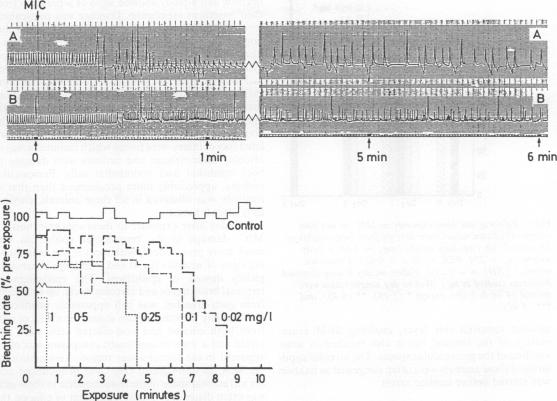
Static exposure of rats to methyl isocyanate, for one hour, led to respiratory impairment during and after exposure. The resultant changes in breathing pattern suggest that this compound is both a sensory and a pulmonary irritant. Low concentrations resulted in extensive necrosis and loss of epithelial cells in the proximal airways but widespread alveolar damage was found only after exposure to high, lethal concentrations. At high concentrations methyl isocyanate probably caused peracute death through reflex inhibition of breathing. Animals surviving the exposure exhibited signs of airway narrowing and development of (haemorrhagic) pulmonary oedema. The epithelial lesions were repaired rapidly, but residual peribronchial fibrosis and signs of renewed injury/inflammation were apparent.
将大鼠静态暴露于异氰酸甲酯一小时,会导致暴露期间及之后出现呼吸功能损害。呼吸模式的最终变化表明,该化合物既是一种感觉刺激物,也是一种肺部刺激物。低浓度会导致近端气道上皮细胞广泛坏死和丧失,但仅在暴露于高致死浓度后才发现广泛的肺泡损伤。高浓度的异氰酸甲酯可能通过反射性抑制呼吸导致超急性死亡。暴露后存活的动物表现出气道狭窄和(出血性)肺水肿的症状。上皮损伤迅速修复,但残留的支气管周围纤维化以及再次损伤/炎症的迹象明显。