Karas Marek, Lucas Natalie, Ryan Barbara
School of Optometry and Vision Sciences, Cardiff University, Cardiff, UK.
Clin Optom (Auckl). 2025 Jul 29;17:217-229. doi: 10.2147/OPTO.S525505. eCollection 2025.
To report on the development, evaluation, and acceptability of a simulated patient resource designed for teaching and assessment in low vision rehabilitation. The findings aim to inform possible future integration of this method into optometric education.
In response to COVID-19 restrictions, a simulated patient resource was developed to allow students undertaking the practical elements of postgraduate modules in low vision practice at Cardiff University to complete their training. Using a mixed methods case study approach, the evaluation examined perspectives from students, assessors, and simulated patients, to establish if there was a consensus of opinion on its use. The study did not seek to demonstrate educational impact or validate SiP against existing methods.
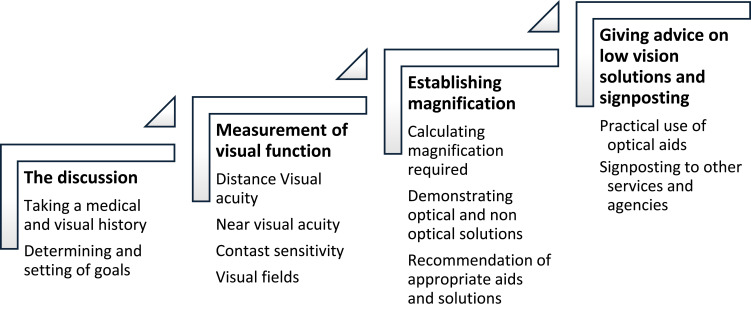
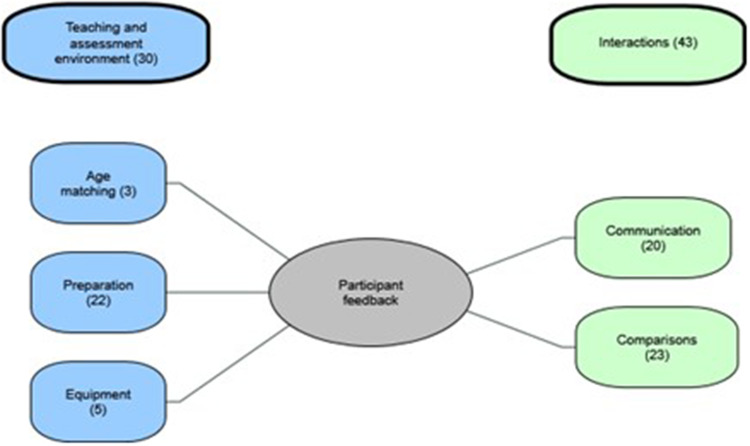
Five assessors, five simulated patients and seven students completed evaluations. Both assessors and students broadly accepted the method for both teaching and assessment, with mean scores across all groups ranging from 7.3 to 9.6 on a 1-10 scale (where 1 indicated very poor acceptance and 10 excellent acceptance). The discussion and establishing magnification elements of the encounter were the least well accepted. Simulated patients found the level of preparation for the role adequate. There were no significant differences between Likert scores between assessors and students in both the teaching and assessment sessions. Thematic analysis of free text comments showed in the main positive responses, with all groups highlighting the benefits of detailed scenarios and pre-session training. The method was acceptable to the professional governing and accrediting body, the College of Optometrists.
Implementing a guideline-compliant simulated patient resource for high-stakes assessment requires significant time and resources. Our single cohort analysis indicates broad acceptance amongst assessors and students. Further research is needed to evaluate its educational impact across a wider range of scenarios and competencies while also further assessing its validity. Though simulated patients offer a viable alternative for teaching and assessing low vision practice, real patient encounters remain preferable.
报告一种为低视力康复教学与评估设计的模拟患者资源的开发、评估及可接受性。研究结果旨在为该方法未来可能融入验光教育提供参考。
为应对新冠疫情限制措施,开发了一种模拟患者资源,使卡迪夫大学低视力实践研究生模块中进行实践环节的学生能够完成培训。采用混合方法案例研究方法,评估从学生、评估者和模拟患者的角度进行,以确定在其使用方面是否存在共识。该研究并非旨在证明其教育影响或与现有方法验证模拟患者。
五名评估者、五名模拟患者和七名学生完成了评估。评估者和学生普遍接受该方法用于教学和评估,所有组的平均得分在1 - 10分制中为7.3至9.6分(其中1表示接受度非常低,10表示接受度非常高)。问诊中的讨论和确定放大倍数环节接受度最低。模拟患者认为该角色的准备程度足够。在教学和评估环节中,评估者和学生的李克特量表得分无显著差异。对自由文本评论的主题分析显示主要为积极回应,所有组都强调了详细场景和课前培训的好处。该方法得到了专业管理和认证机构验光师学院的认可。
实施符合指南的模拟患者资源用于高风险评估需要大量时间和资源。我们的单队列分析表明评估者和学生广泛接受。需要进一步研究以评估其在更广泛场景和能力范围内的教育影响,同时进一步评估其有效性。虽然模拟患者为低视力实践的教学和评估提供了可行的替代方案,但真实患者问诊仍然更可取。