Mwesigye Vicent, Tebulwa Joanita Berytah, Musinguzi Benson, Agaba Bosco Bekita, Bagenda Charlse Nkubi, Bajunirwe Francis, Bazira Joel, Mulogo Edgar, Herbert Itabangi, Byarugaba Frederick
Department of Medical Laboratory Sciences, Faculty of Medicine, Mbarara University of Science and Technology, Mbarara, UGA.
Department of Nursing, Faculty of Medicine, Mbarara University of Science and Technology, Mbarara, UGA.
Cureus. 2025 Jul 8;17(7):e87532. doi: 10.7759/cureus.87532. eCollection 2025 Jul.
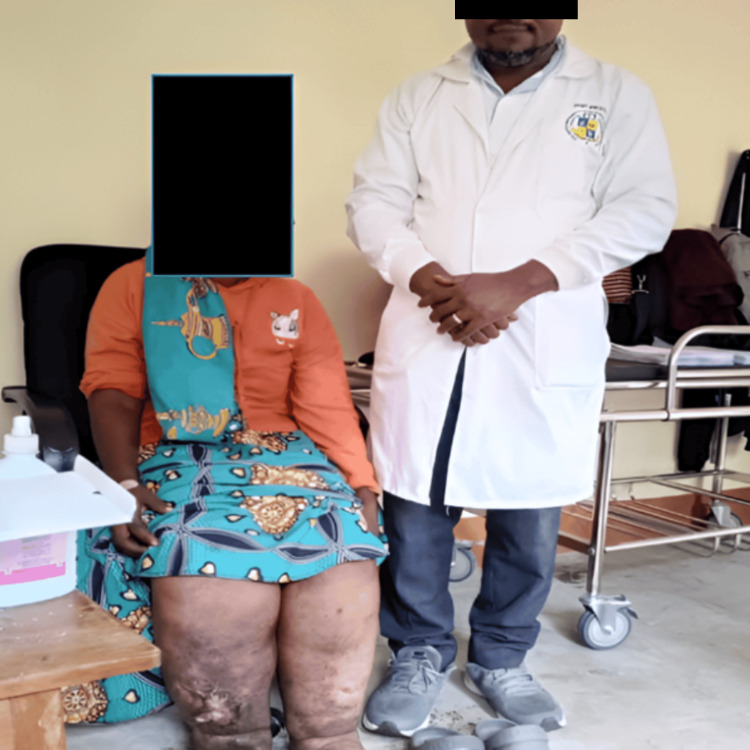
Filarial infections trigger a complex immune response characterized by the production of different antibodies, particularly immunoglobulin G (IgG) and immunoglobulin M (IgM). These immunoglobulins play a key role in diagnosing the disease, with IgM typically indicating recent infection and IgG reflecting past or ongoing exposure. Assessing their presence provides valuable insight into an individual's immune response and infection history. This study examined the levels of IgG and IgM in people living with lymphedema in the Kamwenge district, Western Uganda, to better understand their immunological status in relation to filarial infection. This cross-sectional study, conducted in the Kamwenge district, aimed to assess the presence of anti-filarial antibodies among lymphedema patients. A total of 154 participants, predominantly female (71.4%), with a mean age of 54.7 years, were selected through simple random sampling. Serological testing using the Abbexa Filariasis IgG/IgM Rapid Test revealed that 10.4% tested positive for IgG, and 1.9% for IgM antibodies. We enrolled a total of 154 participants, the majority of whom were female 110 (71.4%) while 44 (28.6%) were male. The participants had a mean age of 54.7 years, with a standard deviation of 15.6 years. Overall, 10.4% (n=16) tested positive for filarial antibodies. Specifically, 10.4% (n=16) were positive for filarial IgG, while 1.9% (n=3) tested positive for IgM antibodies. The serological findings demonstrated a low prevalence of recent filarial infections, with a higher occurrence of past or chronic exposure among participants. This suggests that while active transmission may be limited, lymphatic filariasis remains an ongoing public health concern in the Kamwenge district. These results emphasize the need for continued surveillance, early detection, and targeted interventions to effectively manage and mitigate the burden of filarial-related lymphedema in the region.
丝虫感染引发复杂的免疫反应,其特征是产生不同的抗体,尤其是免疫球蛋白G(IgG)和免疫球蛋白M(IgM)。这些免疫球蛋白在疾病诊断中起关键作用,IgM通常表明近期感染,而IgG反映过去或正在接触感染源。评估它们的存在能为个体的免疫反应和感染史提供有价值的见解。本研究检测了乌干达西部卡姆文盖区淋巴水肿患者体内的IgG和IgM水平,以更好地了解他们与丝虫感染相关的免疫状态。这项在卡姆文盖区开展的横断面研究旨在评估淋巴水肿患者中抗丝虫抗体的存在情况。通过简单随机抽样共选取了154名参与者,其中大多数为女性(71.4%),平均年龄为54.7岁。使用Abbexa丝虫病IgG/IgM快速检测进行血清学检测发现,10.4%的人IgG检测呈阳性,1.9%的人IgM抗体检测呈阳性。我们共招募了154名参与者,其中大多数为女性110名(71.4%),男性44名(28.6%)。参与者的平均年龄为54.7岁,标准差为15.6岁。总体而言,10.4%(n = 16)的丝虫抗体检测呈阳性。具体来说,10.4%(n = 16)的丝虫IgG呈阳性,而1.9%(n = 3)的IgM抗体检测呈阳性。血清学研究结果表明近期丝虫感染的患病率较低,参与者中过去或慢性接触感染源的情况更为普遍。这表明虽然活跃传播可能有限,但淋巴丝虫病在卡姆文盖区仍是一个持续存在的公共卫生问题。这些结果强调需要持续监测、早期检测和有针对性的干预措施,以有效管理和减轻该地区丝虫相关淋巴水肿的负担。