Meng Qingwen, Kuang Xi, Yu Zihan, He Minghui, Cui Hanzhi
School of Computer, Electronics and Information, Guangxi University, Nanning, Guangxi, China.
International School of Business and Finance, Sun Yat-sen University, Guangzhou, China.
PLoS One. 2025 Aug 8;20(8):e0329705. doi: 10.1371/journal.pone.0329705. eCollection 2025.
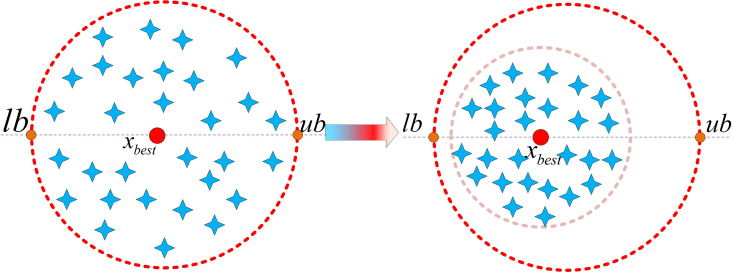
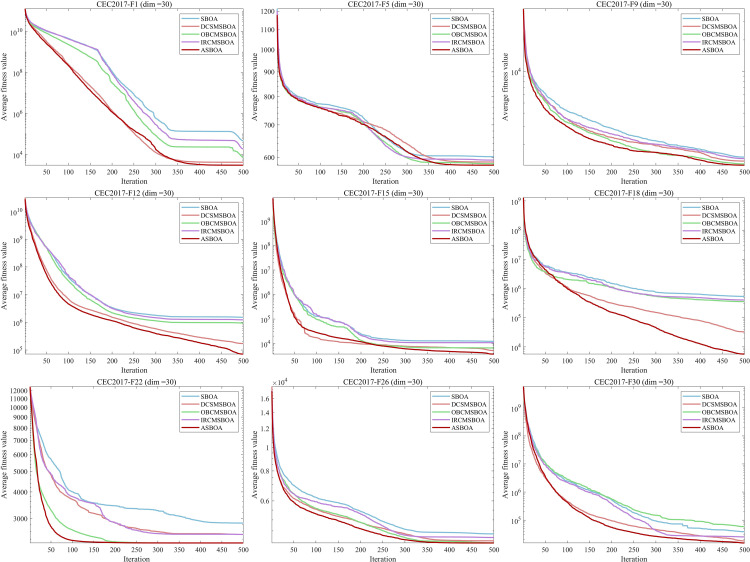
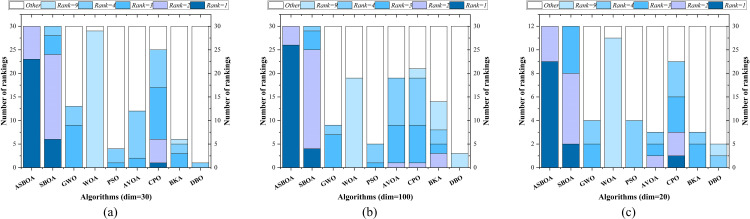
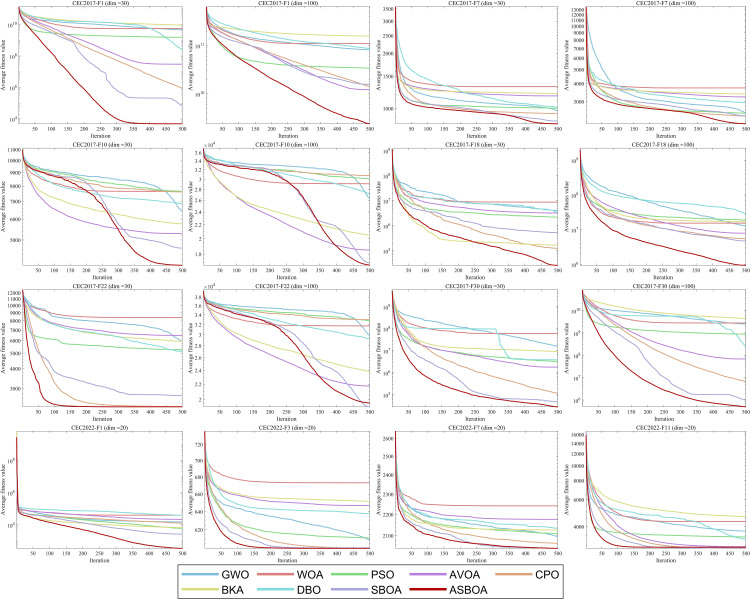
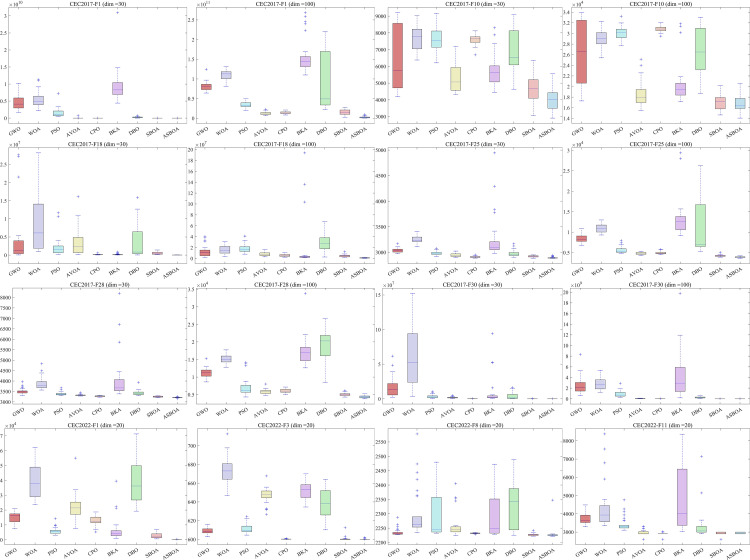
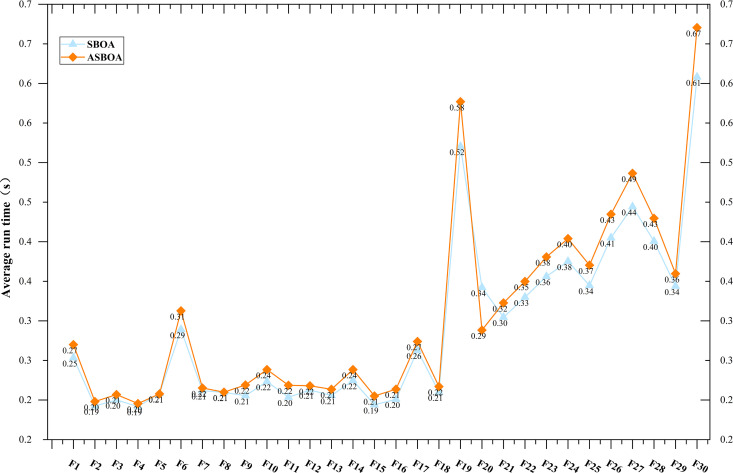
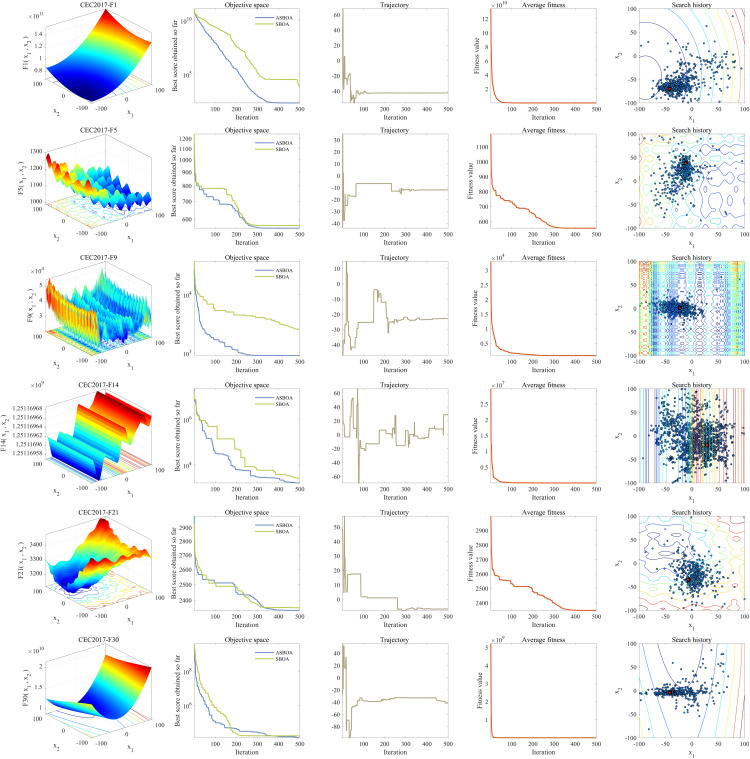
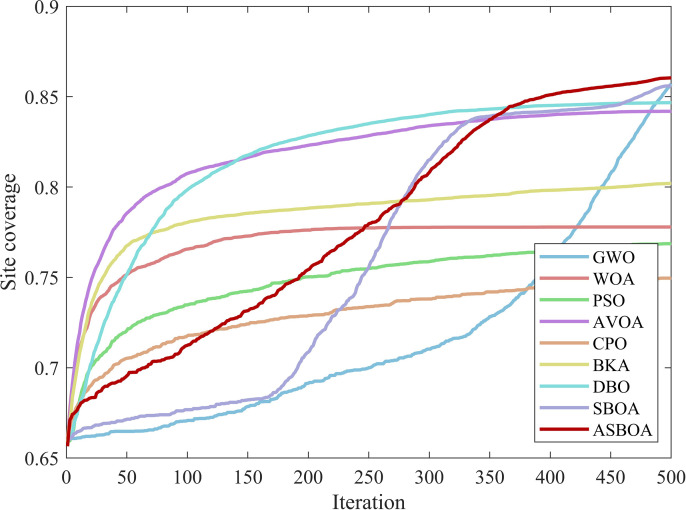
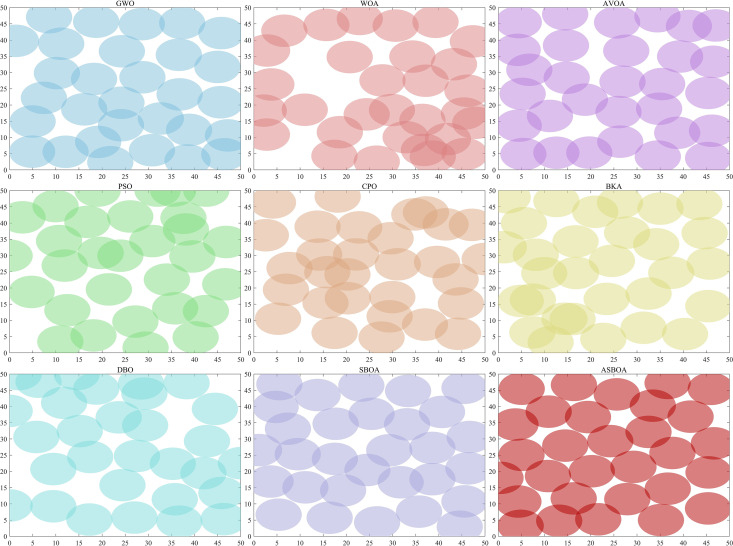
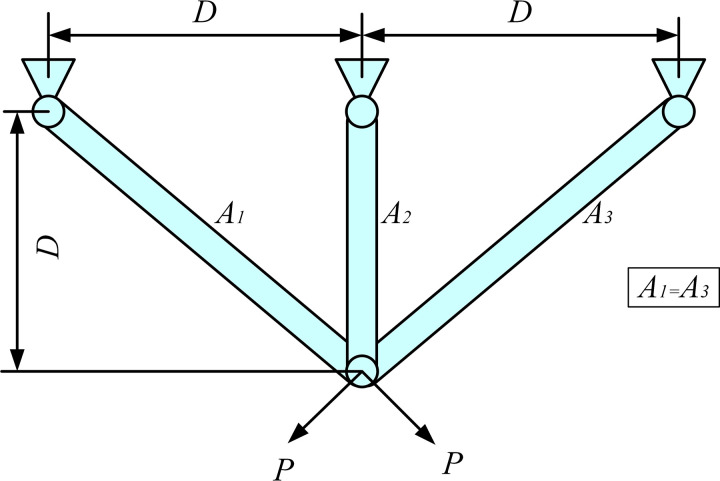
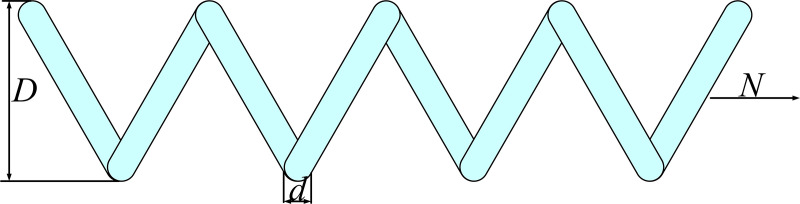
This study develops an enhanced Secretary Bird Optimization Algorithm (ASBOA) based on the original Secretary Bird Optimization Algorithm (SBOA), aiming to further improve the solution accuracy and convergence speed for wireless sensor network (WSN) deployment and engineering optimization problems. Firstly, a differential collaborative search mechanism is introduced in the exploration phase to reduce the risk of the algorithm falling into local optima. Additionally, an optimal boundary control mechanism is employed to prevent ineffective exploration and enhance convergence speed. Simultaneously, an information retention control mechanism is utilized to update the population. This mechanism ensures that individuals that fail to update have a certain probability of being retained in the next generation population, while guaranteeing that the current global optimal solution remains unchanged, thereby accelerating the algorithm's convergence. The ASBOA algorithm was evaluated using the CEC2017 and CEC2022 benchmark test functions and compared with other algorithms (such as PSO, GWO, DBO, and CPO). The results show that in the CEC2017 30-dimensional case, ASBOA performed best on 23 out of 30 functions; in the CEC2017 100-dimensional case, ASBOA performed best on 26 out of 30 functions; and in the CEC2022 20-dimensional case, it performed best on 9 out of 12 functions. Furthermore, the convergence curves and boxplot results indicate that ASBOA has faster convergence speed and robustness. Finally, ASBOA was applied to WSN problems and three engineering design problems (three-bar truss, tension/compression spring, and cantilever beam design). In the engineering problems, ASBOA consistently outperformed competing methods, while in the WSN deployment scenario, it achieved a coverage rate of 88.32%, an improvement of 1.12% over the standard SBOA. These results demonstrate that the proposed ASBOA has strong overall performance and significant potential in solving complex optimization problems. Although ASBOA performs well in these problems, its performance in high-dimensional multimodal problems and complex constrained optimization is unstable, and the introduced strategies add some complexity. Additionally, different parameter settings may lead to varying results, and the sensitivity of different problems to these parameters can also differ. It is necessary to adjust the settings according to the specific problem at hand in order to further refine and achieve a more stable version.
本研究基于原始秘书鸟优化算法(SBOA)开发了一种增强型秘书鸟优化算法(ASBOA),旨在进一步提高无线传感器网络(WSN)部署和工程优化问题的求解精度和收敛速度。首先,在探索阶段引入差分协作搜索机制,以降低算法陷入局部最优的风险。此外,采用最优边界控制机制来防止无效探索并提高收敛速度。同时,利用信息保留控制机制来更新种群。该机制确保未更新的个体有一定概率被保留到下一代种群中,同时保证当前全局最优解不变,从而加速算法的收敛。使用CEC2017和CEC2022基准测试函数对ASBOA算法进行评估,并与其他算法(如PSO、GWO、DBO和CPO)进行比较。结果表明,在CEC2017的30维情况下,ASBOA在30个函数中的23个上表现最佳;在CEC2017的100维情况下,ASBOA在30个函数中的26个上表现最佳;在CEC2022的20维情况下,它在12个函数中的9个上表现最佳。此外,收敛曲线和箱线图结果表明ASBOA具有更快的收敛速度和鲁棒性。最后,将ASBOA应用于WSN问题和三个工程设计问题(三杆桁架、拉伸/压缩弹簧和悬臂梁设计)。在工程问题中,ASBOA始终优于竞争方法,而在WSN部署场景中,它实现了88.32%的覆盖率,比标准SBOA提高了1.12%。这些结果表明,所提出的ASBOA在解决复杂优化问题方面具有强大的整体性能和巨大潜力。尽管ASBOA在这些问题上表现良好,但其在高维多模态问题和复杂约束优化中的性能不稳定,并且引入的策略增加了一些复杂性。此外,不同的参数设置可能导致不同的结果,并且不同问题对这些参数的敏感性也可能不同。有必要根据手头的具体问题调整设置,以进一步优化并实现更稳定的版本。