Bakeer Manal R, Soliman Seham Samir, Ahmed Omaima, Youssef Fady Sayed, Ali Ghada E, Aljarba Nada H, Zouganelis George D, Rashad Maha M
Physiology Department, Faculty of Veterinary Medicine, Cairo University, Giza, Egypt.
Department of Animal Reproduction and Artificial Insemination, Veterinary Research Institute, National Research Centre (NRC), Dokki, Cairo, Egypt.
Front Vet Sci. 2025 Jul 28;12:1616186. doi: 10.3389/fvets.2025.1616186. eCollection 2025.
Di-n-butyl phthalate (DBP), a common plasticizer, is associated with oxidative stress and male reproductive toxicity. Astragalus polysaccharides (APS) have known antioxidative and anti-inflammatory properties, but their role in male reproductive health has not been fully elucidated.
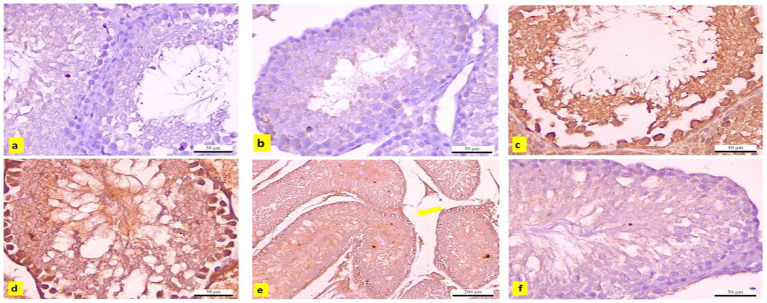
Twenty-four male rats were randomly assigned to four groups ( = 6 each): control, DBP-only (500 mg/kg/day), APS-only (200 mg/kg/day), and APS + DBP (500 mg/kg/day DBP + 200 mg/kg/day APS). Treatments were administered orally for 8 weeks. Biochemical, histological, and molecular analyses were conducted to evaluate testicular function, oxidative stress markers, and gene expression.
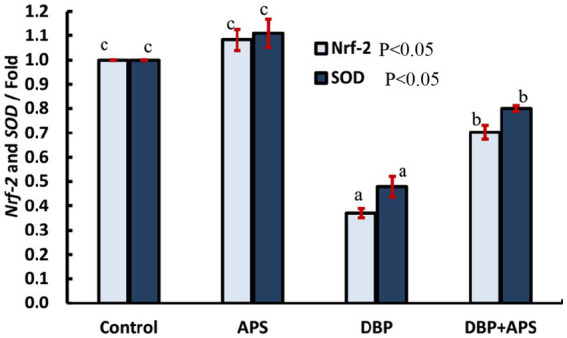
DBP exposure significantly decreased serum testosterone levels, catalase (CAT) activity, lactate dehydrogenase (LDH) activity, and sperm quality, while increasing malondialdehyde (MDA) levels and apoptotic markers . APS co-treatment significantly restored antioxidant enzyme activity, improved sperm parameters, reduced MDA levels, and alleviated histopathological damage. Gene expression analysis revealed upregulation of Nrf2 and SOD, and modulation of the PI3K/AKT/mTOR signaling pathway.
APS exerts protective effects against DBP-induced testicular damage by enhancing antioxidant defenses and regulating key molecular pathways. These findings highlight the therapeutic potential of APS in preventing male infertility associated with environmental toxicants.
邻苯二甲酸二正丁酯(DBP)是一种常见的增塑剂,与氧化应激和男性生殖毒性有关。黄芪多糖(APS)具有抗氧化和抗炎特性,但其在男性生殖健康中的作用尚未完全阐明。
将24只雄性大鼠随机分为四组(每组n = 6):对照组、仅DBP组(500 mg/kg/天)、仅APS组(200 mg/kg/天)和APS + DBP组(500 mg/kg/天DBP + 200 mg/kg/天APS)。口服给药8周。进行生化、组织学和分子分析以评估睾丸功能、氧化应激标志物和基因表达。
暴露于DBP显著降低血清睾酮水平、过氧化氢酶(CAT)活性、乳酸脱氢酶(LDH)活性和精子质量,同时增加丙二醛(MDA)水平和凋亡标志物。APS联合治疗显著恢复抗氧化酶活性,改善精子参数,降低MDA水平,并减轻组织病理学损伤。基因表达分析显示Nrf2和SOD上调,以及PI3K/AKT/mTOR信号通路的调节。
APS通过增强抗氧化防御和调节关键分子途径对DBP诱导的睾丸损伤发挥保护作用。这些发现突出了APS在预防与环境毒物相关的男性不育症方面的治疗潜力。