• 文献检索
  • 文档翻译
  • 深度研究
  • 学术资讯
  • Suppr Zotero 插件Zotero 插件
  • 邀请有礼
  • 套餐&价格
  • 历史记录
应用&插件
Suppr Zotero 插件Zotero 插件浏览器插件Mac 客户端Windows 客户端微信小程序
定价
高级版会员购买积分包购买API积分包
服务
文献检索文档翻译深度研究API 文档MCP 服务
关于我们
关于 Suppr公司介绍联系我们用户协议隐私条款
关注我们

Suppr 超能文献

核心技术专利:CN118964589B侵权必究
粤ICP备2023148730 号-1Suppr @ 2026

文献检索

告别复杂PubMed语法,用中文像聊天一样搜索,搜遍4000万医学文献。AI智能推荐,让科研检索更轻松。

立即免费搜索

文件翻译

保留排版,准确专业,支持PDF/Word/PPT等文件格式,支持 12+语言互译。

免费翻译文档

深度研究

AI帮你快速写综述,25分钟生成高质量综述,智能提取关键信息,辅助科研写作。

立即免费体验

机器学习与机理建模相结合在预测小分子血浆暴露中的应用。

Application of machine learning in combination with mechanistic modeling to predict plasma exposure of small molecules.

作者信息

Mavroudis Panteleimon D, Teutonico Donato, Abos Alexandra, Pillai Nikhil

机构信息

Quantitative Pharmacology Research, DMPK, Sanofi, Cambridge, MA, United States.

Translational Medicine and Early Development, Sanofi, Chilly-Mazarin, France.

出版信息

Front Syst Biol. 2023 Jun 20;3:1180948. doi: 10.3389/fsysb.2023.1180948. eCollection 2023.

DOI:10.3389/fsysb.2023.1180948
PMID:40809487
原文链接:https://pmc.ncbi.nlm.nih.gov/articles/PMC12342024/
Abstract

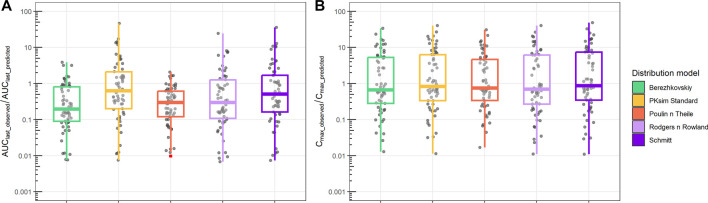
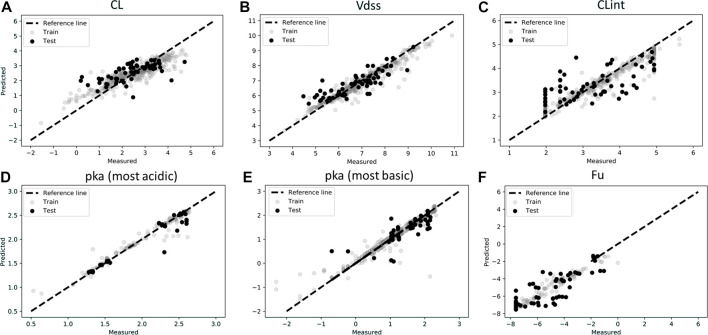
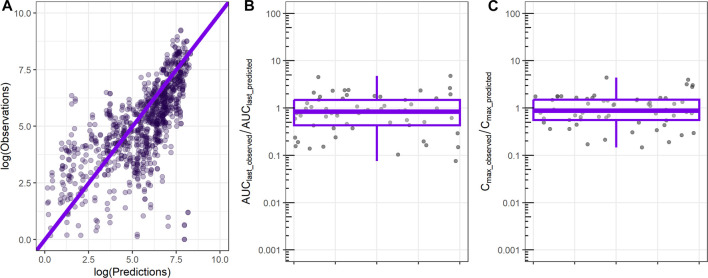
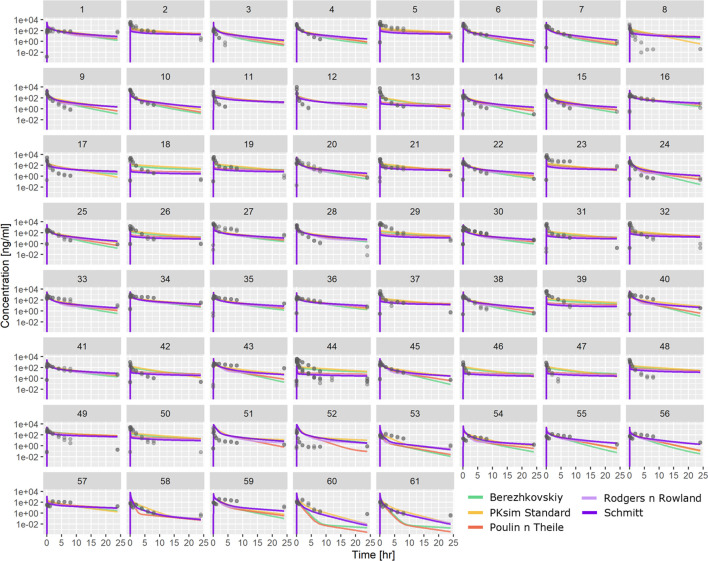
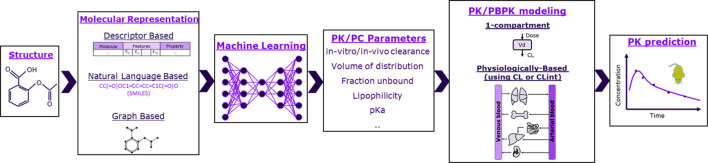
Prediction of a new molecule's exposure in plasma is a critical first step toward understanding its efficacy/toxicity profile and concluding whether it is a possible first-in-class, best-in-class candidate. For this prediction, traditional pharmacometrics use a variety of scaling methods that are heavily based on pre-clinical pharmacokinetic (PK) data. We here propose a novel framework based on which preclinical exposure prediction is performed by applying machine learning (ML) in tandem with mechanism-based modeling. In our proposed method, a relationship is initially established between molecular structure and physicochemical (PC)/PK properties using ML, and then the ML-driven PC/PK parameters are used as input to mechanistic models that ultimately predict the plasma exposure of new candidates. To understand the feasibility of our proposed framework, we evaluated a number of mechanistic models (1-compartment, physiologically based pharmacokinetic (PBPK)), PBPK distribution models (Berezhkovskiy, PK-Sim standard, Poulin and Theil, Rodgers and Rowland, and Schmidt), and PBPK parameterizations (using , or clearance). For most of the scenarios tested, our results demonstrate that PK profiles can be adequately predicted based on the proposed framework. Our analysis further indicates some limitations when liver microsomal intrinsic clearance (CLint) is used as the only clearance pathway and underscores the necessity of investigating the variability emanating from the different distribution models when providing PK predictions. The suggested approach aims at earlier exposure prediction in the drug development process so that critical decisions on molecule screening, chemistry design, or dose selection can be made as early as possible.

摘要

预测新分子在血浆中的暴露情况是了解其疗效/毒性特征并判断其是否可能成为同类首创、同类最佳候选药物的关键第一步。对于这种预测,传统的药物计量学使用多种缩放方法,这些方法严重依赖临床前药代动力学(PK)数据。我们在此提出一种新颖的框架,在此框架下,通过将机器学习(ML)与基于机制的建模相结合来进行临床前暴露预测。在我们提出的方法中,首先使用ML建立分子结构与物理化学(PC)/PK特性之间的关系,然后将ML驱动的PC/PK参数用作机制模型的输入,这些模型最终预测新候选药物的血浆暴露情况。为了了解我们提出的框架的可行性,我们评估了许多机制模型(一室模型、基于生理的药代动力学(PBPK))、PBPK分布模型(别列日科夫斯基模型、PK-Sim标准模型、普林和泰尔模型、罗杰斯和罗兰模型以及施密特模型)以及PBPK参数化(使用、或清除率)。对于测试的大多数情况,我们的结果表明,基于所提出的框架可以充分预测PK曲线。我们的分析进一步表明,当将肝微粒体固有清除率(CLint)用作唯一的清除途径时存在一些局限性,并强调在提供PK预测时研究不同分布模型产生的变异性的必要性。所建议的方法旨在在药物开发过程中更早地进行暴露预测,以便能够尽早对分子筛选、化学设计或剂量选择做出关键决策。
https://cdn.ncbi.nlm.nih.gov/pmc/blobs/8a75/12342024/8da66aab03b3/fsysb-03-1180948-g006.jpg
https://cdn.ncbi.nlm.nih.gov/pmc/blobs/8a75/12342024/6717bb2b8a67/fsysb-03-1180948-g001.jpg
https://cdn.ncbi.nlm.nih.gov/pmc/blobs/8a75/12342024/c2fdc20724f0/fsysb-03-1180948-g002.jpg
https://cdn.ncbi.nlm.nih.gov/pmc/blobs/8a75/12342024/b39c3e6c345e/fsysb-03-1180948-g003.jpg
https://cdn.ncbi.nlm.nih.gov/pmc/blobs/8a75/12342024/e6adf50f2483/fsysb-03-1180948-g004.jpg
https://cdn.ncbi.nlm.nih.gov/pmc/blobs/8a75/12342024/4d857b5b9f75/fsysb-03-1180948-g005.jpg
https://cdn.ncbi.nlm.nih.gov/pmc/blobs/8a75/12342024/8da66aab03b3/fsysb-03-1180948-g006.jpg
https://cdn.ncbi.nlm.nih.gov/pmc/blobs/8a75/12342024/6717bb2b8a67/fsysb-03-1180948-g001.jpg
https://cdn.ncbi.nlm.nih.gov/pmc/blobs/8a75/12342024/c2fdc20724f0/fsysb-03-1180948-g002.jpg
https://cdn.ncbi.nlm.nih.gov/pmc/blobs/8a75/12342024/b39c3e6c345e/fsysb-03-1180948-g003.jpg
https://cdn.ncbi.nlm.nih.gov/pmc/blobs/8a75/12342024/e6adf50f2483/fsysb-03-1180948-g004.jpg
https://cdn.ncbi.nlm.nih.gov/pmc/blobs/8a75/12342024/4d857b5b9f75/fsysb-03-1180948-g005.jpg
https://cdn.ncbi.nlm.nih.gov/pmc/blobs/8a75/12342024/8da66aab03b3/fsysb-03-1180948-g006.jpg

相似文献

1
Application of machine learning in combination with mechanistic modeling to predict plasma exposure of small molecules.机器学习与机理建模相结合在预测小分子血浆暴露中的应用。
Front Syst Biol. 2023 Jun 20;3:1180948. doi: 10.3389/fsysb.2023.1180948. eCollection 2023.
2
Prescription of Controlled Substances: Benefits and Risks管制药品的处方:益处与风险
3
Comparison of Two Modern Survival Prediction Tools, SORG-MLA and METSSS, in Patients With Symptomatic Long-bone Metastases Who Underwent Local Treatment With Surgery Followed by Radiotherapy and With Radiotherapy Alone.两种现代生存预测工具 SORG-MLA 和 METSSS 在接受手术联合放疗和单纯放疗治疗有症状长骨转移患者中的比较。
Clin Orthop Relat Res. 2024 Dec 1;482(12):2193-2208. doi: 10.1097/CORR.0000000000003185. Epub 2024 Jul 23.
4
Does the Presence of Missing Data Affect the Performance of the SORG Machine-learning Algorithm for Patients With Spinal Metastasis? Development of an Internet Application Algorithm.缺失数据的存在是否会影响 SORG 机器学习算法在脊柱转移瘤患者中的性能?开发一种互联网应用算法。
Clin Orthop Relat Res. 2024 Jan 1;482(1):143-157. doi: 10.1097/CORR.0000000000002706. Epub 2023 Jun 12.
5
A New Measure of Quantified Social Health Is Associated With Levels of Discomfort, Capability, and Mental and General Health Among Patients Seeking Musculoskeletal Specialty Care.一种新的量化社会健康指标与寻求肌肉骨骼专科护理的患者的不适程度、能力以及心理和总体健康水平相关。
Clin Orthop Relat Res. 2025 Apr 1;483(4):647-663. doi: 10.1097/CORR.0000000000003394. Epub 2025 Feb 5.
6
The Black Book of Psychotropic Dosing and Monitoring.《精神药物剂量与监测黑皮书》
Psychopharmacol Bull. 2024 Jul 8;54(3):8-59.
7
Approaches for predicting dairy cattle methane emissions: from traditional methods to machine learning.预测奶牛甲烷排放的方法:从传统方法到机器学习。
J Anim Sci. 2024 Jan 3;102. doi: 10.1093/jas/skae219.
8
[Guidelines for the prevention and management of bronchial asthma (2024 edition)].[支气管哮喘防治指南(2024年版)]
Zhonghua Jie He He Hu Xi Za Zhi. 2025 Mar 12;48(3):208-248. doi: 10.3760/cma.j.cn112147-20241013-00601.
9
Signs and symptoms to determine if a patient presenting in primary care or hospital outpatient settings has COVID-19.在基层医疗机构或医院门诊环境中,如果患者出现以下症状和体征,可判断其是否患有 COVID-19。
Cochrane Database Syst Rev. 2022 May 20;5(5):CD013665. doi: 10.1002/14651858.CD013665.pub3.
10
A rapid and systematic review of the clinical effectiveness and cost-effectiveness of paclitaxel, docetaxel, gemcitabine and vinorelbine in non-small-cell lung cancer.对紫杉醇、多西他赛、吉西他滨和长春瑞滨在非小细胞肺癌中的临床疗效和成本效益进行的快速系统评价。
Health Technol Assess. 2001;5(32):1-195. doi: 10.3310/hta5320.

引用本文的文献

1
The dawn of a new era: can machine learning and large language models reshape QSP modeling?新时代的曙光:机器学习和大语言模型能否重塑定量系统药理学建模?
J Pharmacokinet Pharmacodyn. 2025 Jun 16;52(4):36. doi: 10.1007/s10928-025-09984-5.

本文引用的文献

1
Machine learning and artificial intelligence in physiologically based pharmacokinetic modeling.机器学习和人工智能在基于生理学的药代动力学建模中的应用。
Toxicol Sci. 2023 Jan 31;191(1):1-14. doi: 10.1093/toxsci/kfac101.
2
A multi-model approach to predict efficacious clinical dose for an anti-TGF-β antibody (GC2008) in the treatment of osteogenesis imperfecta.多模型方法预测抗 TGF-β 抗体(GC2008)治疗成骨不全症的有效临床剂量。
CPT Pharmacometrics Syst Pharmacol. 2022 Nov;11(11):1485-1496. doi: 10.1002/psp4.12857. Epub 2022 Sep 27.
3
Current Approaches for Predicting Human PK for Small Molecule Development Candidates: Findings from the IQ Human PK Prediction Working Group Survey.
当前小分子药物研发候选物人体 PK 预测方法:IQ 人体 PK 预测工作组调查结果。
AAPS J. 2022 Jul 19;24(5):85. doi: 10.1208/s12248-022-00735-9.
4
Prediction of In Vivo Pharmacokinetic Parameters and Time-Exposure Curves in Rats Using Machine Learning from the Chemical Structure.基于化学结构的机器学习预测大鼠体内药代动力学参数和时间-暴露曲线。
Mol Pharm. 2022 May 2;19(5):1488-1504. doi: 10.1021/acs.molpharmaceut.2c00027. Epub 2022 Apr 12.
5
Machine Learning guided early drug discovery of small molecules.机器学习指导小分子药物的早期发现。
Drug Discov Today. 2022 Aug;27(8):2209-2215. doi: 10.1016/j.drudis.2022.03.017. Epub 2022 Mar 29.
6
Machine Learning Models for Human Pharmacokinetic Parameters with In-House Validation.基于内部验证的人体药代动力学参数的机器学习模型。
Mol Pharm. 2021 Dec 6;18(12):4520-4530. doi: 10.1021/acs.molpharmaceut.1c00718. Epub 2021 Nov 10.
7
A hybrid modeling approach for assessing mechanistic models of small molecule partitioning in vivo using a machine learning-integrated modeling platform.一种使用机器学习集成建模平台评估小分子体内分配机制模型的混合建模方法。
Sci Rep. 2021 May 27;11(1):11143. doi: 10.1038/s41598-021-90637-1.
8
Model-based Target Pharmacology Assessment (mTPA): An Approach Using PBPK/PD Modeling and Machine Learning to Design Medicinal Chemistry and DMPK Strategies in Early Drug Discovery.基于模型的靶标药效学评估 (mTPA):一种利用 PBPK/PD 建模和机器学习设计早期药物发现中药物化学和 DMPK 策略的方法。
J Med Chem. 2021 Mar 25;64(6):3185-3196. doi: 10.1021/acs.jmedchem.0c02033. Epub 2021 Mar 15.
9
Prediction of Oral Pharmacokinetics Using a Combination of In Silico Descriptors and In Vitro ADME Properties.利用体内外 ADME 特性与计算描述符组合预测口服药代动力学。
Mol Pharm. 2021 Mar 1;18(3):1071-1079. doi: 10.1021/acs.molpharmaceut.0c01009. Epub 2021 Jan 29.
10
Artificial intelligence in drug discovery: what is realistic, what are illusions? Part 2: a discussion of chemical and biological data.药物研发中的人工智能:何为现实,何为幻想?第二部分:化学与生物学数据探讨
Drug Discov Today. 2021 Apr;26(4):1040-1052. doi: 10.1016/j.drudis.2020.11.037. Epub 2021 Jan 27.