Sharma Meghan, Taylor Gonzalez David, Antonietti Michael, Uversky Vladimir, Djulbegovic Mak
John A. Moran Eye Center, University of Utah, Salt Lake City, UT, USA.
Hamilton Eye Institute, University of Tennessee Science Center, Memphis, TN, USA.
J Proteins Proteom. 2025 May 13. doi: 10.1007/s42485-025-00186-8.
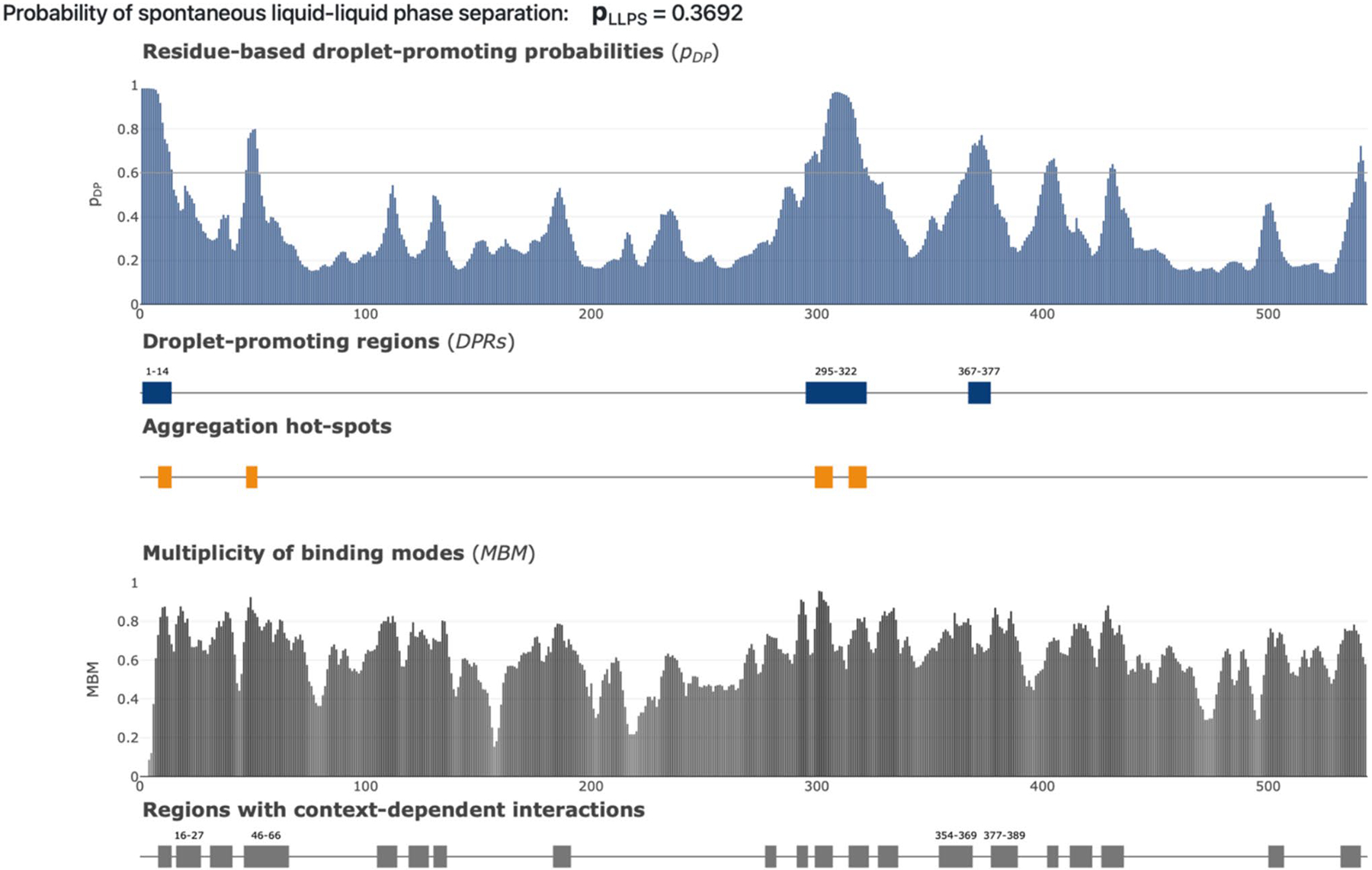
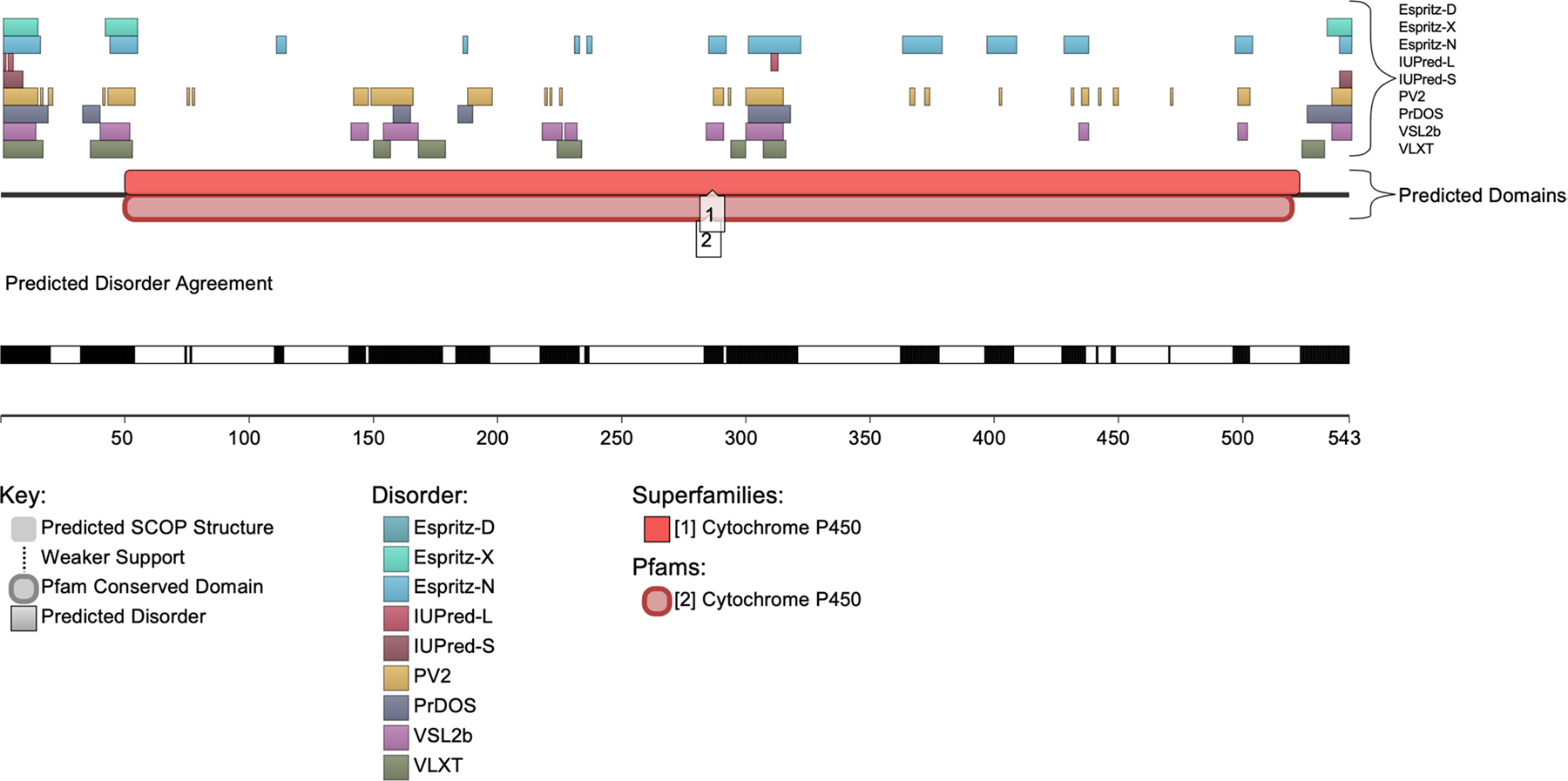
Cytochrome P450 1B1 (CYP1B1) plays a critical role in the pathogenesis of primary congenital glaucoma (PCG), a severe eye disorder that can lead to pediatric blindness if untreated. Increasing evidence suggests that intrinsically disordered proteins and regions (IDPs/IDPRs), which lack a stable three-dimensional structure, are significant in disease pathology due to their flexible nature, impacting protein interactions and function. This study explores the intrinsic disorder within CYP1B1 and its implications in the molecular mechanisms underlying PCG. We employed a comprehensive bioinformatics approach to assess the structural and functional properties of CYP1B1 using tools such as AlphaMissense, a tool crafted to evaluate the functional impact of missense mutations in proteins. Our structural analysis qualitatively demonstrated that CYP1B1 contains intrinsically disordered protein regions (i.e., spaghetti-like entities) that are structureless and flexible. Correlation analysis showed that disorder decreases exponentially relative to AlphaMissense predicted pathogenicity, with an exponential decay fit ( = 0.62), suggesting that highly disordered regions tend to harbor benign mutations. This study identifies critical intrinsically disordered regions within CYP1B1 and elucidates its complex interaction network, highlighting the potential role of these regions in PCG pathogenesis. The observed correlation between intrinsic disorder and reduced pathogenicity of mutations suggests that IDPRs may buffer against deleterious effects, providing a possible explanation for the variability in clinical outcomes associated with CYP1B1 mutations. These insights enhance our understanding of the molecular basis of PCG and offer potential targets for novel therapeutic interventions to combat this blinding childhood disorder.
细胞色素P450 1B1(CYP1B1)在原发性先天性青光眼(PCG)的发病机制中起关键作用,PCG是一种严重的眼部疾病,若不治疗可导致儿童失明。越来越多的证据表明,缺乏稳定三维结构的内在无序蛋白质和区域(IDPs/IDPRs)因其柔性本质在疾病病理学中具有重要意义,会影响蛋白质相互作用和功能。本研究探讨了CYP1B1中的内在无序性及其在PCG潜在分子机制中的意义。我们采用了全面的生物信息学方法,使用诸如AlphaMissense等工具来评估CYP1B1的结构和功能特性,AlphaMissense是一种用于评估蛋白质中错义突变功能影响的工具。我们的结构分析定性地表明,CYP1B1包含无结构且柔性的内在无序蛋白质区域(即类似意大利面条的实体)。相关性分析表明,无序性相对于AlphaMissense预测的致病性呈指数下降,指数衰减拟合值( = 0.62),这表明高度无序的区域往往含有良性突变。本研究确定了CYP1B1中关键的内在无序区域,并阐明了其复杂的相互作用网络,突出了这些区域在PCG发病机制中的潜在作用。观察到的内在无序性与突变致病性降低之间的相关性表明,IDPRs可能缓冲有害影响,这为与CYP1B1突变相关的临床结果变异性提供了一种可能的解释。这些见解加深了我们对PCG分子基础的理解,并为对抗这种致盲性儿童疾病的新型治疗干预提供了潜在靶点。