Waar Z Abu, El-Samad A Abd, Zeenelabden H, Swillam M, Yasin S, Moustafa M
Department of Physics, College of Science, The University of Jordan, Amman, 11942, Jordan.
Department of Physics, School of Sciences and Engineering, The American University in Cairo, New Cairo, 11835, Egypt.
Sci Rep. 2025 Sep 1;15(1):32054. doi: 10.1038/s41598-025-00822-9.
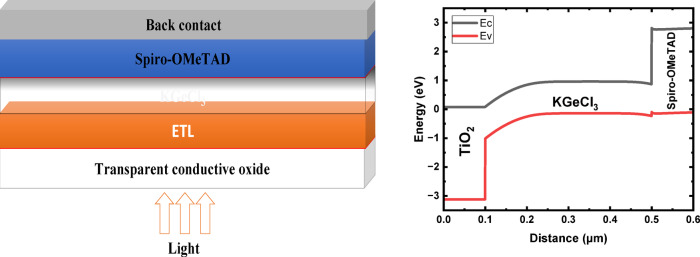
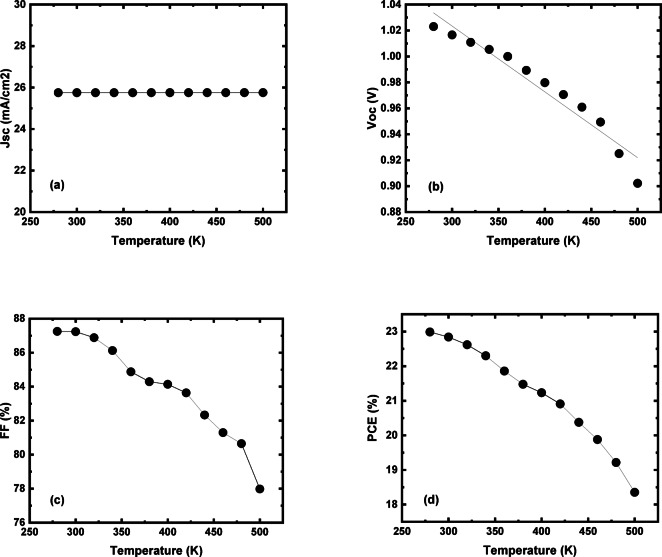
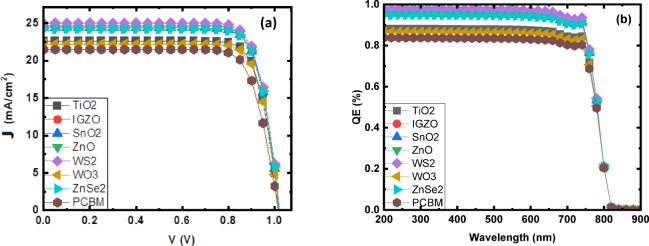
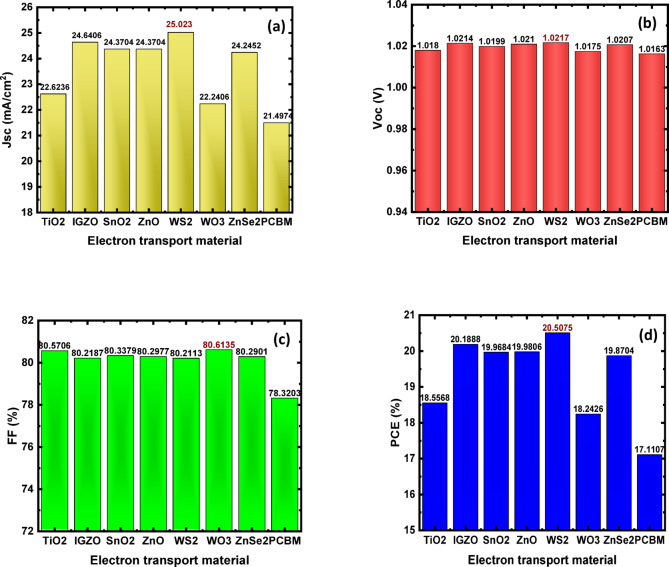
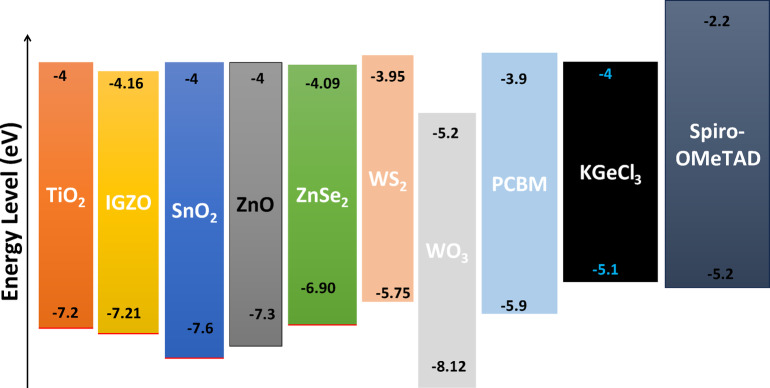
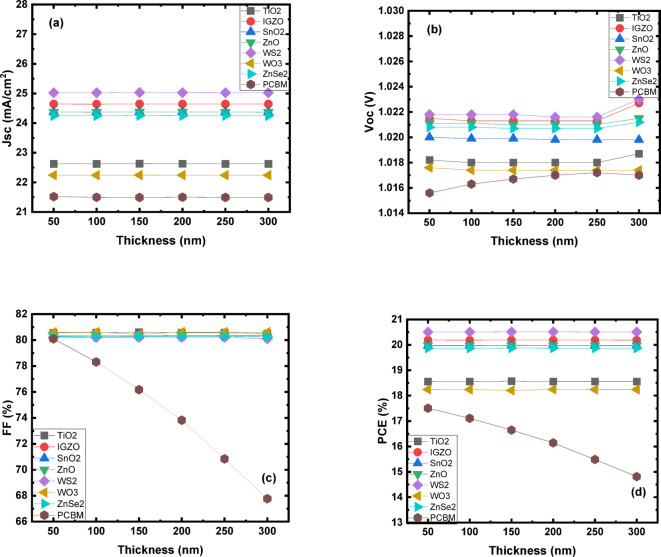
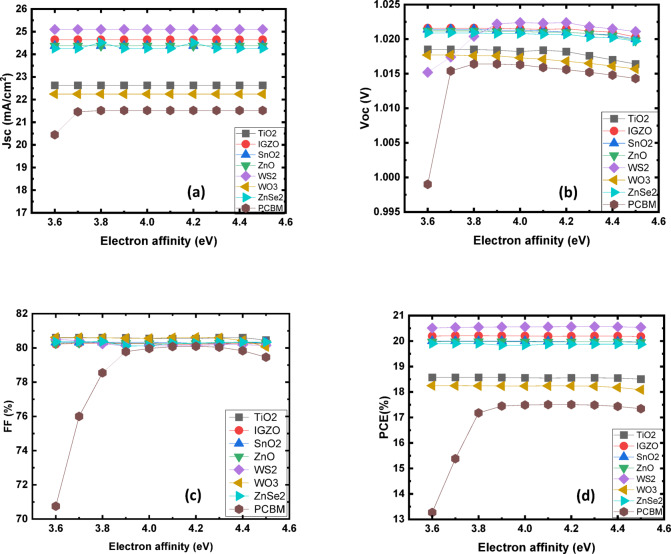
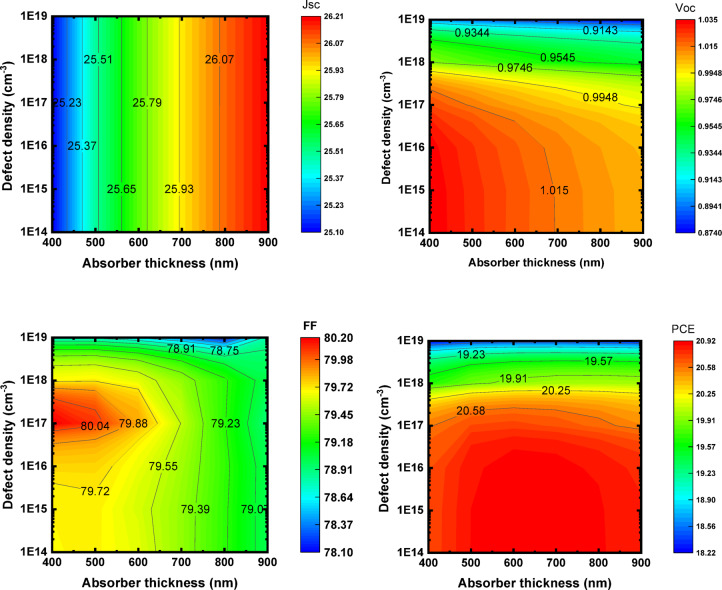
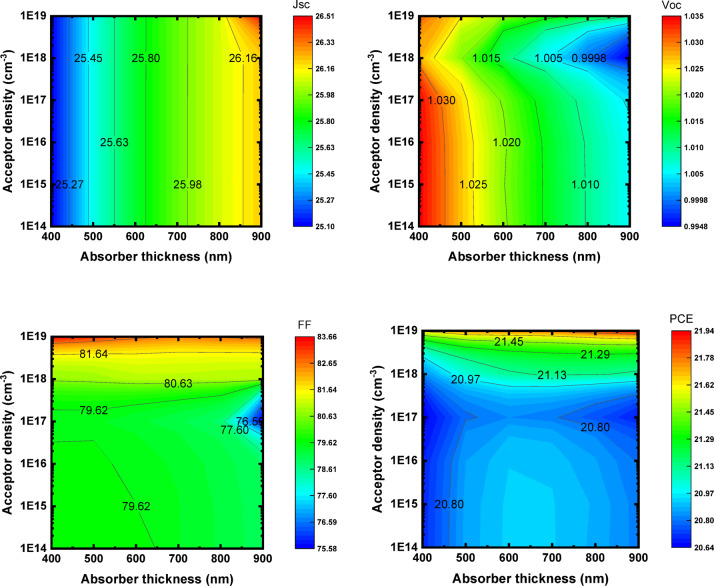
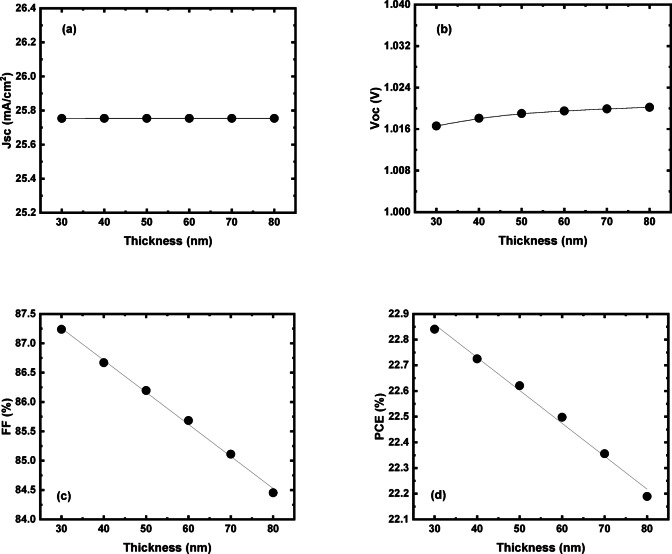
Germanium-based perovskite solar cells (PSCs) have gained attention as a promising alternative to conventional lead-based PSCs due to their environmentally friendly and non-toxic nature. However, their efficiency remains below optimal levels, requiring further exploration to enhance their performance. This study investigates a novel n-i-p structured germanium-based perovskite solar cell using the wxAMPS simulation. The baseline structure-FTO/TiO/KGeCl/Spiro-OMeTAD/Au-achieved a power conversion efficiency (PCE) of 18.55%. To improve efficiency, various electron transport layer (ETL) materials were evaluated, including TiO, IGZO, SnO, ZnO, ZnSe, WO, PCBM, and WS TMDC. The results revealed that the WS emerging as the most suitable candidate. Optimization of key parameters, including the thicknesses of WS ETL (50 nm), Spiro-OMeTAD HTL (30 nm), and the absorber layer KGeCl (600 nm), significantly improved device performance. Additional investigations into defect density, acceptor concentration, electron affinity, and donor concentration further optimized the device's operation. The study also analyzed the adverse effects of functional temperature, providing insights into stability and efficiency under real-world conditions. The optimized solar cell device demonstrated enhanced performance metrics: V = 1.02 V, J = 25.77 mA/cm, FF = 78.25%, and PCE = 22.98%. These findings highlight the potential of germanium-based perovskite solar cells as a sustainable, lead-free photovoltaic solution. The integration of WS as an ETL paves the way for achieving high-efficiency, environmentally friendly solar cells, with promising implications for advancements in renewable energy solutions.
锗基钙钛矿太阳能电池(PSCs)因其环保无毒的特性,作为传统铅基PSCs的一种有前景的替代品而受到关注。然而,其效率仍低于最佳水平,需要进一步探索以提高其性能。本研究使用wxAMPS模拟研究了一种新型n-i-p结构的锗基钙钛矿太阳能电池。基线结构-FTO/TiO/KGeCl/Spiro-OMeTAD/Au-实现了18.55%的功率转换效率(PCE)。为了提高效率,评估了各种电子传输层(ETL)材料,包括TiO、IGZO、SnO、ZnO、ZnSe、WO、PCBM和WS TMDC。结果表明,WS成为最合适的候选材料。对关键参数进行优化,包括WS ETL的厚度(50 nm)、Spiro-OMeTAD HTL的厚度(30 nm)和吸收层KGeCl的厚度(600 nm),显著提高了器件性能。对缺陷密度、受体浓度、电子亲和力和供体浓度的进一步研究进一步优化了器件的运行。该研究还分析了功能温度的不利影响,为实际条件下的稳定性和效率提供了见解。优化后的太阳能电池器件表现出更高的性能指标:V = 1.02 V,J = 25.77 mA/cm²,FF = 78.25%,PCE = 22.98%。这些发现突出了锗基钙钛矿太阳能电池作为一种可持续的无铅光伏解决方案的潜力。将WS作为ETL的集成,为实现高效、环保的太阳能电池铺平了道路,对可再生能源解决方案的进步具有重要意义。