
遗传数据和气象条件表明,H5N1高致病性禽流感在商业家禽疫情之间通过空气传播。
Genetic data and meteorological conditions suggesting windborne transmission of H5N1 high-pathogenicity avian influenza between commercial poultry outbreaks.
作者信息
Nagy Alexander, Černíková Lenka, Sedlák Kamil
机构信息
State Veterinary Institute Prague, Prague, Czech Republic.
出版信息
PLoS One. 2025 Sep 5;20(9):e0319880. doi: 10.1371/journal.pone.0319880. eCollection 2025.
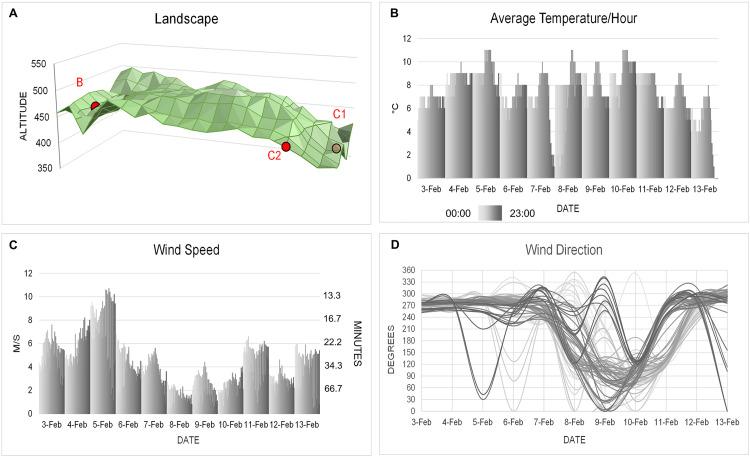
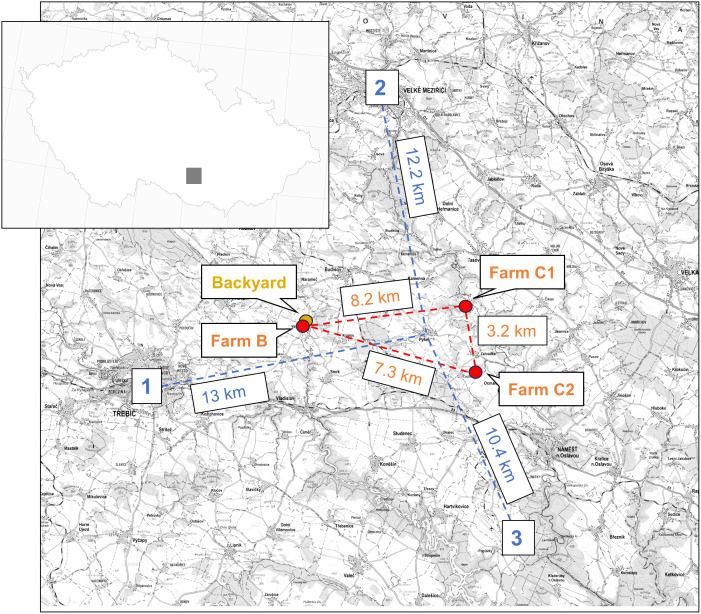
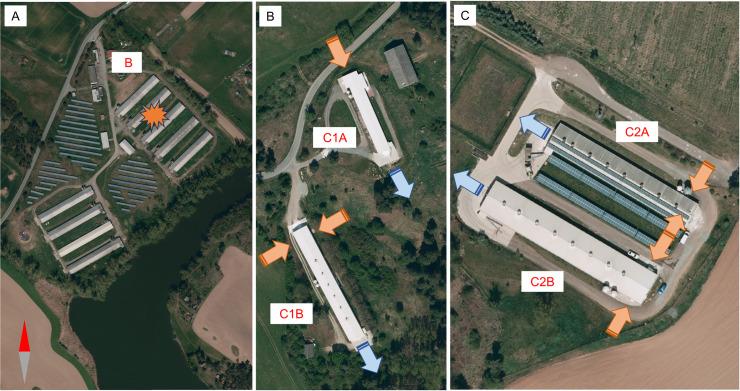
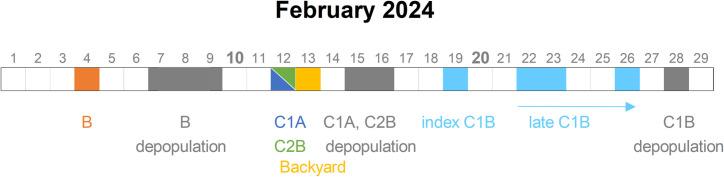
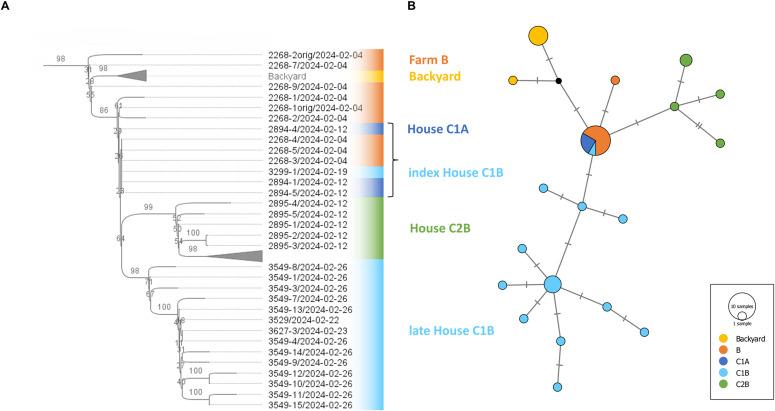
Understanding the transmission routes of high-pathogenicity avian influenza (HPAI) is crucial for developing effective control measures to prevent its spread. In this context, windborne transmission, the idea that the virus could travel through the air over considerable distances, is a contentious concept, and documented cases have been rare. Here, though, we provide genetic evidence supporting the feasibility of windborne transmission. During the 2023-24 HPAI season, molecular surveillance identified identical H5N1 strains among a cluster of unrelated commercial farms about 8 km apart in the Czech Republic. The episode started with the abrupt mortality of fattening ducks on one farm. This was followed by disease outbreaks at two nearby high-biosecurity chicken farms. Using genetic, epizootiological, meteorological and geographical data, we reconstructed a mosaic of events strongly suggesting wind was the most probable mechanism of infection transmission between poultry in at least two independent cases. By aligning the genetic and meteorological data with critical outbreak events, we determined the most likely time window during which the transmission occurred and inferred the sequence of infected houses at the recipient sites. Our results suggest that the contaminated plume emitted from the infected fattening duck farm was the critical medium of HPAI transmission, rather than the dust generated during depopulation. Furthermore, our results also strongly implicate the role of confined mechanically-ventilated buildings with high population densities in facilitating windborne transmission and propagating virus concentrations below the minimum infectious dose at the recipient sites. These findings underscore the importance of considering windborne spread in future outbreak mitigation strategies.
了解高致病性禽流感(HPAI)的传播途径对于制定有效的防控措施以防止其传播至关重要。在此背景下,空气传播这一概念,即病毒可通过空气远距离传播,存在争议且有记录的案例很少。然而,在此我们提供了支持空气传播可行性的基因证据。在2023 - 2024年高致病性禽流感流行季期间,分子监测在捷克共和国相距约8公里的一群不相关商业农场中发现了相同的H5N1毒株。这一事件始于一个农场育肥鸭的突然死亡,随后附近两个高生物安全标准的养鸡场爆发了疫情。利用基因、流行病学、气象和地理数据,我们重建了一系列事件,强烈表明在至少两起独立案例中,风是家禽间感染传播最可能的机制。通过将基因和气象数据与关键疫情事件进行比对,我们确定了最可能发生传播的时间窗口,并推断出受感染场所中感染禽舍的顺序。我们的结果表明,受感染的育肥鸭场排放的污染羽流是高致病性禽流感传播的关键媒介,而非扑杀过程中产生的灰尘。此外,我们的结果还强烈表明,人口密度高的封闭式机械通风建筑在促进空气传播以及在受感染场所将病毒浓度传播至低于最小感染剂量方面发挥了作用。这些发现强调了在未来疫情缓解策略中考虑空气传播的重要性。
 Zotero 插件