• 文献检索
  • 文档翻译
  • 深度研究
  • 学术资讯
  • Suppr Zotero 插件Zotero 插件
  • 邀请有礼
  • 套餐&价格
  • 历史记录
应用&插件
Suppr Zotero 插件Zotero 插件浏览器插件Mac 客户端Windows 客户端微信小程序
定价
高级版会员购买积分包购买API积分包
服务
文献检索文档翻译深度研究API 文档MCP 服务
关于我们
关于 Suppr公司介绍联系我们用户协议隐私条款
关注我们

Suppr 超能文献

核心技术专利:CN118964589B侵权必究
粤ICP备2023148730 号-1Suppr @ 2026

文献检索

告别复杂PubMed语法,用中文像聊天一样搜索,搜遍4000万医学文献。AI智能推荐,让科研检索更轻松。

立即免费搜索

文件翻译

保留排版,准确专业,支持PDF/Word/PPT等文件格式,支持 12+语言互译。

免费翻译文档

深度研究

AI帮你快速写综述,25分钟生成高质量综述,智能提取关键信息,辅助科研写作。

立即免费体验

医疗保健与医学中的人工智能:临床应用、治疗进展及未来展望。

Artificial intelligence in healthcare and medicine: clinical applications, therapeutic advances, and future perspectives.

作者信息

Fahim Yosri A, Hasani Ibrahim W, Kabba Samer, Ragab Waleed Mahmoud

机构信息

Department of Basic Medical Sciences, Health Sector, Galala University, Suez, 43511, Egypt.

Faculty of Pharmacy, Al-Andalus University for Medical Sciences, Qadmus, Tartus, Syrian Arab Republic.

出版信息

Eur J Med Res. 2025 Sep 23;30(1):848. doi: 10.1186/s40001-025-03196-w.

DOI:10.1186/s40001-025-03196-w
PMID:40988064
原文链接:https://pmc.ncbi.nlm.nih.gov/articles/PMC12455834/
Abstract

Healthcare systems worldwide face growing challenges, including rising costs, workforce shortages, and disparities in access and quality, particularly in low- and middle-income countries. Artificial intelligence (AI) has emerged as a transformative tool capable of addressing these issues by enhancing diagnostics, treatment planning, patient monitoring, and healthcare efficiency. AI's role in modern medicine spans disease detection, personalized care, drug discovery, predictive analytics, telemedicine, and wearable health technologies. Leveraging machine learning and deep learning, AI can analyze complex data sets, including electronic health records, medical imaging, and genomic profiles, to identify patterns, predict disease progression, and recommend optimized treatment strategies. AI also has the potential to promote equity by enabling cost-effective, resource-efficient solutions in low-resource and remote settings, such as mobile diagnostics, wearable biosensors, and lightweight algorithms. Successful deployment requires addressing critical challenges, including data privacy, algorithmic bias, model interpretability, regulatory oversight, and maintaining human clinical oversight. Emphasizing scalable, ethical, and evidence-driven implementation, key strategies include clinician training in AI literacy, adoption of resource efficient tools, global collaboration, and robust regulatory frameworks to ensure transparency, safety, and accountability. By complementing rather than replacing healthcare professionals, AI can reduce errors, optimize resources, improve patient outcomes, and expand access to quality care. This review emphasizes the responsible integration of AI as a powerful catalyst for innovation, sustainability, and equity in healthcare delivery worldwide.

摘要

全球医疗保健系统面临着日益严峻的挑战,包括成本上升、劳动力短缺以及医疗服务可及性和质量方面的差异,在低收入和中等收入国家尤为明显。人工智能(AI)已成为一种变革性工具,能够通过加强诊断、治疗规划、患者监测和提高医疗保健效率来解决这些问题。人工智能在现代医学中的作用涵盖疾病检测、个性化医疗、药物研发、预测分析、远程医疗和可穿戴健康技术。利用机器学习和深度学习,人工智能可以分析复杂的数据集,包括电子健康记录、医学影像和基因组图谱,以识别模式、预测疾病进展并推荐优化的治疗策略。人工智能还具有通过在资源匮乏和偏远地区提供具有成本效益、资源高效的解决方案来促进公平的潜力,例如移动诊断、可穿戴生物传感器和轻量级算法。成功部署需要应对关键挑战,包括数据隐私、算法偏差、模型可解释性、监管监督以及保持人类临床监督。强调可扩展、符合道德且以证据为驱动的实施,关键策略包括对临床医生进行人工智能素养培训、采用资源高效的工具、全球合作以及建立强大的监管框架,以确保透明度、安全性和问责制。通过补充而非取代医疗保健专业人员,人工智能可以减少错误、优化资源、改善患者预后并扩大优质医疗服务的可及性。本综述强调了负责任地整合人工智能,将其作为全球医疗保健服务创新、可持续性和公平性的强大催化剂。
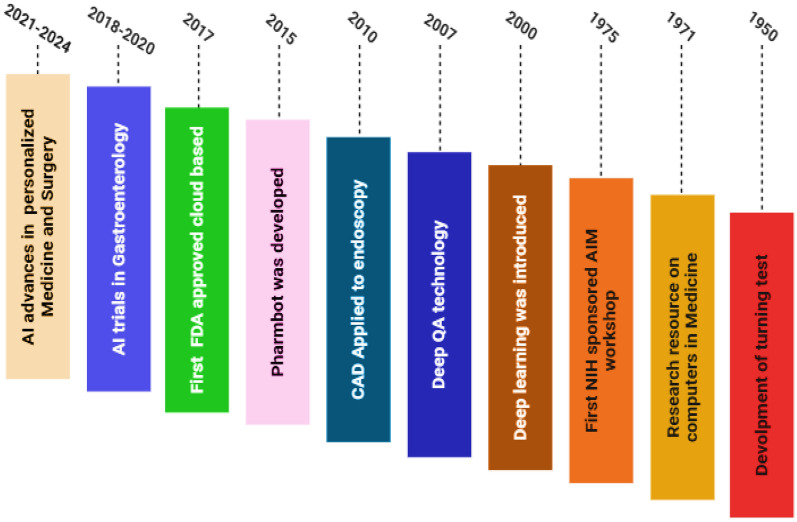
https://cdn.ncbi.nlm.nih.gov/pmc/blobs/1b2d/12455834/bb19ed6b5b8d/40001_2025_3196_Fig6_HTML.jpg
https://cdn.ncbi.nlm.nih.gov/pmc/blobs/1b2d/12455834/39d2d4c97be3/40001_2025_3196_Fig1_HTML.jpg
https://cdn.ncbi.nlm.nih.gov/pmc/blobs/1b2d/12455834/6b10ea12ba05/40001_2025_3196_Fig2_HTML.jpg
https://cdn.ncbi.nlm.nih.gov/pmc/blobs/1b2d/12455834/70defd823587/40001_2025_3196_Fig3_HTML.jpg
https://cdn.ncbi.nlm.nih.gov/pmc/blobs/1b2d/12455834/31eb4916fcac/40001_2025_3196_Fig4_HTML.jpg
https://cdn.ncbi.nlm.nih.gov/pmc/blobs/1b2d/12455834/bfa5f01ae5c0/40001_2025_3196_Fig5_HTML.jpg
https://cdn.ncbi.nlm.nih.gov/pmc/blobs/1b2d/12455834/bb19ed6b5b8d/40001_2025_3196_Fig6_HTML.jpg
https://cdn.ncbi.nlm.nih.gov/pmc/blobs/1b2d/12455834/39d2d4c97be3/40001_2025_3196_Fig1_HTML.jpg
https://cdn.ncbi.nlm.nih.gov/pmc/blobs/1b2d/12455834/6b10ea12ba05/40001_2025_3196_Fig2_HTML.jpg
https://cdn.ncbi.nlm.nih.gov/pmc/blobs/1b2d/12455834/70defd823587/40001_2025_3196_Fig3_HTML.jpg
https://cdn.ncbi.nlm.nih.gov/pmc/blobs/1b2d/12455834/31eb4916fcac/40001_2025_3196_Fig4_HTML.jpg
https://cdn.ncbi.nlm.nih.gov/pmc/blobs/1b2d/12455834/bfa5f01ae5c0/40001_2025_3196_Fig5_HTML.jpg
https://cdn.ncbi.nlm.nih.gov/pmc/blobs/1b2d/12455834/bb19ed6b5b8d/40001_2025_3196_Fig6_HTML.jpg

相似文献

1
Artificial intelligence in healthcare and medicine: clinical applications, therapeutic advances, and future perspectives.医疗保健与医学中的人工智能:临床应用、治疗进展及未来展望。
Eur J Med Res. 2025 Sep 23;30(1):848. doi: 10.1186/s40001-025-03196-w.
2
Integrating artificial intelligence in healthcare: applications, challenges, and future directions.将人工智能整合到医疗保健中:应用、挑战及未来方向。
Future Sci OA. 2025 Dec;11(1):2527505. doi: 10.1080/20565623.2025.2527505. Epub 2025 Jul 4.
3
Artificial intelligence in disease diagnostics: a comprehensive narrative review of current advances, applications, and future challenges in healthcare.疾病诊断中的人工智能:对医疗保健领域当前进展、应用及未来挑战的全面叙述性综述
Ann Med Surg (Lond). 2025 May 26;87(7):4237-4245. doi: 10.1097/MS9.0000000000003423. eCollection 2025 Jul.
4
Artificial intelligence in diabetes management: transformative potential, challenges, and opportunities in healthcare.糖尿病管理中的人工智能:医疗保健中的变革潜力、挑战与机遇。
Hormones (Athens). 2025 Mar 21. doi: 10.1007/s42000-025-00644-4.
5
The Role of Artificial Intelligence in Heart Failure Diagnostics, Risk Prediction, and Therapeutic Strategies: A Comprehensive Review.人工智能在心力衰竭诊断、风险预测及治疗策略中的作用:一项综述
Cureus. 2025 Jul 1;17(7):e87130. doi: 10.7759/cureus.87130. eCollection 2025 Jul.
6
Economic, ethical, and regulatory dimensions of artificial intelligence in healthcare: an integrative review.医疗保健领域人工智能的经济、伦理和监管维度:一项综合综述。
Front Public Health. 2025 Aug 29;13:1617138. doi: 10.3389/fpubh.2025.1617138. eCollection 2025.
7
Leadership in radiology in the era of technological advancements and artificial intelligence.技术进步与人工智能时代的放射学领导力。
Eur Radiol. 2025 Jun 27. doi: 10.1007/s00330-025-11745-4.
8
Opportunities and Challenges of Using Artificial Intelligence in Predicting Clinical Outcomes and Length of Stay in Neonatal Intensive Care Units: Systematic Review.在新生儿重症监护病房中使用人工智能预测临床结局和住院时间的机遇与挑战:系统评价
J Med Internet Res. 2025 Oct 3;27:e63175. doi: 10.2196/63175.
9
Artificial Intelligence Applications in Healthcare: A Systematic Review of Their Impact on Nursing Practice and Patient Outcomes.人工智能在医疗保健中的应用:对护理实践和患者结局影响的系统评价
J Nurs Scholarsh. 2025 Aug 20. doi: 10.1111/jnu.70040.
10
Revolutionizing e-health: the transformative role of AI-powered hybrid chatbots in healthcare solutions.变革电子健康:人工智能驱动的混合聊天机器人在医疗保健解决方案中的变革性作用。
Front Public Health. 2025 Feb 13;13:1530799. doi: 10.3389/fpubh.2025.1530799. eCollection 2025.

本文引用的文献

1
Nanomedicine: The Effective Role of Nanomaterials in Healthcare from Diagnosis to Therapy.纳米医学:纳米材料在从诊断到治疗的医疗保健中的有效作用。
Pharmaceutics. 2025 Jul 30;17(8):987. doi: 10.3390/pharmaceutics17080987.
2
Artificial Intelligence-Based Pathology to Assist Prediction of Neoadjuvant Therapy Responses for Breast Cancer.基于人工智能的病理学辅助预测乳腺癌新辅助治疗反应
Cancer Med. 2025 Aug;14(15):e71132. doi: 10.1002/cam4.71132.
3
Biomedical and environmental applications via nanobiocatalysts and enzyme immobilization.
通过纳米生物催化剂和酶固定化实现的生物医学与环境应用。
Eur J Med Res. 2025 Jun 21;30(1):505. doi: 10.1186/s40001-025-02782-2.
4
Equality, Diversity, and Inclusion in AI-Driven Healthcare Chatbots: Addressing Challenges and Shaping Strategies.人工智能驱动的医疗聊天机器人中的平等、多样性和包容性:应对挑战与制定策略
Eur J Cardiovasc Nurs. 2025 Jun 2. doi: 10.1093/eurjcn/zvaf104.
5
Promising biomedical applications using superparamagnetic nanoparticles.使用超顺磁性纳米颗粒的有前景的生物医学应用。
Eur J Med Res. 2025 Jun 2;30(1):441. doi: 10.1186/s40001-025-02696-z.
6
Advanced Artificial Intelligence Technologies Transforming Contemporary Pharmaceutical Research.先进人工智能技术变革当代药物研发
Bioengineering (Basel). 2025 Mar 31;12(4):363. doi: 10.3390/bioengineering12040363.
7
Deep learning for automated segmentation of brain edema in meningioma after radiosurgery.用于放射治疗后脑膜瘤中脑水肿自动分割的深度学习
BMC Med Imaging. 2025 Apr 22;25(1):130. doi: 10.1186/s12880-025-01660-x.
8
Global Harmonization of Artificial Intelligence-Enabled Software as a Medical Device Regulation: Addressing Challenges and Unifying Standards.人工智能驱动的软件作为医疗器械监管的全球协调:应对挑战与统一标准。
Mayo Clin Proc Digit Health. 2024 Dec 24;3(1):100191. doi: 10.1016/j.mcpdig.2024.100191. eCollection 2025 Mar.
9
Shaping the Future of Healthcare: Ethical Clinical Challenges and Pathways to Trustworthy AI.塑造医疗保健的未来:伦理临床挑战与可信人工智能之路。
J Clin Med. 2025 Feb 27;14(5):1605. doi: 10.3390/jcm14051605.
10
A Systematic Review: The Role of Artificial Intelligence in Lung Cancer Screening in Detecting Lung Nodules on Chest X-Rays.一项系统评价:人工智能在肺癌筛查中对胸部X线片上肺结节检测的作用
Diagnostics (Basel). 2025 Jan 22;15(3):246. doi: 10.3390/diagnostics15030246.