Shope T, Dechairo D, Miller G
Proc Natl Acad Sci U S A. 1973 Sep;70(9):2487-91. doi: 10.1073/pnas.70.9.2487.
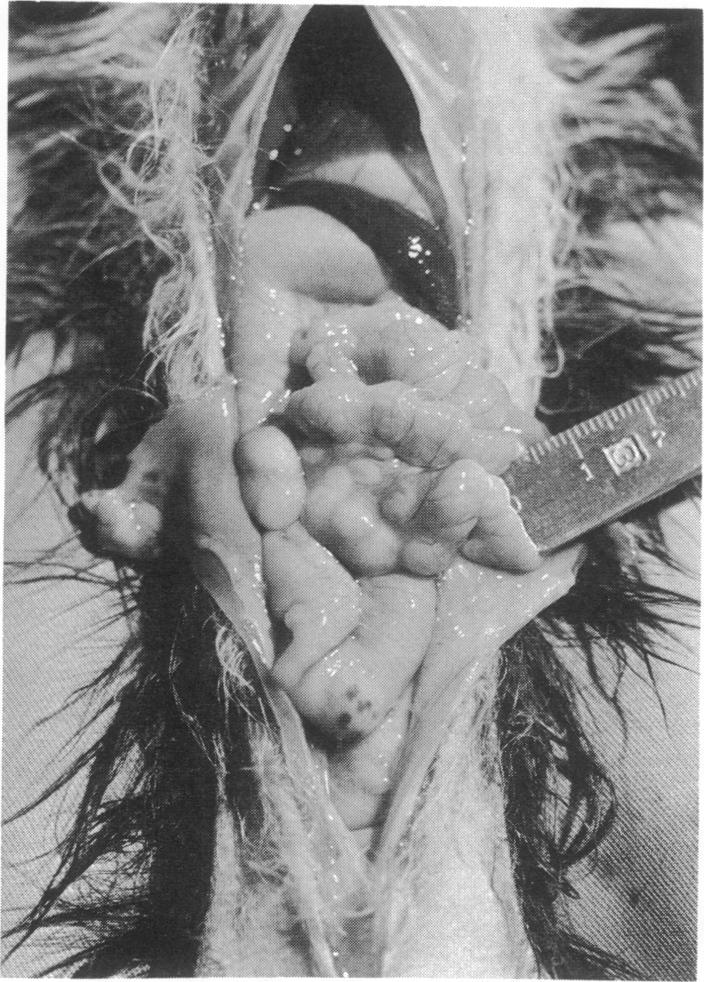
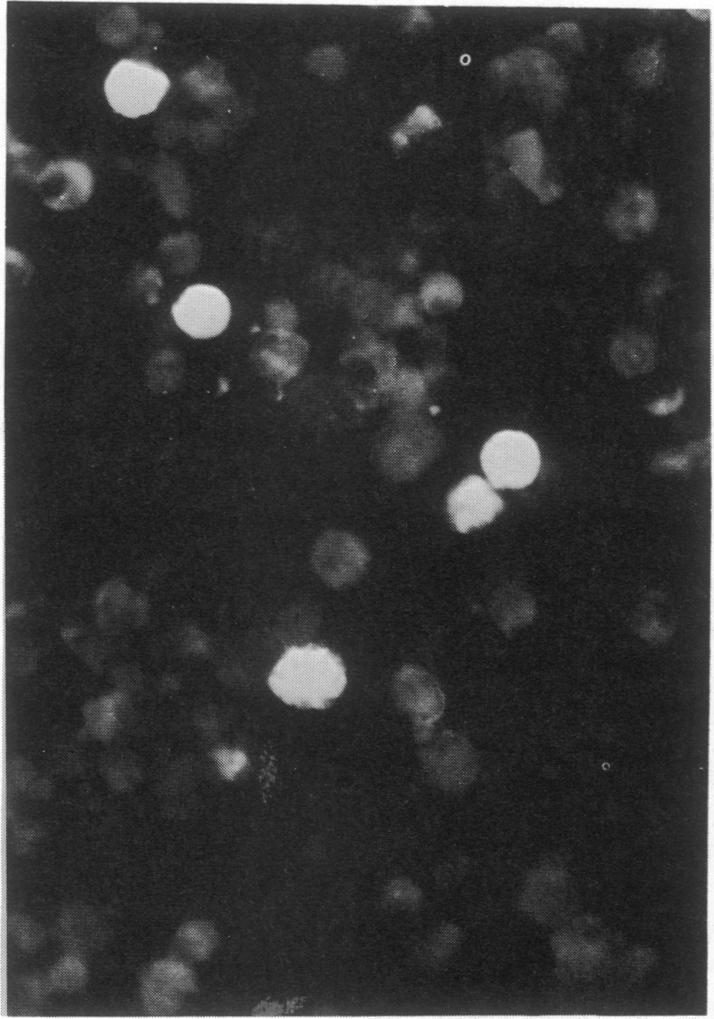
Neoplasia resembling human malignant lymphoma, reticulum cell sarcoma type, occurred in cottontop marmosets inoculated with materials containing Epstein-Barr virus. One of four monkeys that received autologous cells transformed in vitro by Epstein-Barr virus developed lymphoma in mesenteric lymph nodes 7.5 months after inoculation. Three of four marmosets inoculated with cell-free Epstein-Barr virus developed lymphoma. The latent period for detectable tumor formation after addition of virus was 31-46 days. Immunosuppressive drugs given with the virus accelerated the course of disease. Nevertheless, malignant lymphoma occurred in an animal given only cell-free virus. Six of eight marmosets inoculated with the virus demonstrated antibodies to the virus. Four marmosets not exposed to the virus, including two that received immunosuppressive drugs, developed neither tumors nor antibodies to Epstein-Barr virus. Virus antigen detectable by immunofluorescence was found in 5% of cells shed from one tumor maintained in organ culture. These results imply that Epstein-Barr virus is capable of inducing malignant lymphoma in at least one primate species. Additional evidence is required before its oncogenic capacity in this host can be accepted without reservation.
在接种含有爱泼斯坦-巴尔病毒材料的棉顶狨猴中出现了类似于人类恶性淋巴瘤(网状细胞肉瘤型)的肿瘤形成。四只接种经爱泼斯坦-巴尔病毒体外转化的自体细胞的猴子中,有一只在接种后7.5个月在肠系膜淋巴结发生了淋巴瘤。四只接种无细胞爱泼斯坦-巴尔病毒的狨猴中有三只发生了淋巴瘤。添加病毒后可检测到肿瘤形成的潜伏期为31 - 46天。与病毒一起给予的免疫抑制药物加速了疾病进程。然而,仅给予无细胞病毒的一只动物也发生了恶性淋巴瘤。接种该病毒的八只狨猴中有六只表现出针对该病毒的抗体。四只未接触该病毒的狨猴,包括两只接受免疫抑制药物的狨猴,既未发生肿瘤,也未产生针对爱泼斯坦-巴尔病毒的抗体。在器官培养中维持的一个肿瘤脱落的细胞中,5%的细胞可通过免疫荧光检测到病毒抗原。这些结果表明,爱泼斯坦-巴尔病毒能够在至少一种灵长类动物物种中诱导恶性淋巴瘤。在毫无保留地接受其在该宿主中的致癌能力之前,还需要更多证据。