Takemoto K K, Mullarkey M F
J Virol. 1973 Sep;12(3):625-31. doi: 10.1128/JVI.12.3.625-631.1973.
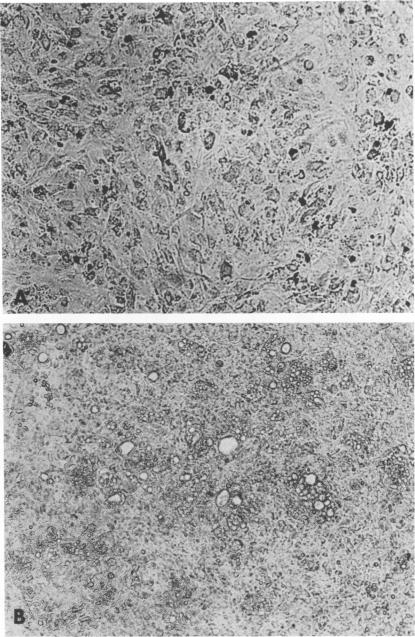
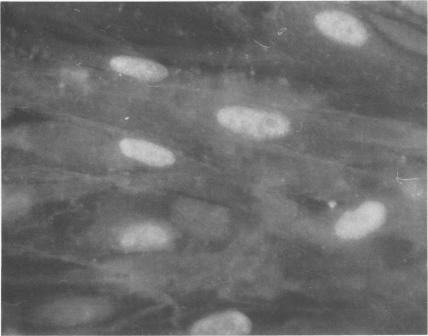
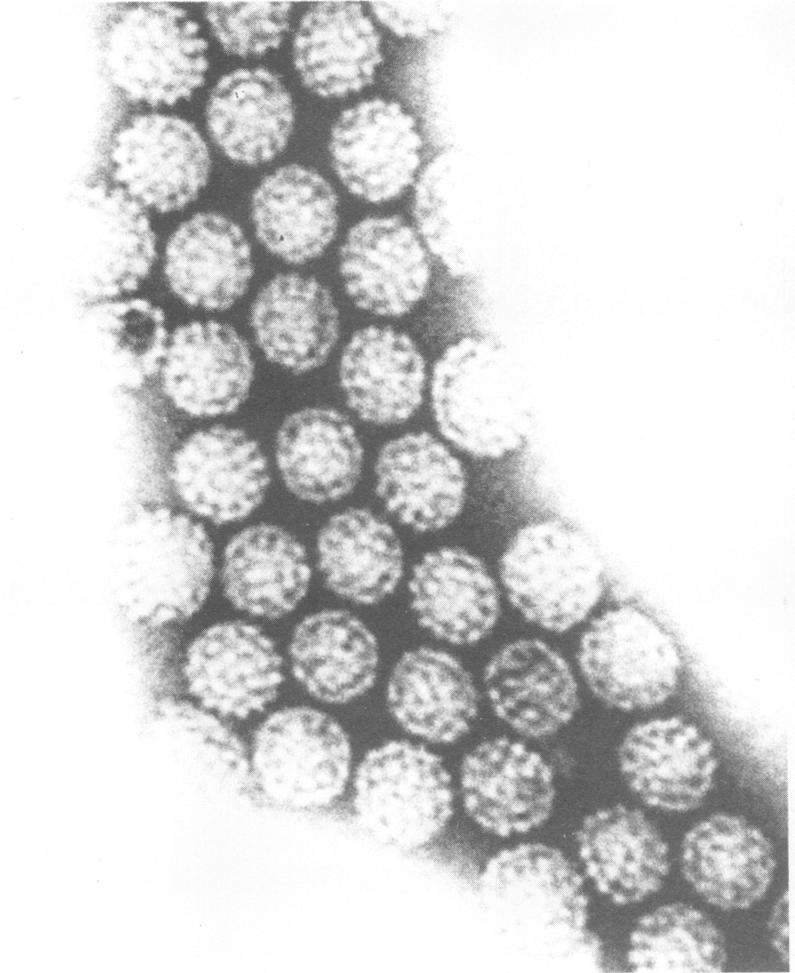
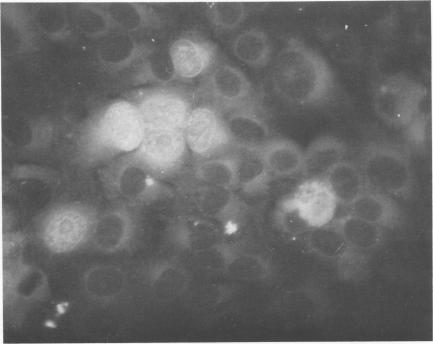
Some of the properties of a new human papovavirus, BK, have been examined. Host range studies of BK virus (BKV) showed human cells to be more sensitive to infection than monkey cells; human fetal brain cells appear to be highly sensitive to BKV, with the production of extensive cytopathology characterized by cytoplasmic vacuolization. The hemagglutinin of BKV is associated with the virion and is resistant to ether or heating at 56 C for 30 min. Fluorescent antibody as well as neutralization tests indicated antigenic similarities between simian virus 40 (SV40) and BKV. Cells undergoing lytic infection with BKV synthesized intranuclear T antigen(s) which reacted with SV40 T antibody demonstrable by immunofluorescence. However, BKV did not appear to induce SV40 transplantation antigens in transplantation-resistance tests. Evidence was obtained that BKV was present in humans prior to the widespread use of polio vaccines, thus ruling out the possibility that BKV is an SV40-related monkey virus, introduced into the human population by accidental contamination of poliovirus vaccines.
一种新的人乳头多瘤病毒——BK病毒的某些特性已被研究。BK病毒(BKV)的宿主范围研究表明,人类细胞比猴细胞对感染更敏感;人类胎儿脑细胞似乎对BKV高度敏感,会产生以细胞质空泡化为特征的广泛细胞病变。BKV的血凝素与病毒粒子相关,并且对乙醚或56℃加热30分钟具有抗性。荧光抗体以及中和试验表明,猿猴病毒40(SV40)和BKV之间存在抗原相似性。受到BKV裂解感染的细胞合成了核内T抗原,该抗原与通过免疫荧光可检测到的SV40 T抗体发生反应。然而,在移植抗性试验中,BKV似乎并未诱导出SV40移植抗原。有证据表明,在脊髓灰质炎疫苗广泛使用之前,BKV就已存在于人类中,因此排除了BKV是一种与SV40相关的猴病毒并通过脊髓灰质炎疫苗的意外污染而引入人类群体的可能性。