Hausman R E, Moscona A A
Proc Natl Acad Sci U S A. 1973 Nov;70(11):3111-4. doi: 10.1073/pnas.70.11.3111.
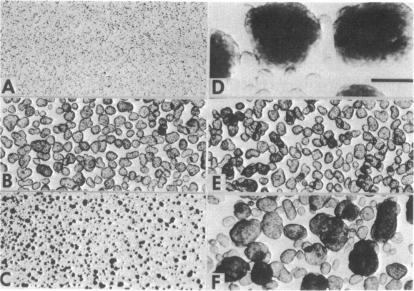
Cell recognition and morphogenetic aggregation of embryonic cells into tissues are mediated by specific macromolecules in the cell surface (cell-aggregating factors). A factor specific for embryonic neural retina cells was demonstrated; its synthesis is required for histotypic reaggregation of retina cell suspensions. We show that proflavine (3,6-diaminoacridine) preferentially and reversibly suppresses production of the cell-aggregating factor and thereby inhibits normal cell reaggregation. If such proflavine-treated retina cells are exogenously supplied with the retina-specific factor, they reaggregate. The selectivity of these effects supports the postulated significance of specific cell-surface components in cell association into tissues; the results indicate that proflavine may be a useful molecular probe for studying formation of specific cell-surface components and their role in various cell interactions.
胚胎细胞的细胞识别以及向组织的形态发生聚集是由细胞表面的特定大分子(细胞聚集因子)介导的。已证明存在一种对胚胎神经视网膜细胞特异的因子;视网膜细胞悬液进行组织型重聚集需要该因子的合成。我们发现,原黄素(3,6 - 二氨基吖啶)优先且可逆地抑制细胞聚集因子的产生,从而抑制正常的细胞重聚集。如果给经原黄素处理的视网膜细胞外源提供视网膜特异性因子,它们就会重聚集。这些效应的选择性支持了特定细胞表面成分在细胞缔合形成组织过程中假定的重要性;结果表明,原黄素可能是研究特定细胞表面成分的形成及其在各种细胞相互作用中作用的有用分子探针。