Woode G N, Pohlenz J F, Gourley N E, Fagerland J A
J Clin Microbiol. 1984 May;19(5):623-30. doi: 10.1128/jcm.19.5.623-630.1984.
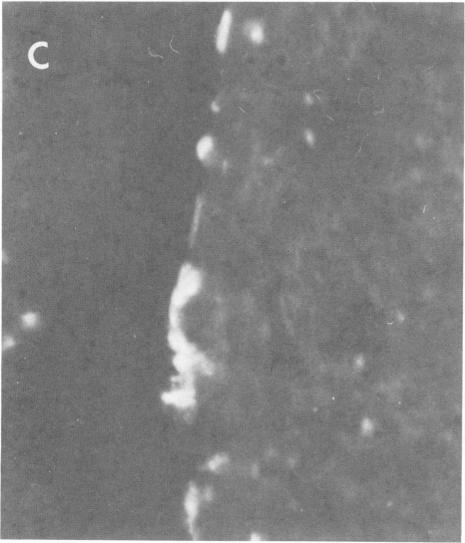
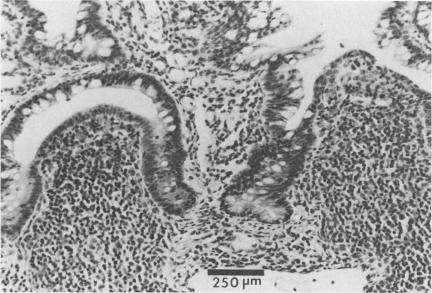
A bovine enteric virus antigenically related to the United Kingdom isolate of bovine astrovirus was isolated from diarrheic feces, also containing rotavirus, of a calf in Florida. The astrovirus infected cell cultures and the epithelial cells of domes in the ileum, and there was cross-immunofluorescence with antiserum to the United Kingdom astrovirus. Calves infected with astrovirus alone did not develop clinical disease, but when astrovirus was mixed with rotavirus or Breda virus 2, the calves developed severe diarrhea and more extensive astrovirus infection of the dome epithelium. The dome epithelial cells showed degeneration associated with astrovirus infection, and a few cells showed degeneration with Breda virus 2 infection. Virions with a 30-nm diameter were seen in astrovirus-infected dome cells, and Breda virus 2 virions were also observed either in separate cells or, on occasion, with both viruses in one cell.
从佛罗里达州一头患有腹泻的小牛的粪便(其中还含有轮状病毒)中分离出一种与英国分离的牛星状病毒抗原相关的牛肠道病毒。该星状病毒可感染细胞培养物以及回肠穹窿的上皮细胞,并且与针对英国星状病毒的抗血清存在交叉免疫荧光反应。单独感染星状病毒的小牛未出现临床疾病,但当星状病毒与轮状病毒或布雷达病毒2混合时,小牛会出现严重腹泻,且穹窿上皮细胞的星状病毒感染范围更广。穹窿上皮细胞出现了与星状病毒感染相关的变性,少数细胞出现了与布雷达病毒2感染相关的变性。在星状病毒感染的穹窿细胞中可见直径为30纳米的病毒粒子,在单独的细胞中也观察到了布雷达病毒2病毒粒子,偶尔在一个细胞中还能同时观察到这两种病毒的病毒粒子。