Cochrane C G, Spragg R, Revak S D
J Clin Invest. 1983 Mar;71(3):754-61. doi: 10.1172/jci110823.
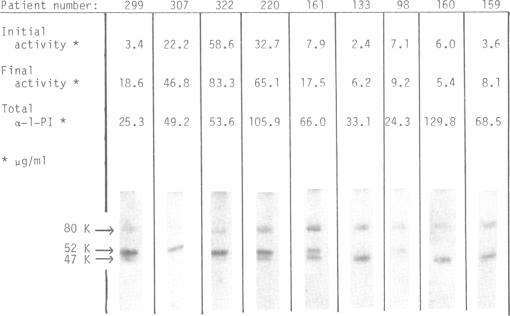
Evidence is presented indicating that oxidants are generated in lungs of patients with the adult respiratory distress syndrome (ARDS). The evidence was derived from observations that alpha-1-PI, recovered in bronchoalveolar lavage (BAL) fluid, had been inactivated by oxidation, presumably oxidation of the methionyl residue in the reaction site of the molecule. This was indicated by findings that activity of the alpha-1-PI could be restored by exposure to the reducing agent, dithiothreitol in the presence of methionyl sulfoxide peptide reductase. The amount of activity restored was proportional to the amount of inactive alpha-1-PI present at 52,000 D. Oxidation of the 52,000-D alpha-1-PI was also revealed by the finding that the inactive molecule was subject to proteolytic cleavage to 47,000 D when exposed to porcine pancreatic elastase, a characteristic of alpha-1-PI with oxidized methionyl residues in the reactive site. Inactivation of the alpha-1-PI in vivo also resulted from complexing to an active enzyme, shown previously to be neutrophil elastase, and from proteolytic cleavage in vivo, that produced a fragment of 47,000 mol wt. In contrast to that in BAL fluids, the alpha-1-PI in plasma of patients with respiratory distress syndrome was found to be greater than 90% active in 14 of 22 cases and 50-90% active in 8 cases. This suggested that for the most part, alpha-1-PI was inactivated after leaving the vessels and entering the lung. The circulating alpha-1-PI in patients with the respiratory distress syndrome was found to be equally susceptible to oxidative inactivation as alpha-1-PI from normal individuals. It seems improbable therefore that patients develop ARDS because of labile alpha-1-PI inhibitor.
有证据表明,成人呼吸窘迫综合征(ARDS)患者的肺部会产生氧化剂。该证据来源于以下观察结果:在支气管肺泡灌洗(BAL)液中回收的α-1-抗胰蛋白酶(alpha-1-PI)已被氧化失活,推测是该分子反应位点中的甲硫氨酰残基发生了氧化。这一点可通过以下发现得以证明:在甲硫氨酰亚砜肽还原酶存在的情况下,将α-1-PI暴露于还原剂二硫苏糖醇(dithiothreitol),其活性可以恢复。恢复的活性量与52,000 D处存在的无活性α-1-PI量成正比。52,000-D的α-1-PI发生氧化还通过以下发现得以揭示:当暴露于猪胰弹性蛋白酶时,无活性分子会被蛋白水解切割成47,000 D,这是反应位点中甲硫氨酰残基被氧化的α-1-PI的一个特征。α-1-PI在体内失活还源于与一种活性酶结合,该活性酶先前已被证明是中性粒细胞弹性蛋白酶,以及体内的蛋白水解切割,产生了一个47,000摩尔重量的片段。与BAL液中的情况相反,在22例呼吸窘迫综合征患者中,有14例血浆中的α-1-PI活性大于90%,8例患者的活性为50 - 90%。这表明在大多数情况下,α-1-PI在离开血管进入肺部后被失活。呼吸窘迫综合征患者循环中的α-1-PI与正常个体的α-1-PI一样,同样容易受到氧化失活的影响。因此,患者因不稳定的α-1-PI抑制剂而患上ARDS似乎不太可能。