Balch C M, Tilden A B, Dougherty P A, Cloud G A
Ann Surg. 1983 Aug;198(2):192-9. doi: 10.1097/00000658-198308000-00014.
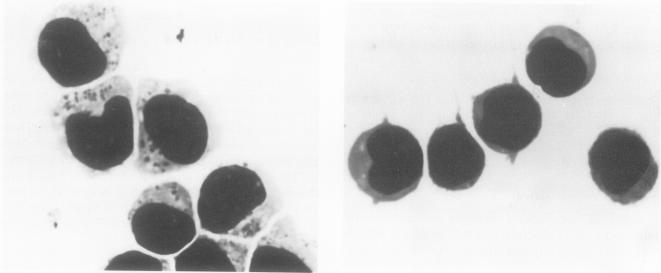
The HNK-1 (Leu-7) monoclonal antibody was used to enumerate and characterize the level of blood granular lymphocytes in 247 cancer patients. The results were compared to 146 control individuals. A fluorescence-activated cell sorter was used to purify blood HNK-1+ cells from cancer patients. The monoclonal antibody identified a homogeneous population of granular lymphocytes with greater than 95% purity. Conversely, virtually 100% of HNK-1- cells from cancer patients were agranular lymphocytes. These results were the same as previously observed in normal individuals, where the HNK-1+ cell fraction contained all the lymphocytes with spontaneous cytotoxicity in natural killer (NK) and killer (K) cell assays. The level of HNK-1+ cells in cancer patients correlated significantly with the patient's age and sex, with older individuals having higher levels and male patients containing a higher proportion than female patients. The levels in the cancer patients were significantly lower than normal controls (p = 0.04). When the results were subdivided by the histologic type of cancer, additional differences were noted. Compared to age and sex-matched controls, significantly depressed levels of HNK-1+ granular lymphocytes were observed in 49 patients with colon cancer (9.7% vs. 15.8%, p = 0.0001), 18 patients with lung carcinoma (11.7% vs. 27.0%, p = 0.0001), 24 patients with breast carcinoma (12.0% vs. 15.5%, p = 0.04) and 64 patients with head and neck carcinoma (15.9% vs. 19.1%, p = 0.05). However, there were no significant differences overall in the average HNK-1+ cell level of 66 patients with melanoma (13.0% vs. 13.5%, p = 0.75) and nine patients with sarcomas (15.8% vs. 14.3%, p = 0.71). Thus, this important subpopulation of granular lymphocytes with NK and K cell function was significantly depressed in most cancer patients. Accounting for the patient's age and sex and the histologic type of cancer was critical to interpreting the results.
采用HNK-1(Leu-7)单克隆抗体对247例癌症患者血液中颗粒淋巴细胞的水平进行计数和特征分析。将结果与146名对照个体进行比较。使用荧光激活细胞分选仪从癌症患者中纯化血液HNK-1+细胞。该单克隆抗体鉴定出一群纯度大于95%的均一颗粒淋巴细胞。相反,癌症患者中几乎100%的HNK-1-细胞为无颗粒淋巴细胞。这些结果与先前在正常个体中观察到的结果相同,在正常个体中,HNK-1+细胞部分包含自然杀伤(NK)和杀伤(K)细胞试验中所有具有自发细胞毒性的淋巴细胞。癌症患者中HNK-1+细胞的水平与患者的年龄和性别显著相关,年龄较大的个体水平较高,男性患者的比例高于女性患者。癌症患者的水平显著低于正常对照组(p = 0.04)。当按癌症的组织学类型细分结果时,发现了其他差异。与年龄和性别匹配的对照组相比,49例结肠癌患者(9.7%对15.8%,p = 0.0001)、18例肺癌患者(11.7%对27.0%,p = 0.0001)、24例乳腺癌患者(12.0%对15.5%,p = 0.04)和64例头颈癌患者(15.9%对19.1%,p = 0.05)的HNK-1+颗粒淋巴细胞水平显著降低。然而,66例黑色素瘤患者(13.0%对13.5%,p = 0.75)和9例肉瘤患者(15.8%对14.3%,p = 0.71)的平均HNK-1+细胞水平总体上没有显著差异。因此,在大多数癌症患者中,这种具有NK和K细胞功能的重要颗粒淋巴细胞亚群显著减少。考虑患者的年龄、性别和癌症的组织学类型对于解释结果至关重要。