Stuart R O, Nigam S K
Department of Medicine, Brigham and Women's Hospital, Boston, MA, USA.
Proc Natl Acad Sci U S A. 1995 Jun 20;92(13):6072-6. doi: 10.1073/pnas.92.13.6072.
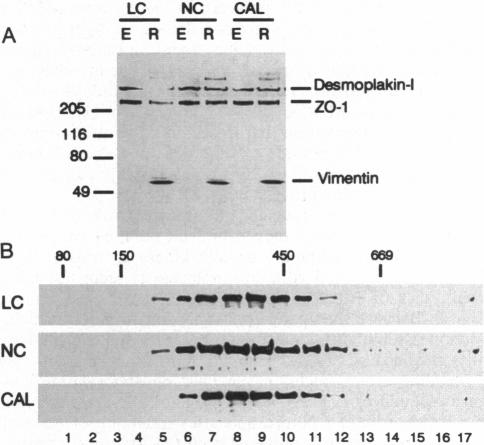
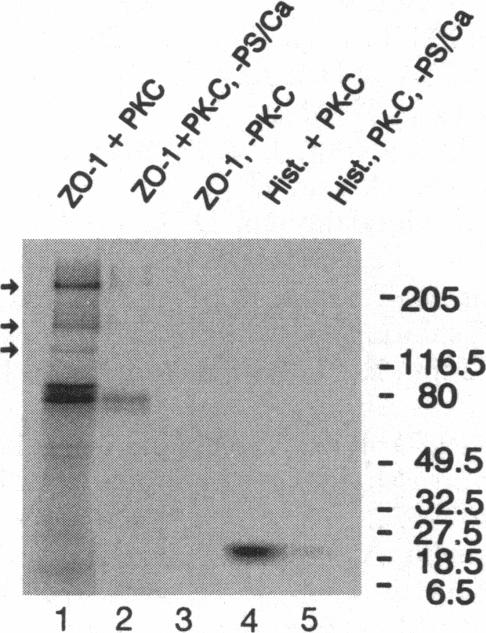
We have previously shown that protein phosphorylation plays an important role in the sorting and assembly of tight junctions. We have now examined in detail the role of protein kinases in intercellular junction biogenesis by using a combination of highly specific and broad-spectrum inhibitors that act by independent mechanisms. Our data indicate that protein kinase C (PKC) is required for the proper assembly of tight junctions. Low concentrations of the specific inhibitor of PKC, calphostin C, markedly inhibited development of transepithelial electrical resistance, a functional measure of tight-junction biogenesis. The effect of PKC inhibitors on the development of tight junctions, as measured by resistance, was paralleled by a delay in the sorting of the tight-junction protein, zona occludens 1 (ZO-1), to the tight junction. The assembly of desmosomes and the adherens junction were not detectably affected, as determined by immunocytochemical analysis. In addition, ZO-1 was phosphorylated subsequent to the initiation of cell-cell contact, and treatment with calphostin C prevented approximately 85% of the phosphorylation increase. Furthermore, in vitro measurements indicate that ZO-1 may be a direct target of PKC. Moreover, membrane-associated PKC activity more than doubled during junction assembly, and immunocytochemical analysis revealed a pool of PKC zeta that appeared to colocalize with ZO-1 at the tight junction. A preformed complex containing ZO-1, ZO-2, p130, as well as 330- and 65-kDa phosphoproteins was detected by coimmunoprecipitation in both the presence and absence of cell-cell contact. Identity of the 330- and 65-kDa phosphoproteins remains to be determined, but the 65-kDa protein may be occludin. The mass of this complex and the incorporation of ZO-1 into the Triton X-100-insoluble cytoskeleton were not PKC dependent.
我们之前已经表明,蛋白质磷酸化在紧密连接的分选和组装中起着重要作用。我们现在通过使用一组作用机制独立的高特异性和广谱抑制剂,详细研究了蛋白激酶在细胞间连接生物发生中的作用。我们的数据表明,蛋白激酶C(PKC)是紧密连接正确组装所必需的。低浓度的PKC特异性抑制剂钙泊三醇C显著抑制跨上皮电阻的发展,这是紧密连接生物发生的一种功能指标。PKC抑制剂对紧密连接发展的影响(通过电阻测量)与紧密连接蛋白闭合蛋白1(ZO-1)分选至紧密连接的延迟相平行。通过免疫细胞化学分析确定,桥粒和黏附连接的组装未受到可检测到的影响。此外,在细胞间接触开始后ZO-1发生了磷酸化,用钙泊三醇C处理可阻止约85%的磷酸化增加。此外,体外测量表明ZO-1可能是PKC的直接靶点。而且,在连接组装过程中,膜相关的PKC活性增加了一倍多,免疫细胞化学分析显示有一群PKC ζ似乎在紧密连接处与ZO-1共定位。在存在和不存在细胞间接触的情况下,通过共免疫沉淀均检测到了一个预先形成的复合物(包含ZO-1、ZO-2及p130以及330 kDa和65 kDa的磷蛋白)。330 kDa和65 kDa磷蛋白的身份仍有待确定,但65 kDa的蛋白可能是闭合蛋白。该复合物的质量以及ZO-1掺入Triton X-100不溶性细胞骨架的过程并不依赖于PKC。