Corpet D E, Yin Y, Zhang X M, Rémésy C, Stamp D, Medline A, Thompson L, Bruce W R, Archer M C
Sécurité des Ailments, Ecole Nationale Vétérinaire, Toulouse, France.
Nutr Cancer. 1995;23(3):271-81. doi: 10.1080/01635589509514381.
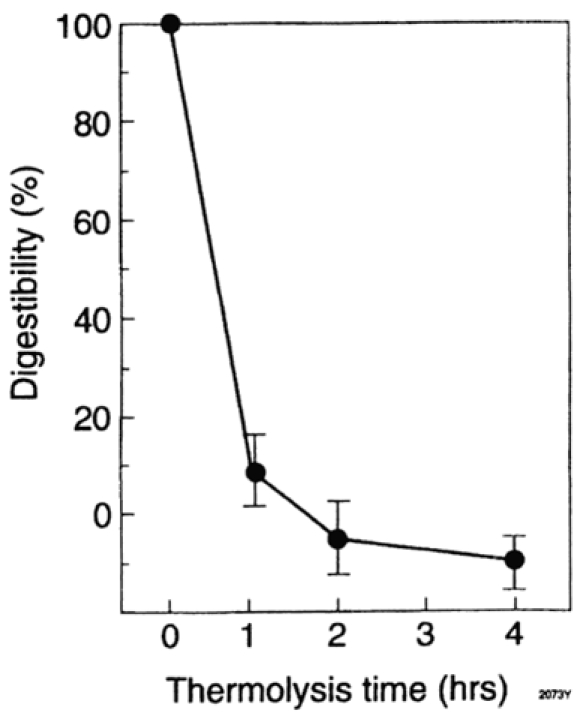
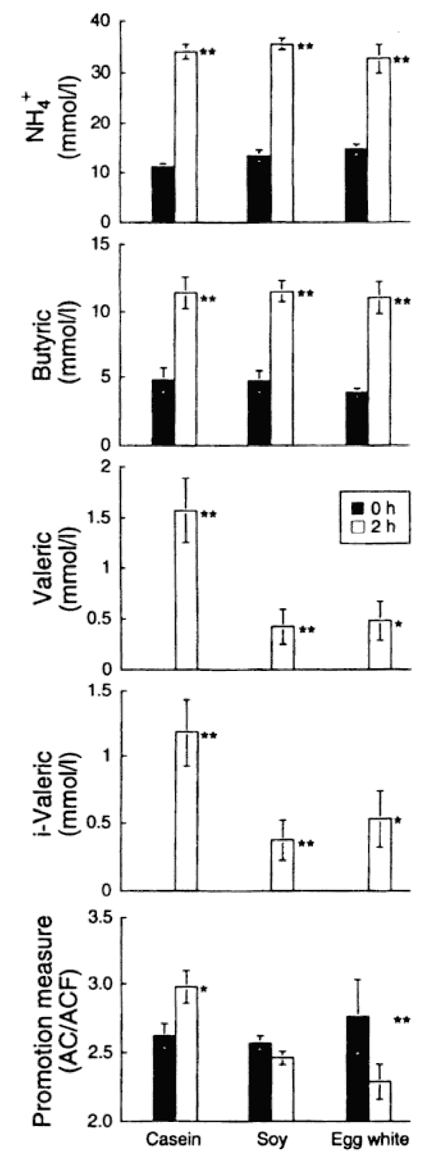
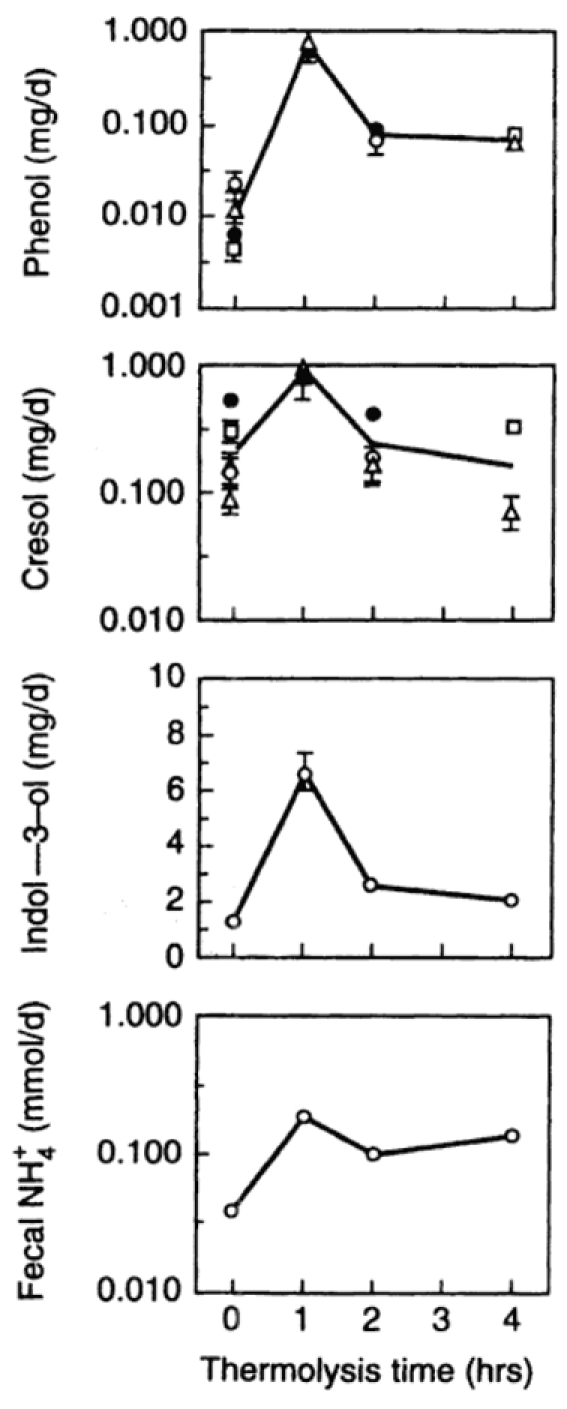
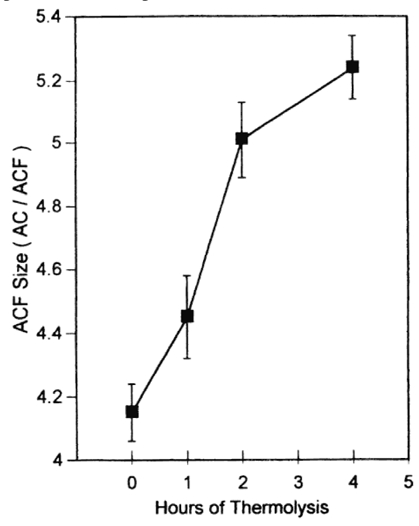
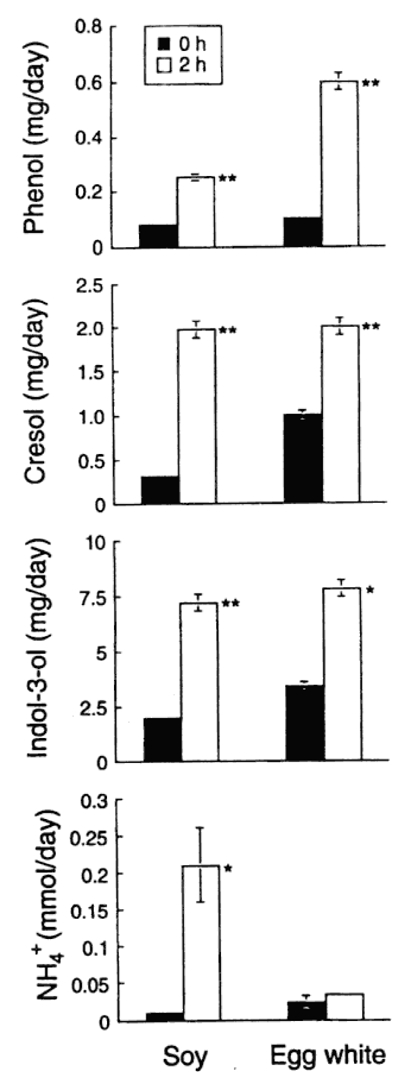
Thermolyzed casein is known to promote the growth of aberrant crypt foci (ACF) and colon cancer when it is fed to rats that have been initiated with azoxymethane. We speculated that the promotion was a consequence of increased colonic protein fermentation (i.e., that the thermolysis of the casein decreases its digestibility, increases the amount of protein reaching the colon, and increases colonic protein fermentation and that the potentially toxic products of this fermentation promote colon carcinogenesis). We found that the thermolysis of casein reduces its digestibility and increases colonic protein fermentation, as assessed by fecal ammonium and urinary phenol, cresol, and indol-3-ol. Thermolysis of two other proteins, soy and egg white protein, also increases colonic protein fermentation with increased fecal ammonia and urinary phenols, and thermolysis of all three proteins increases the levels of ammonia and butyric, valeric, and i-valeric acids in the cecal contents. We found, however, that the increased protein fermentation observed with thermolysis is not associated with promotion of colon carcinogenesis. With casein, the kinetics of protein fermentation with increasing thermolysis time are clearly different from the kinetics of promotion of ACF growth. The formation of the fermentation products was highest when the protein was thermolyzed for one hour, whereas promotion was highest for protein that had been thermolyzed for two or more hours. With soy and egg white, thermolysis increased colonic protein fermentation but did not promote colon carcinogenesis. Thus, although thermolysis of dietary casein increases colonic protein fermentation, products of this fermentation do not appear to be responsible for the promotion of colon carcinogenesis. Indeed, the results suggest that protein fermentation products do not play an important role in colon cancer promotion.
已知将热解酪蛋白喂给已用氧化偶氮甲烷启动的大鼠时,它会促进异常隐窝灶(ACF)的生长和结肠癌的发生。我们推测这种促进作用是结肠蛋白质发酵增加的结果(即酪蛋白的热解降低了其消化率,增加了到达结肠的蛋白质量,增加了结肠蛋白质发酵,并且这种发酵的潜在有毒产物促进了结肠癌的发生)。我们发现,通过粪便铵以及尿液中的苯酚、甲酚和吲哚 - 3 - 醇评估,酪蛋白的热解降低了其消化率并增加了结肠蛋白质发酵。另外两种蛋白质,大豆蛋白和蛋清蛋白的热解也会增加结肠蛋白质发酵,同时粪便氨和尿液酚类增加,并且这三种蛋白质的热解都会增加盲肠内容物中氨以及丁酸、戊酸和异戊酸的水平。然而,我们发现热解观察到的蛋白质发酵增加与结肠癌发生的促进作用无关。对于酪蛋白,随着热解时间增加的蛋白质发酵动力学与ACF生长促进的动力学明显不同。当蛋白质热解一小时时,发酵产物的形成最高,而热解两小时或更长时间的蛋白质促进作用最高。对于大豆蛋白和蛋清蛋白,热解增加了结肠蛋白质发酵,但没有促进结肠癌的发生。因此,尽管膳食酪蛋白的热解增加了结肠蛋白质发酵,但这种发酵产物似乎不是结肠癌发生促进作用的原因。实际上,结果表明蛋白质发酵产物在结肠癌促进中不发挥重要作用。