Fátyol K, Cserpán I, Praznovszky T, Keresö J, Hadlaczky G
Institute of Genetics, Hungarian Academy of Sciences, Szeged.
Nucleic Acids Res. 1994 Sep 11;22(18):3728-36. doi: 10.1093/nar/22.18.3728.
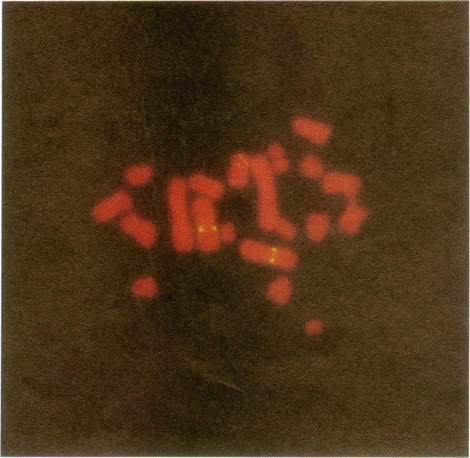
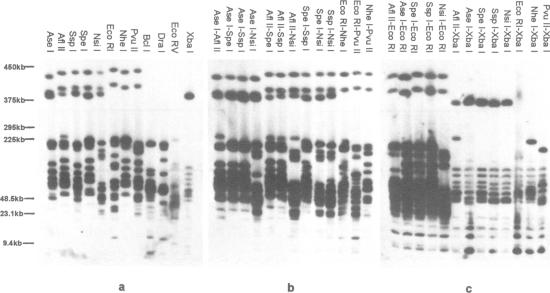
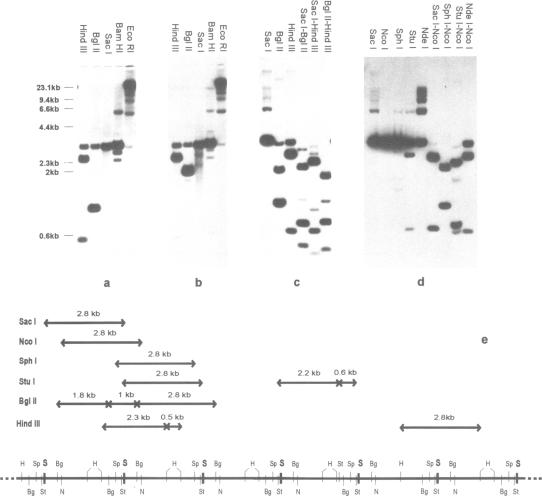
We isolated and characterized the first chromosome-specific satellite DNA (HC2sat) of Chinese hamster. This novel satellite was localized to the pericentric region of hamster chromosome 2. The 2.8 kb long repeat unit of HC2sat was identified and two such units were sequenced. Extended short range periodicity could not be revealed in repeat units. These elements are amongst the largest satellite repeat units reported from mammals to date. HC2sat is a major constituent of the pericentric region of CHO chromosome 2 representing a 7-14 Mb long DNA segment. Studies of long range organization of HC2sat indicated that the formation of the satellite array might occur in different phases and involved different amplification mechanisms.
我们分离并鉴定了中国仓鼠的首个染色体特异性卫星DNA(HC2sat)。这种新型卫星定位于仓鼠2号染色体的着丝粒周围区域。确定了HC2sat 2.8 kb长的重复单元,并对两个这样的单元进行了测序。在重复单元中未发现扩展的短程周期性。这些元件是迄今为止哺乳动物报道的最大的卫星重复单元之一。HC2sat是中国仓鼠卵巢细胞(CHO)2号染色体着丝粒周围区域的主要成分,代表一个7 - 14 Mb长的DNA片段。对HC2sat长程组织的研究表明,卫星阵列的形成可能发生在不同阶段,并涉及不同的扩增机制。