Bal A E, Gravekamp C, Hartskeerl R A, De Meza-Brewster J, Korver H, Terpstra W J
Department of Biomedical Research, Royal Tropical Institute, Amsterdam, The Netherlands.
J Clin Microbiol. 1994 Aug;32(8):1894-8. doi: 10.1128/jcm.32.8.1894-1898.1994.
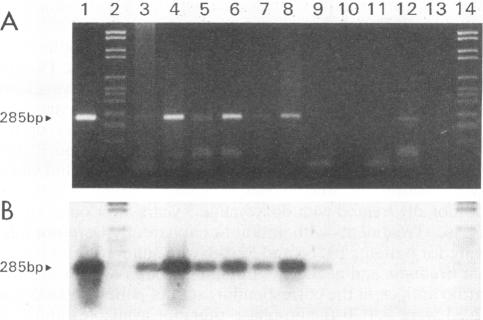
We tested urine samples from patients at different stages of current leptospirosis and thereafter to determine whether use of the PCR for detection of leptospires in urine can be a valuable alternative to culturing. The procedure of DNA extraction and subsequent PCR applied to 15 freshly voided urine samples proved to be twice as sensitive as culturing. Overall, we were able to detect leptospires in approximately 90% (26 of 29) of the urine samples. Urine and serum samples were obtained from seven patients, before the eighth day of illness. Although it is generally assumed that leptospiruria starts approximately in the second week of illness, we were able to detect leptospires in all of these early urine samples. In contrast, only two of seven corresponding serum samples gave positive PCR results, which suggests that PCR analysis of urine can be more successful for early diagnosis of leptospirosis than PCR analysis of serum. Urine samples from six patients who had been treated with antibiotics at the time of illness were positive by PCR, implying that the patients were still shedding leptospires in their urine despite treatment. Some of these samples were even taken years after the infection, indicating that shedding of leptospires in urine may last much longer than is generally assumed. We conclude that detection of leptospires in urine with PCR is a promising approach for early diagnosis of leptospirosis and may also be useful in studying long-term shedding.
我们检测了当前钩端螺旋体病不同阶段患者的尿液样本,以确定使用聚合酶链反应(PCR)检测尿液中的钩端螺旋体是否可成为培养法的有效替代方法。对15份新鲜晨尿样本进行DNA提取及后续PCR的操作,结果显示其灵敏度是培养法的两倍。总体而言,我们能够在约90%(29份样本中的26份)的尿液样本中检测到钩端螺旋体。在发病第八天之前,从7名患者处获取了尿液和血清样本。虽然一般认为钩端螺旋体尿大约在发病第二周开始出现,但我们在所有这些早期尿液样本中都检测到了钩端螺旋体。相比之下,7份相应血清样本中只有两份PCR结果呈阳性,这表明对尿液进行PCR分析在钩端螺旋体病的早期诊断中比血清PCR分析更成功。6名发病时接受过抗生素治疗的患者的尿液样本经PCR检测呈阳性,这意味着尽管接受了治疗,患者尿液中仍有钩端螺旋体排出。其中一些样本甚至是在感染数年之后采集的,这表明尿液中钩端螺旋体的排出可能比一般认为的持续时间长得多。我们得出结论,用PCR检测尿液中的钩端螺旋体是钩端螺旋体病早期诊断的一种有前景的方法,在研究长期排菌方面也可能有用。