Thompson-Stewart D, Karpen G H, Spradling A C
Howard Hughes Medical Institute Research Laboratories, Carnegic Institution of Washington, Baltimore, MD 21210.
Proc Natl Acad Sci U S A. 1994 Sep 13;91(19):9042-6. doi: 10.1073/pnas.91.19.9042.
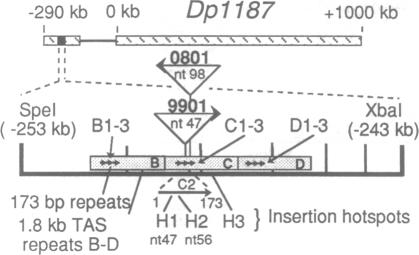
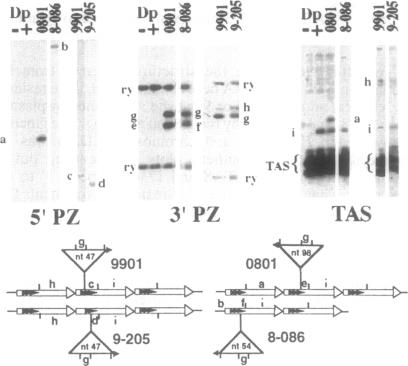
Recombination and conversion have been proposed to drive the concerted evolution of tandemly repeated DNA sequences. However, specific correction events within the repeated genes of multicellular organisms have not been observed directly, so their nature has remained speculative. We investigated whether the excision of transposable P elements from tandemly repeated sequences would induce unequal gene conversion. Genetically marked elements located in a subtelomeric repeat were mobilized, and the structure of the region was analyzed in progeny. We observed that the number of repeats was frequently altered. Decreases were more common than increases, and this bias probably resulted from intrinsic mechanisms governing P element-induced double-strand break repair. Our results suggest that transposable elements play an important role in the evolution of repetitious DNA.
重组和转换被认为推动了串联重复DNA序列的协同进化。然而,多细胞生物重复基因内的特定校正事件尚未被直接观察到,因此其本质仍具有推测性。我们研究了从串联重复序列中切除转座P元件是否会诱导不等基因转换。位于亚端粒重复序列中的基因标记元件被激活,并在后代中分析该区域的结构。我们观察到重复序列的数量经常发生改变。减少比增加更常见,这种偏差可能是由控制P元件诱导的双链断裂修复的内在机制导致的。我们的结果表明,转座元件在重复DNA的进化中起重要作用。