McCracken A A, Kruse K B
Department of Biology, University of Nevada, Reno 89557.
Mol Biol Cell. 1993 Jul;4(7):729-36. doi: 10.1091/mbc.4.7.729.
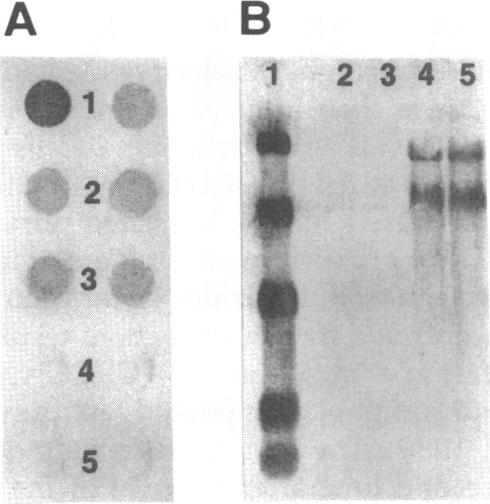
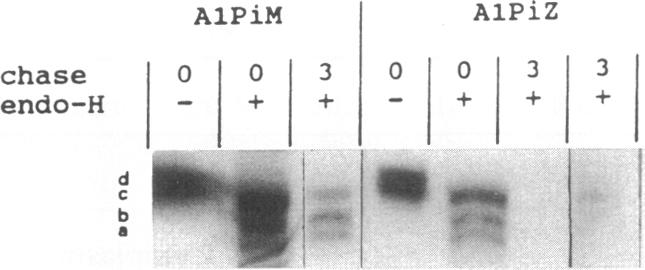
Protein degradation in the exocytic pathway was studied in Saccharomyces cerevisiae using human alpha-1-protease inhibitor (A1Pi) as a reporter molecule. Yeast cells transformed with A1Pi cDNA genes synthesized A1Pi that entered the secretion pathway and accumulated in the endoplasmic reticulum (ER). Cells expressing A1PiM (wild-type) accumulated about 10-fold more A1Pi than cells expressing A1PiZ (secretion defective variant). Analyses of A1Pi mRNA indicated that the low level of A1PiZ relative to A1PiM was not the result of differential gene transcription. Pulse-chase A1Pi radiolabeling showed that A1PiM and A1PiZ were degraded at different rates and suggested a rapid specific turnover of newly synthesized A1PiZ in the ER. Accumulated A1Pi was degraded at comparable rates in both wild-type cells and cells deficient in vacuolar protease activity, indicating that degradation of A1Pi did not occur in the vacuole. Studies to investigate the intracellular location of the degradative process, using temperature-sensitive secretion defective yeast strains, suggested the possibility that degradation occurs not only in the ER but at a second site accessed by vesicle transport. Together, these results demonstrate that a selective protein degradation process operates early in the yeast cell exocytic pathway.
利用人α-1-蛋白酶抑制剂(A1Pi)作为报告分子,在酿酒酵母中研究了胞吐途径中的蛋白质降解。用A1Pi cDNA基因转化的酵母细胞合成了进入分泌途径并在内质网(ER)中积累的A1Pi。表达A1PiM(野生型)的细胞积累的A1Pi比表达A1PiZ(分泌缺陷变体)的细胞多约10倍。对A1Pi mRNA的分析表明,相对于A1PiM,A1PiZ的低水平并非差异基因转录的结果。脉冲追踪A1Pi放射性标记显示,A1PiM和A1PiZ以不同速率降解,这表明内质网中新合成的A1PiZ有快速的特异性周转。积累的A1Pi在野生型细胞和液泡蛋白酶活性缺陷的细胞中以相当的速率降解,这表明A1Pi的降解不在液泡中发生。利用温度敏感的分泌缺陷酵母菌株研究降解过程的细胞内位置,结果表明不仅在内质网中发生降解,而且在囊泡运输可到达的第二个位点也可能发生降解。总之,这些结果表明,在酵母细胞胞吐途径早期存在一种选择性蛋白质降解过程。