Nicholson F, Ajetunmobi J F, Li M, Shackleton E A, Starkey W G, Illavia S J, Muir P, Banatvala J E
Department of Virology, United Medical School, Guy's and St Thomas', (St Thomas' campus) London.
Br Heart J. 1995 Nov;74(5):522-7. doi: 10.1136/hrt.74.5.522.
To determine whether enterovirus RNA can be demonstrated in archival necropsy material in acute myocarditis.
Analysis of paraffin embedded myocardial tissue from cases of acute myocarditis.
University virology department.
Extraction of RNA from tissue followed by polymerase chain reaction (PCR) and DNA sequence analysis.
Six patients with histologically proven myocarditis and eight controls.
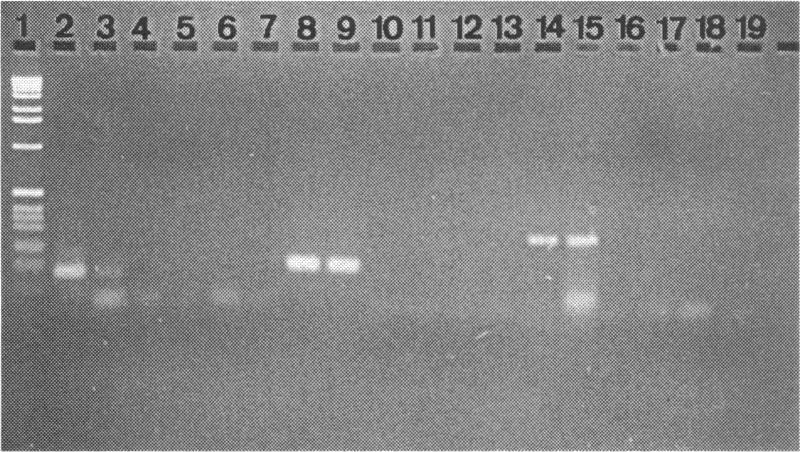
Enterovirus RNA was identified in 5 of 6 patients with myocarditis and in none of the controls. The nucleotide sequences of the PCR products showed greatest similarity to group B coxsackieviruses, particularly coxsackievirus B3.
This study indicates that archival tissue samples, even histologically stained tissue sections, can be used to study the role of enteroviruses in myocardial disease using molecular detection techniques. If a predominant role for coxsackievirus B3 in myocarditis is confirmed by further study, this may have implications for the development of a specific vaccine.
确定在急性心肌炎尸检存档材料中是否能检测到肠道病毒RNA。
对急性心肌炎病例的石蜡包埋心肌组织进行分析。
大学病毒学系。
从组织中提取RNA,随后进行聚合酶链反应(PCR)和DNA序列分析。
6例经组织学证实为心肌炎的患者及8例对照。
6例心肌炎患者中有5例检测到肠道病毒RNA,而对照中无一例检测到。PCR产物的核苷酸序列与B组柯萨奇病毒最为相似,尤其是柯萨奇病毒B3。
本研究表明,存档组织样本,甚至是经组织学染色的组织切片,可通过分子检测技术用于研究肠道病毒在心肌疾病中的作用。如果进一步研究证实柯萨奇病毒B3在心肌炎中起主要作用,这可能对特定疫苗的研发具有重要意义。