Braga V M, Machesky L M, Hall A, Hotchin N A
Medical Research Council Laboratory for Molecular Cell Biology, University College London, WC1E 6BT, London, United Kingdom.
J Cell Biol. 1997 Jun 16;137(6):1421-31. doi: 10.1083/jcb.137.6.1421.
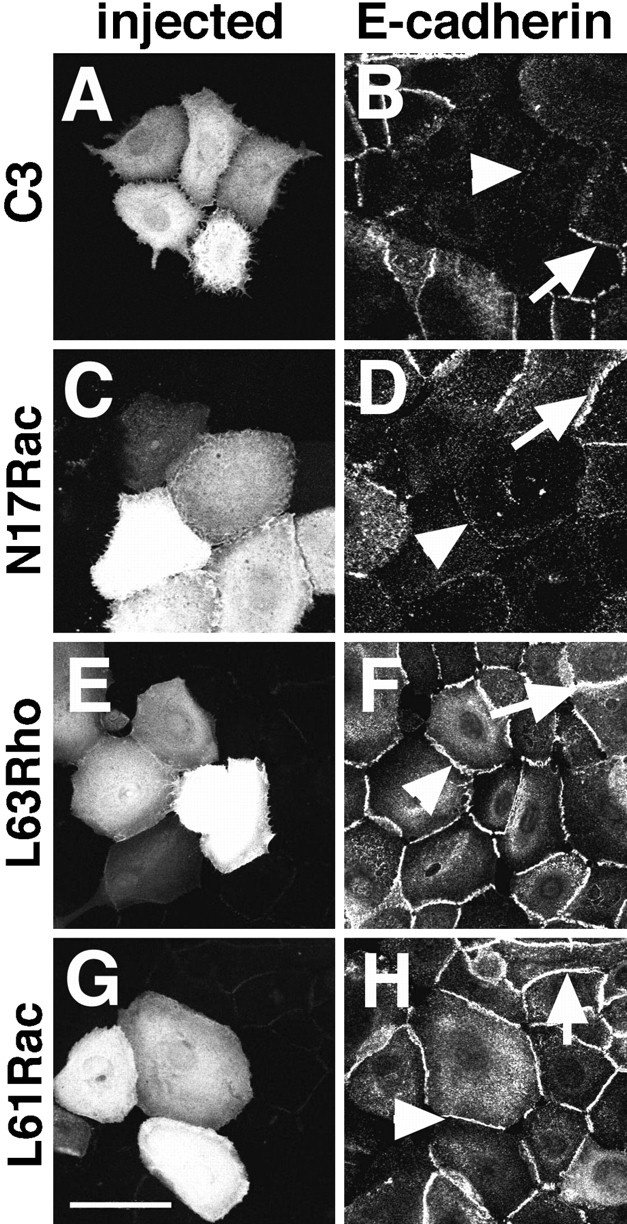
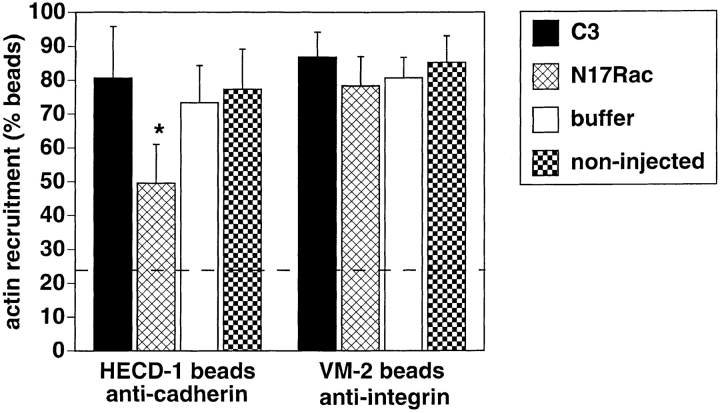
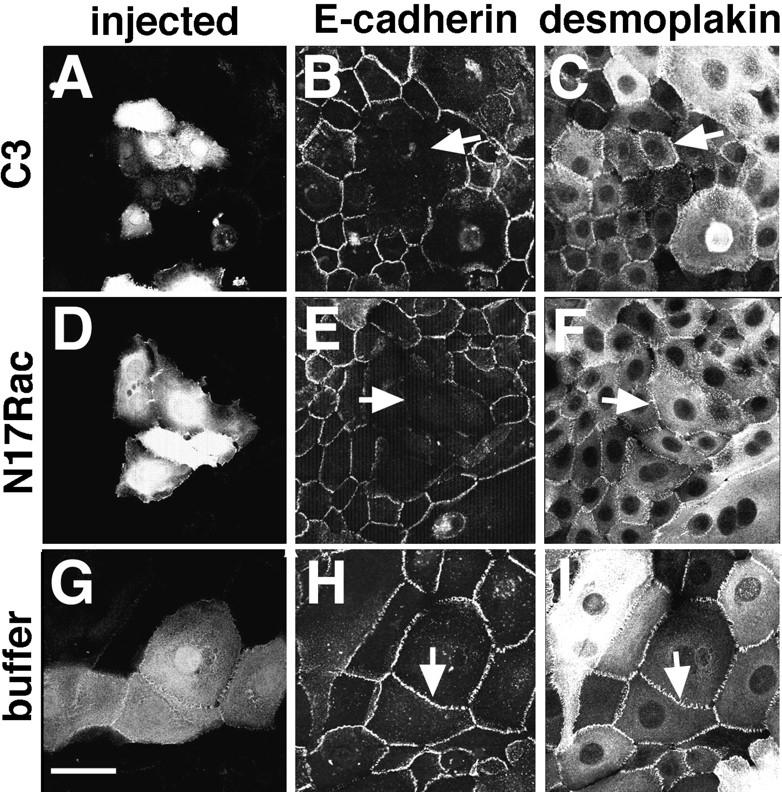
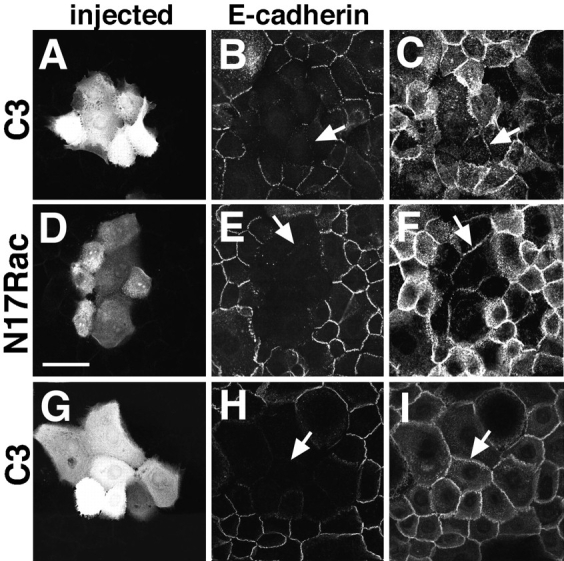
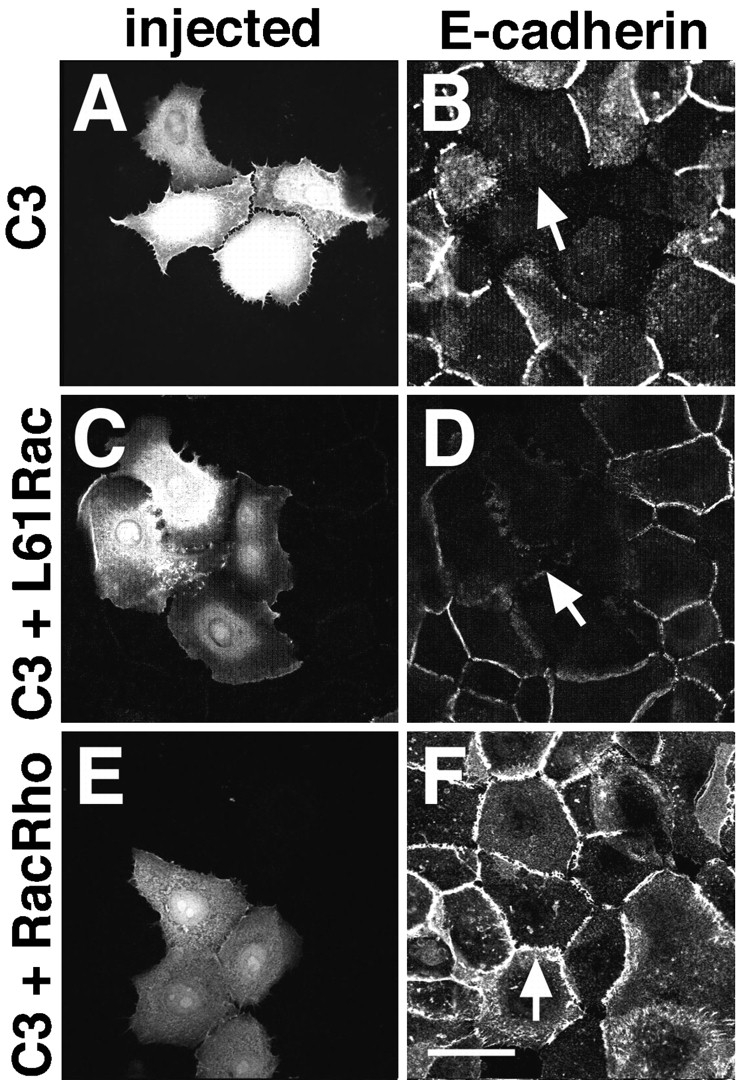
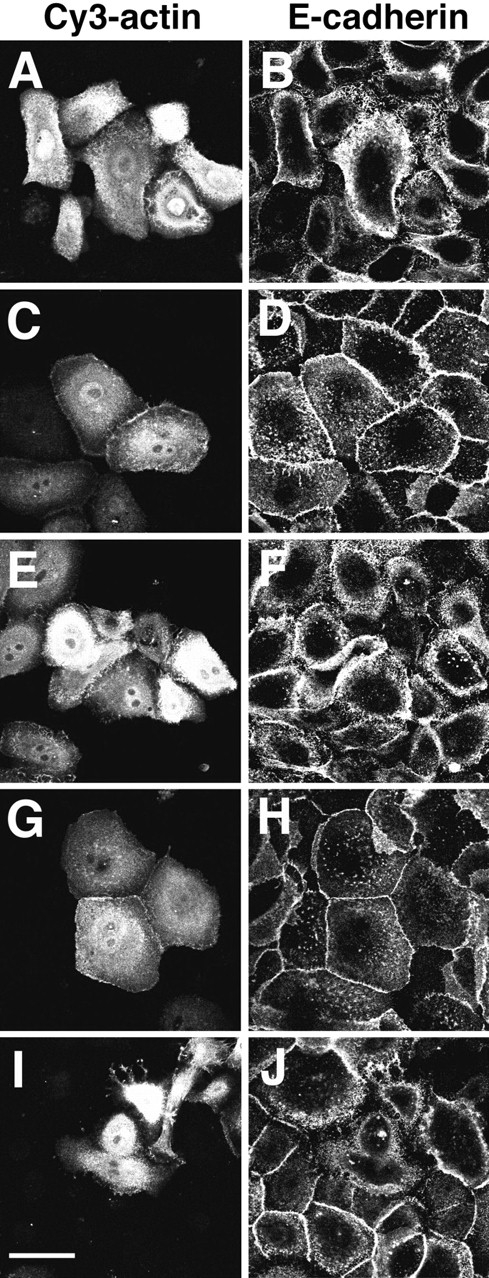
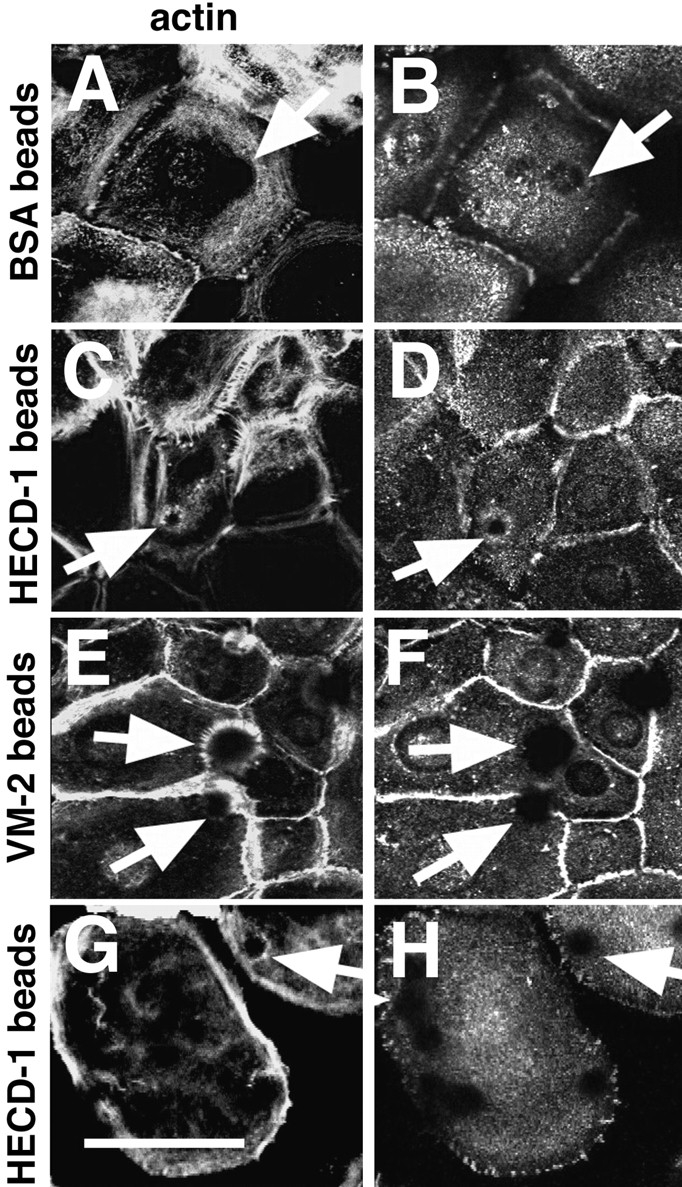
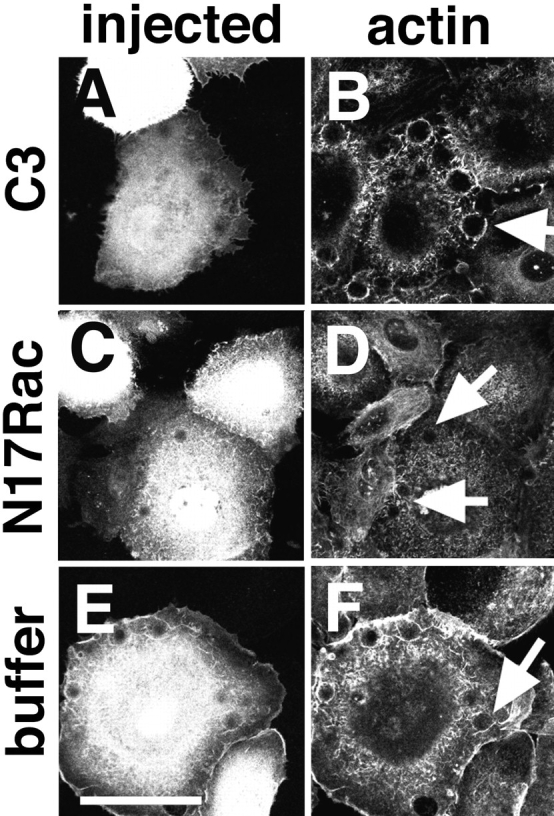
Cadherins are calcium-dependent cell-cell adhesion molecules that require the interaction of the cytoplasmic tail with the actin cytoskeleton for adhesive activity. Because of the functional relationship between cadherin receptors and actin filament organization, we investigated whether members of the Rho family of small GTPases are necessary for cadherin adhesion. In fibroblasts, the Rho family members Rho and Rac regulate actin polymerization to produce stress fibers and lamellipodia, respectively. In epithelial cells, we demonstrate that Rho and Rac are required for the establishment of cadherin-mediated cell-cell adhesion and the actin reorganization necessary to stabilize the receptors at sites of intercellular junctions. Blocking endogenous Rho or Rac selectively removed cadherin complexes from junctions induced for up to 3 h, while desmosomes were not perturbed. In addition, withdrawal of cadherins from intercellular junctions temporally precedes the removal of CD44 and integrins, other microfilament-associated receptors. Our data showed that the concerted action of Rho and Rac modulate the establishment of cadherin adhesion: a constitutively active form of Rac was not sufficient to stabilize cadherindependent cell-cell contacts when endogenous Rho was inhibited. Upon induction of calcium-dependent intercellular adhesion, there was a rapid accumulation of actin at sites of cell-cell contacts, which was prevented by blocking cadherin function, Rho or Rac activity. However, if cadherin complexes are clustered by specific antibodies attached to beads, actin recruitment to the receptors was perturbed by inhibiting Rac but not Rho. Our results provide new insights into the role of the small GTPases in the cadherin-dependent cell- cell contact formation and the remodelling of actin filaments in epithelial cells.
钙黏着蛋白是依赖钙的细胞间黏附分子,其黏附活性需要细胞质尾部与肌动蛋白细胞骨架相互作用。由于钙黏着蛋白受体与肌动蛋白丝组织之间存在功能关系,我们研究了小GTP酶Rho家族成员对于钙黏着蛋白黏附是否必要。在成纤维细胞中,Rho家族成员Rho和Rac分别调节肌动蛋白聚合以产生应力纤维和片状伪足。在上皮细胞中,我们证明Rho和Rac对于建立钙黏着蛋白介导的细胞间黏附以及使受体稳定在细胞间连接部位所需的肌动蛋白重组是必需的。阻断内源性Rho或Rac可在长达3小时内选择性地从诱导形成的连接中去除钙黏着蛋白复合物,而桥粒不受影响。此外,钙黏着蛋白从细胞间连接中撤出在时间上先于CD44和整合素(其他与微丝相关的受体)的去除。我们的数据表明,Rho和Rac的协同作用调节钙黏着蛋白黏附的建立:当内源性Rho被抑制时,组成型活性形式的Rac不足以稳定依赖钙黏着蛋白的细胞间接触。在诱导钙依赖性细胞间黏附时,细胞间接触部位迅速积累肌动蛋白,这可通过阻断钙黏着蛋白功能、Rho或Rac活性来阻止。然而,如果钙黏着蛋白复合物被附着在珠子上的特异性抗体聚集,通过抑制Rac而非Rho可干扰肌动蛋白向受体的募集。我们的结果为小GTP酶在上皮细胞中依赖钙黏着蛋白的细胞间接触形成以及肌动蛋白丝重塑中的作用提供了新见解。