Zei P C, Aldrich R W
The Howard Hughes Medical Institute, Stanford University School of Medicine, Stanford, California 94305, USA.
J Gen Physiol. 1998 Dec;112(6):679-713. doi: 10.1085/jgp.112.6.679.
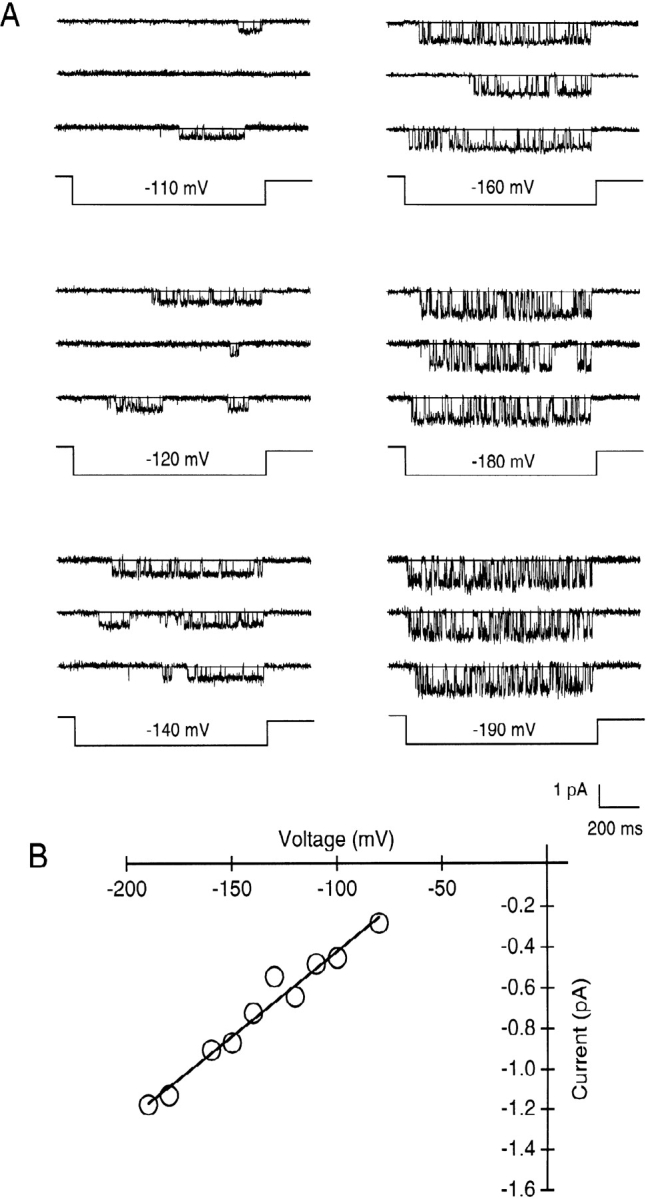
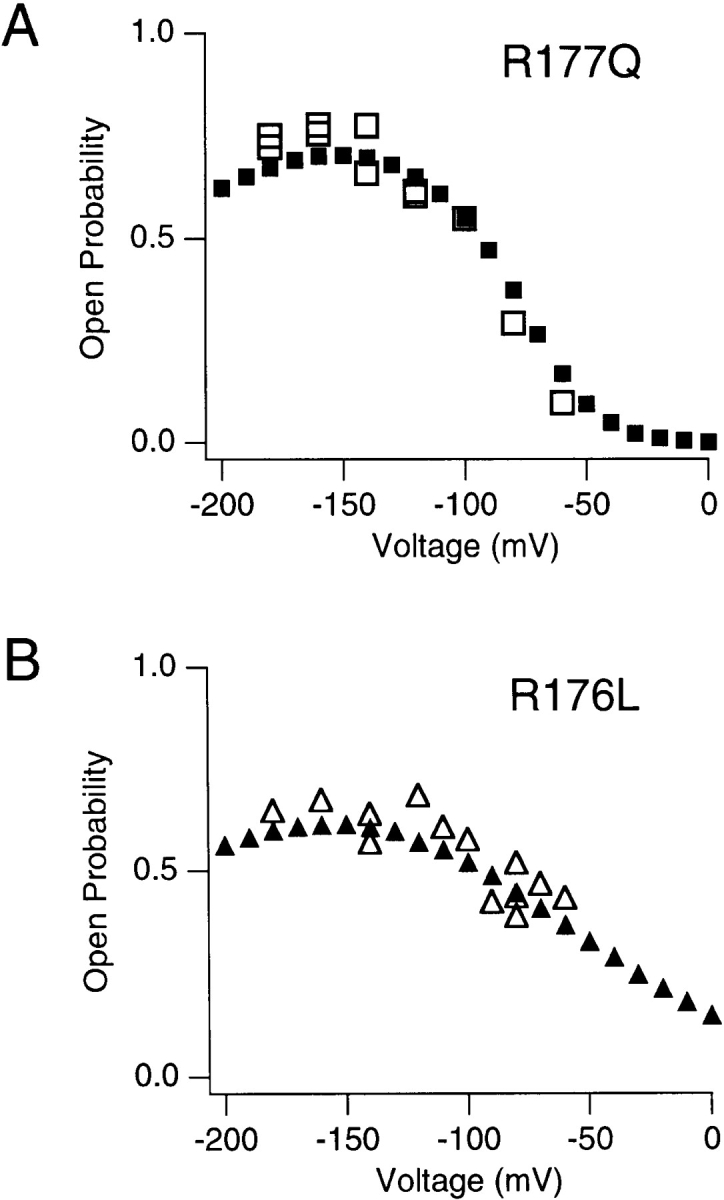
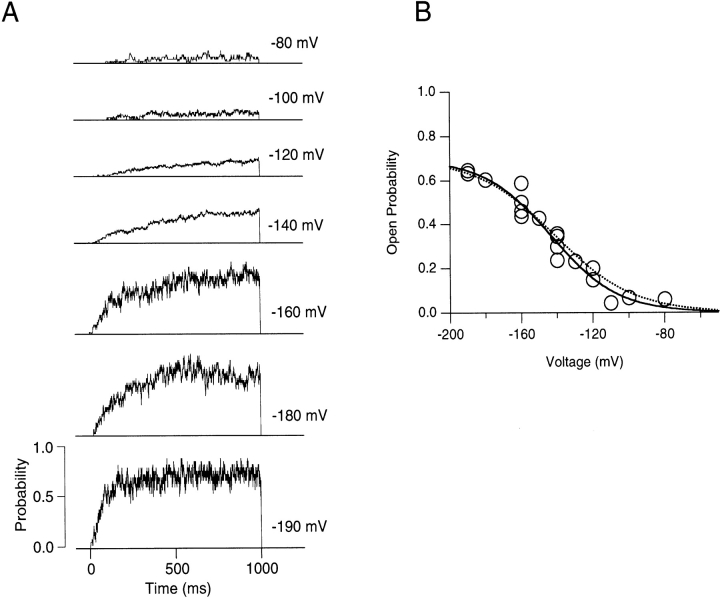
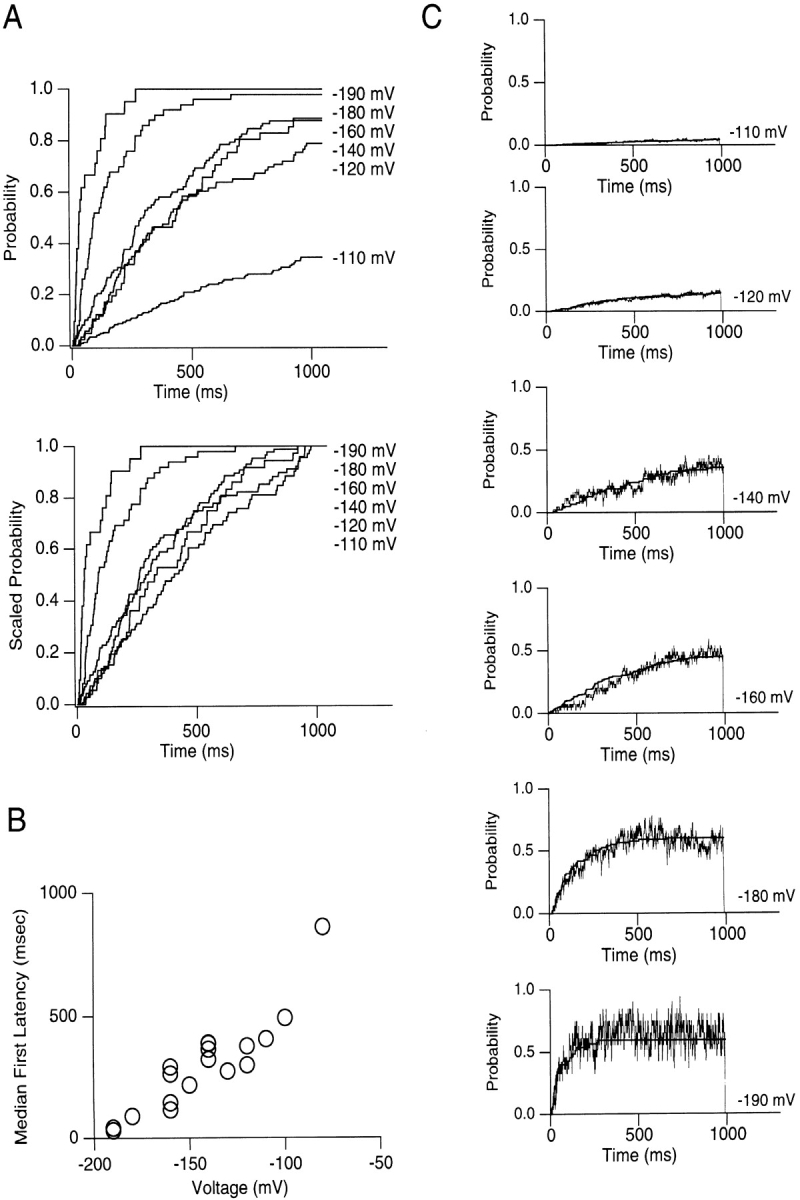
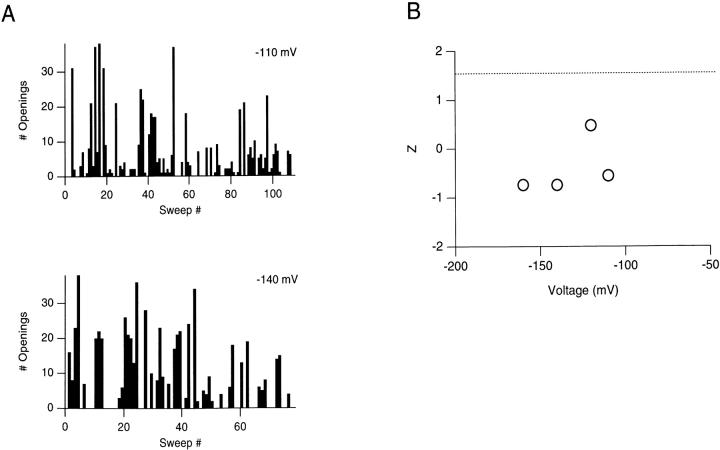
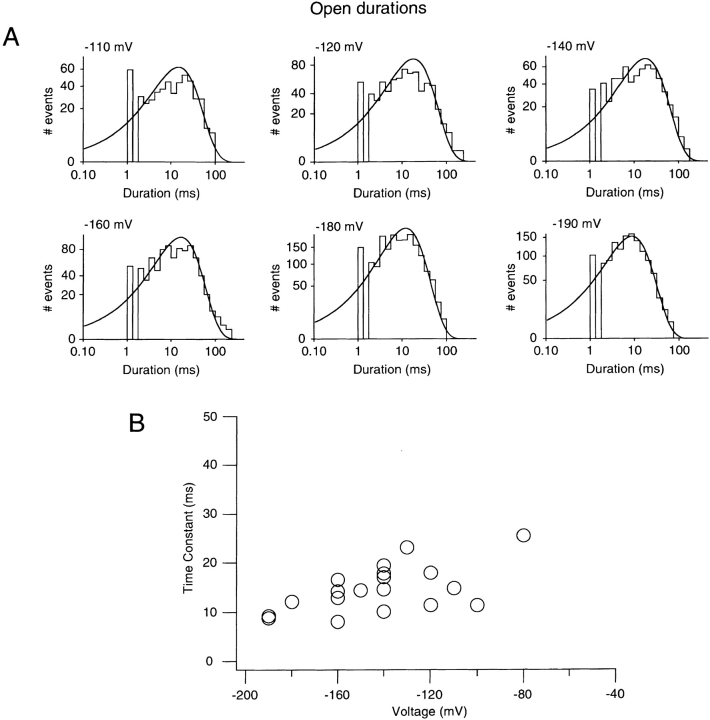
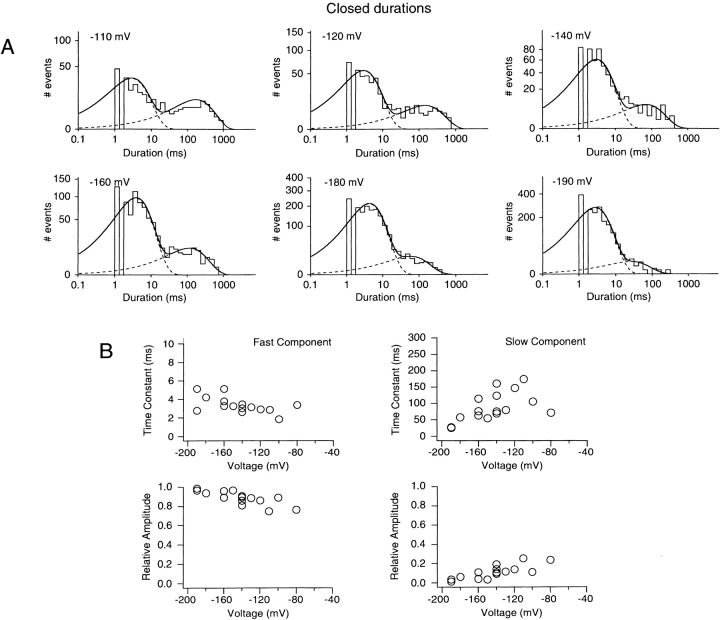
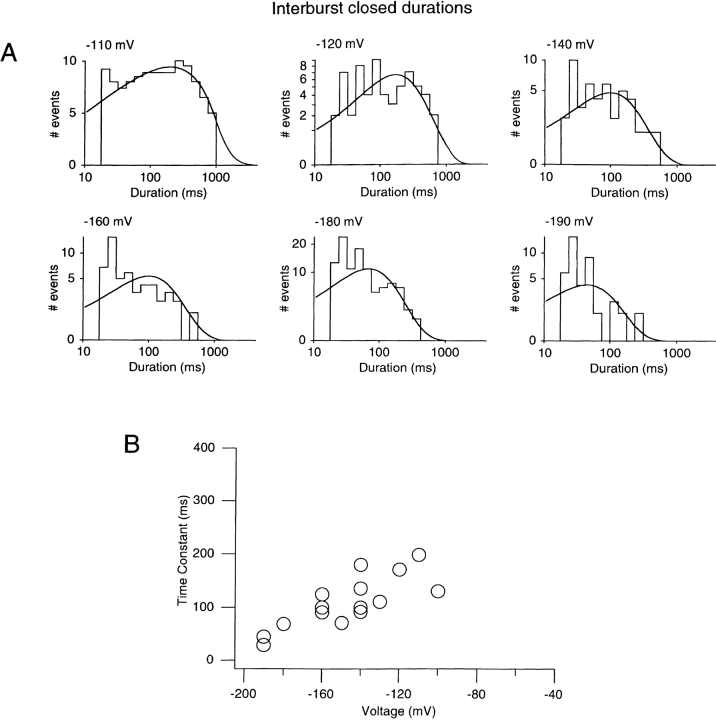
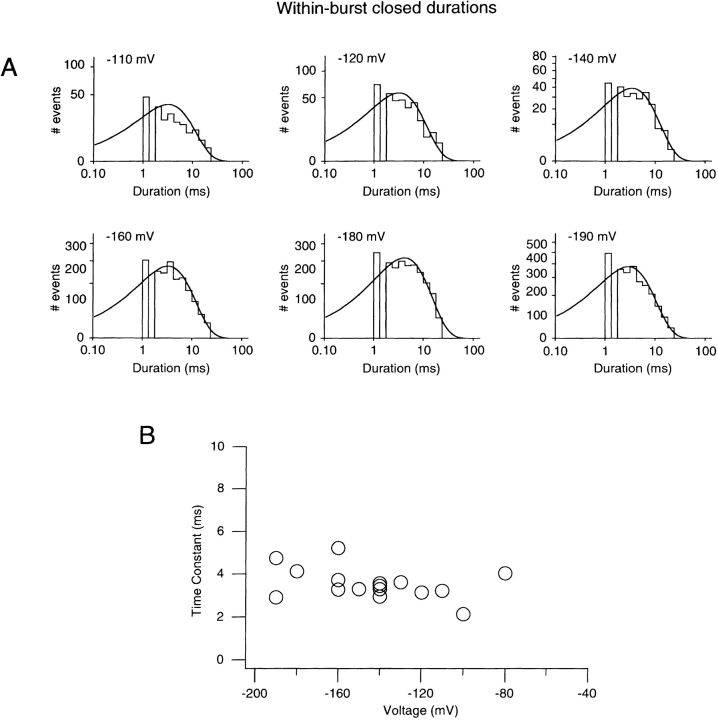
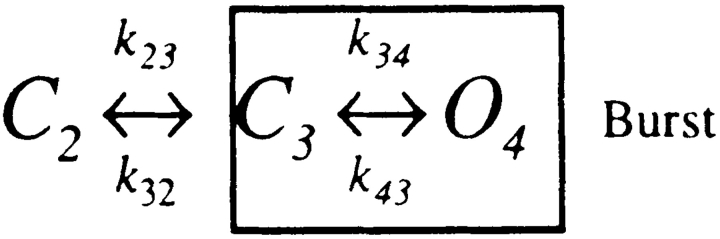
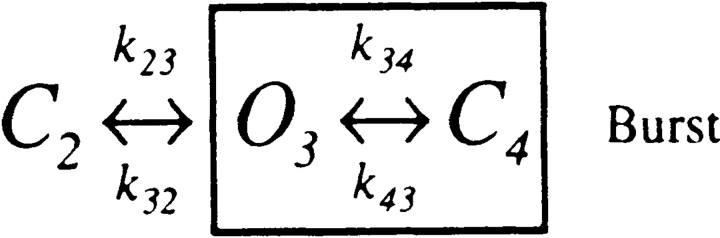
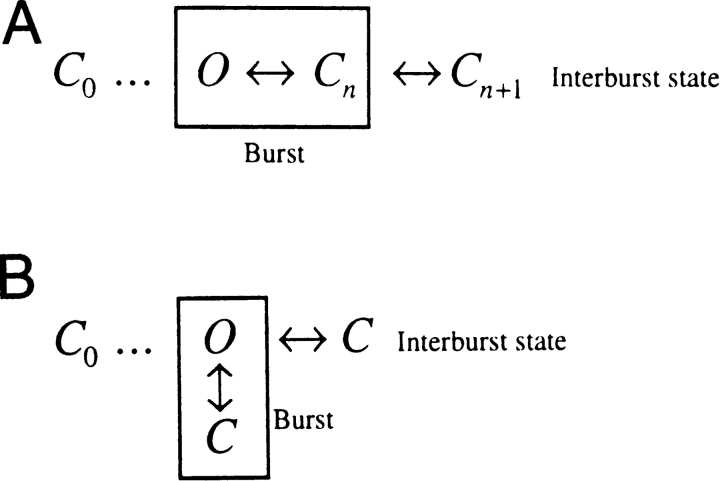
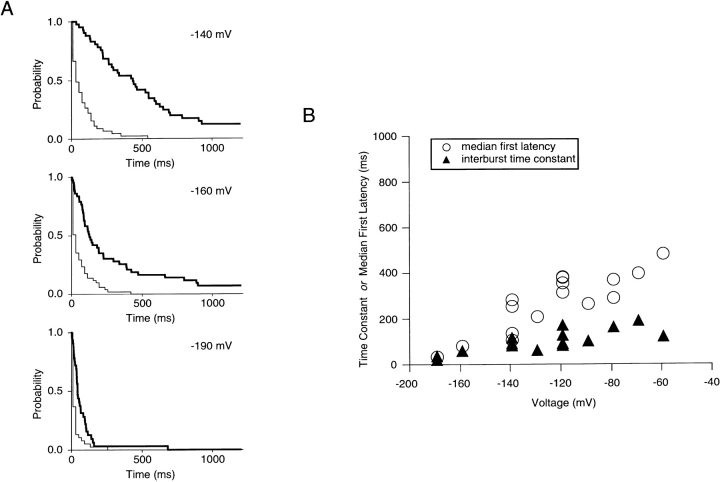
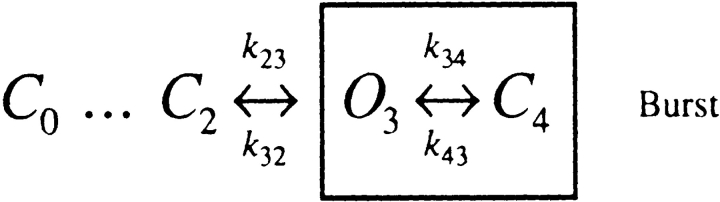
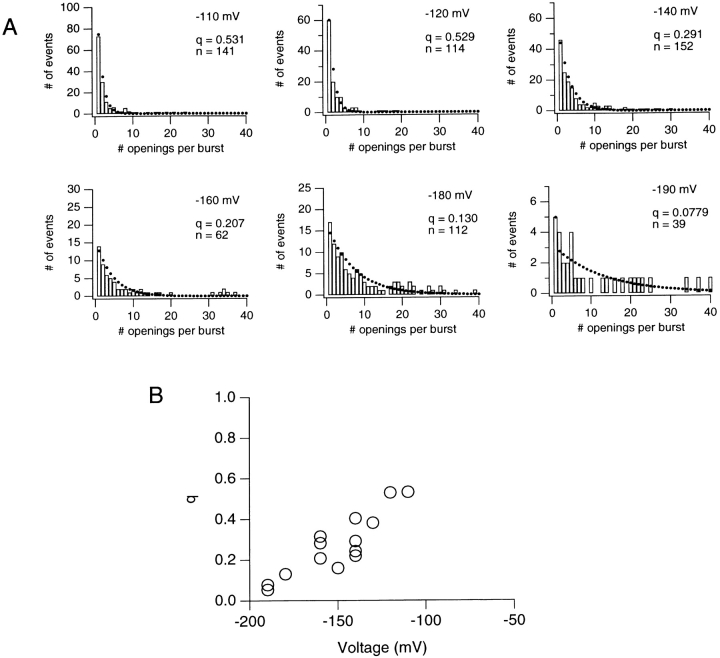
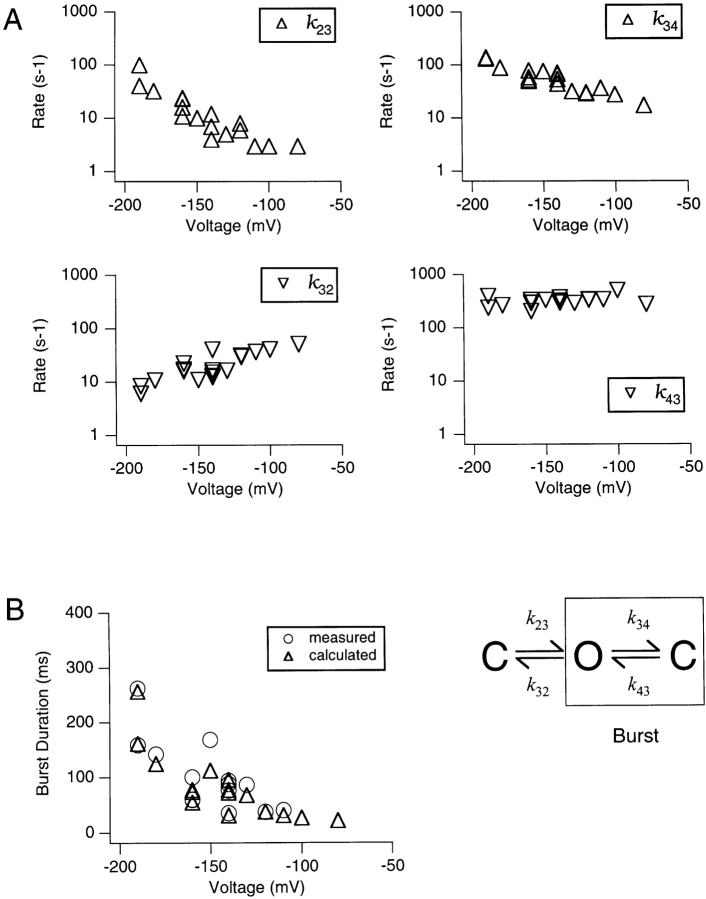
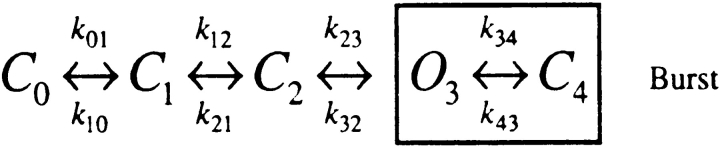
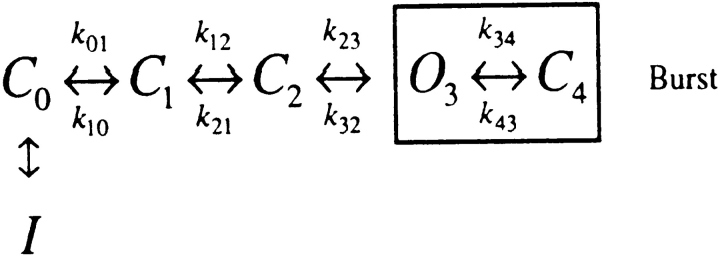
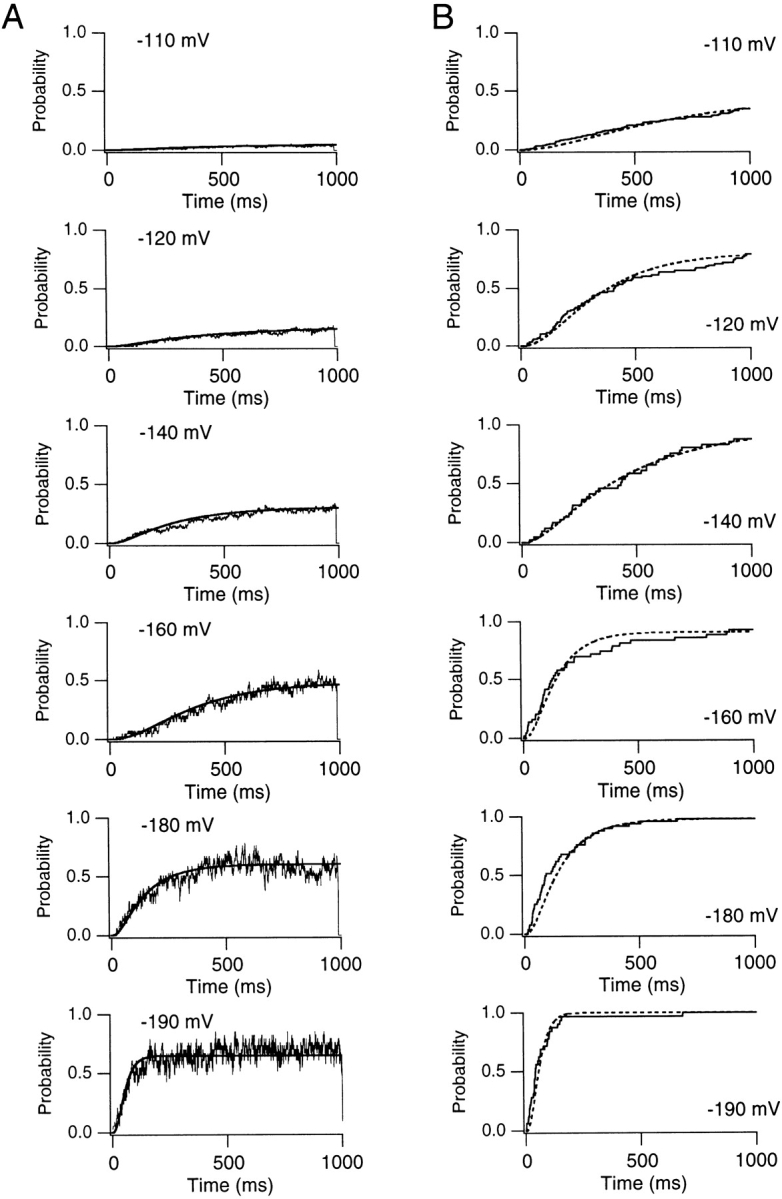
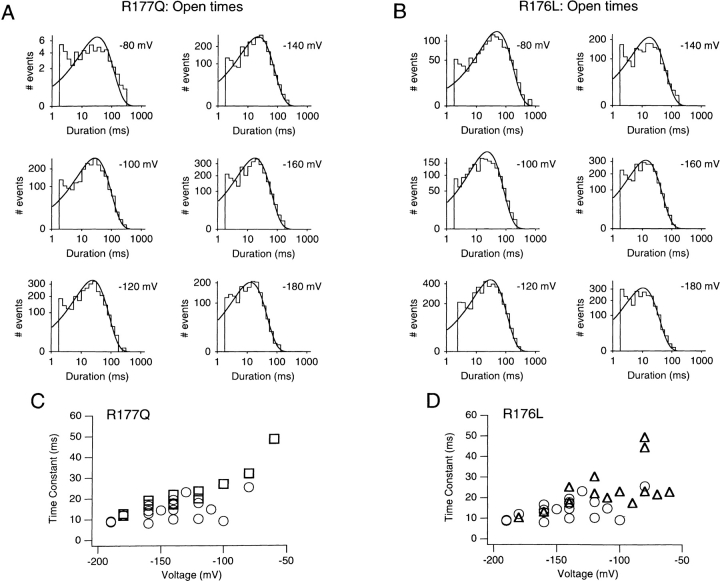
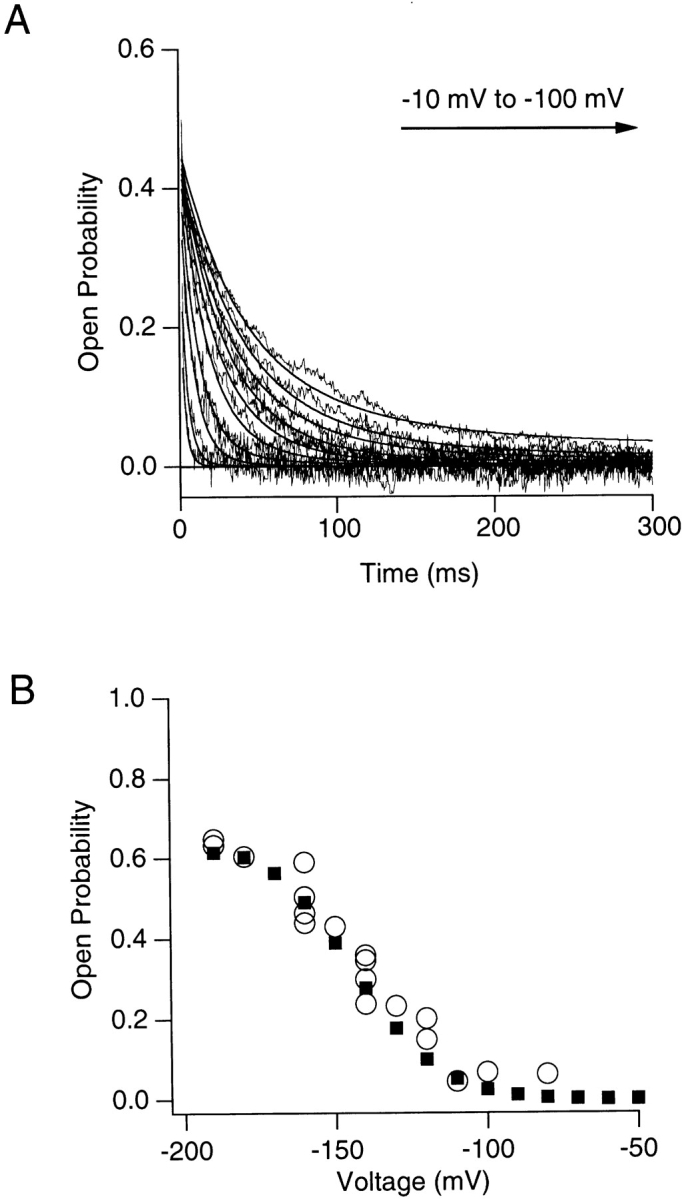
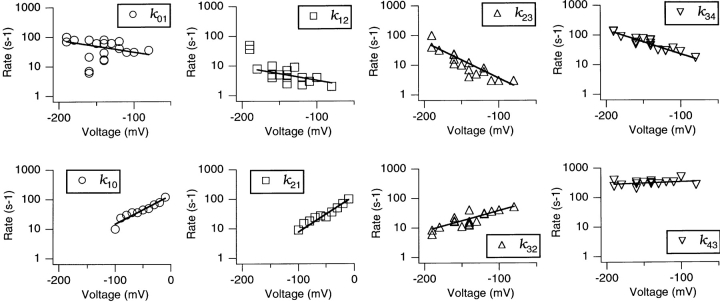
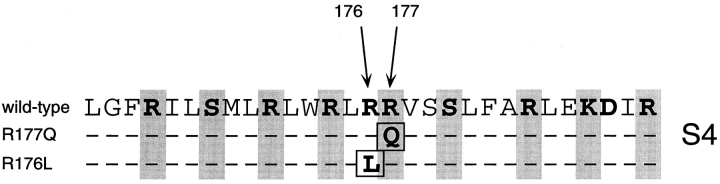
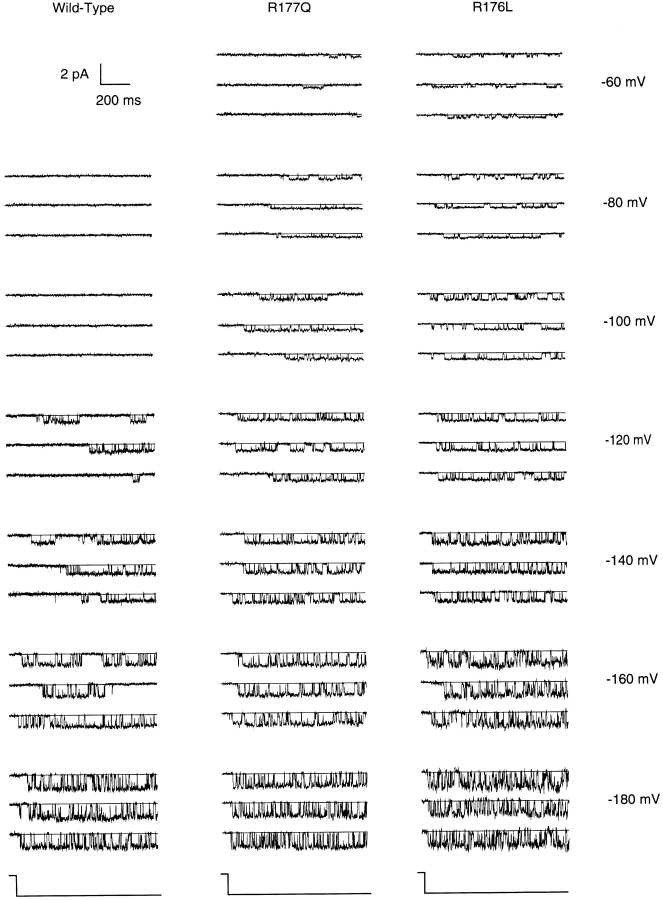
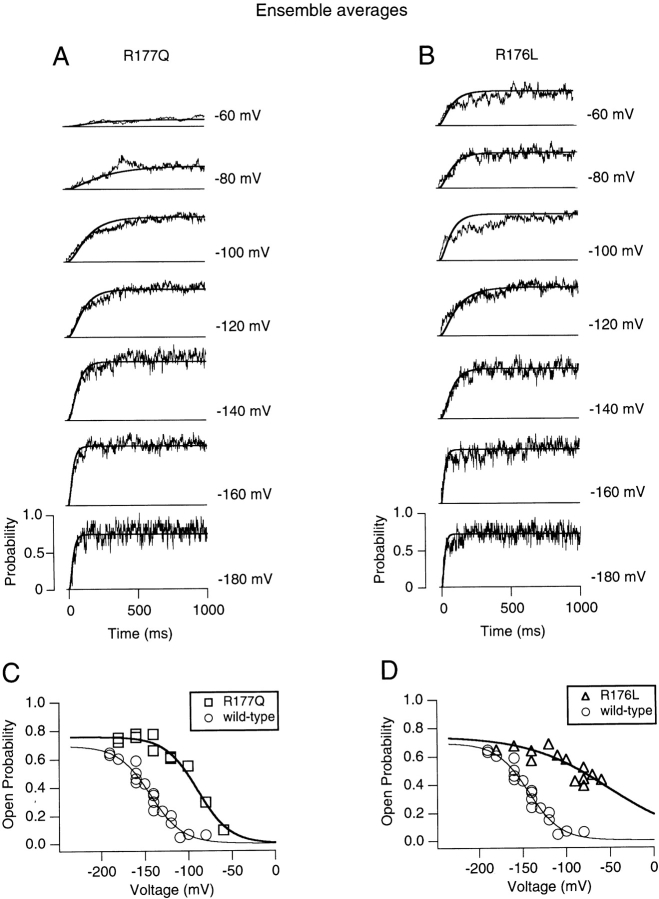
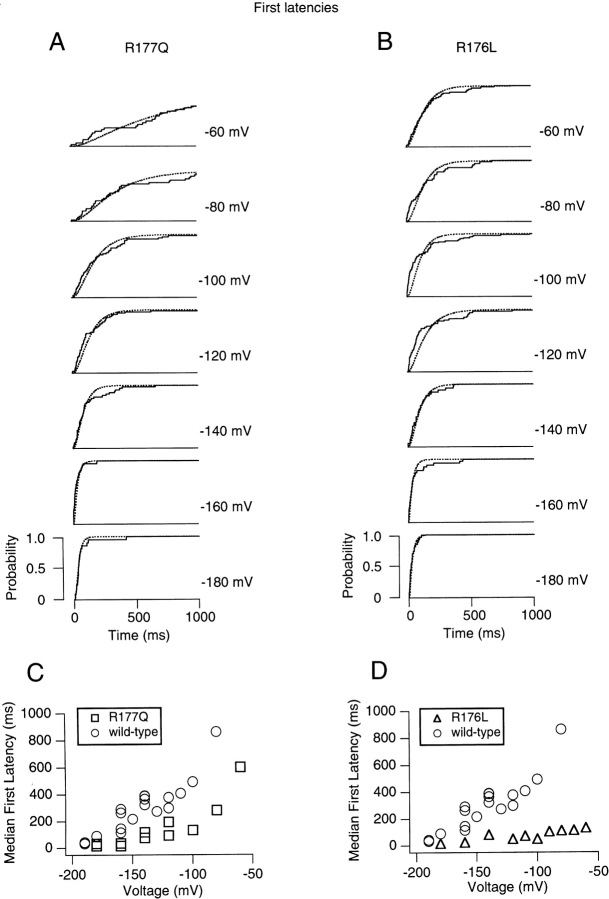
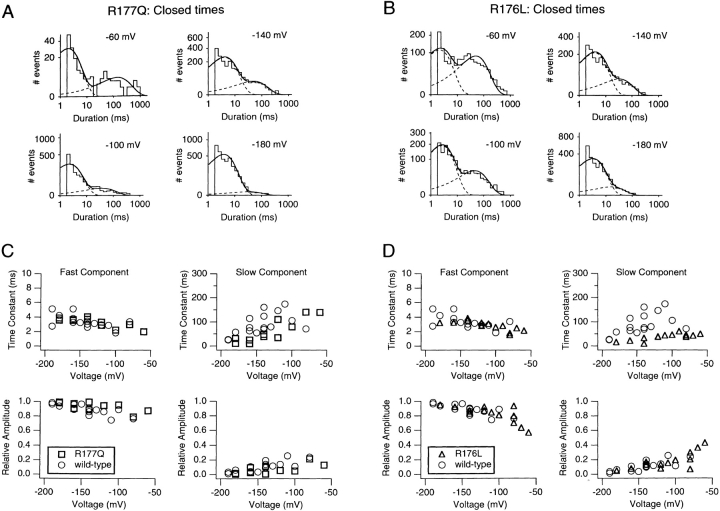
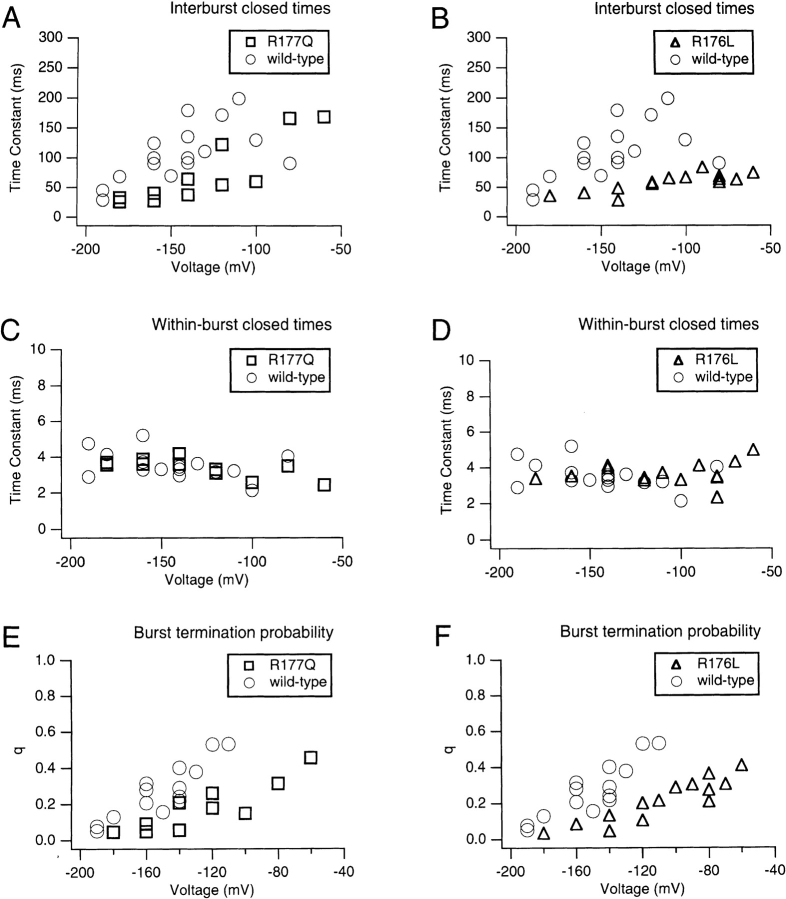
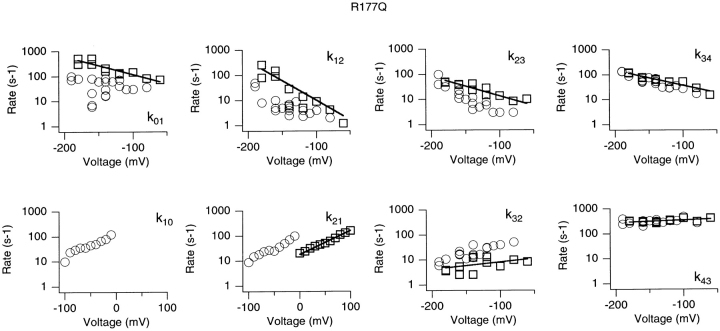
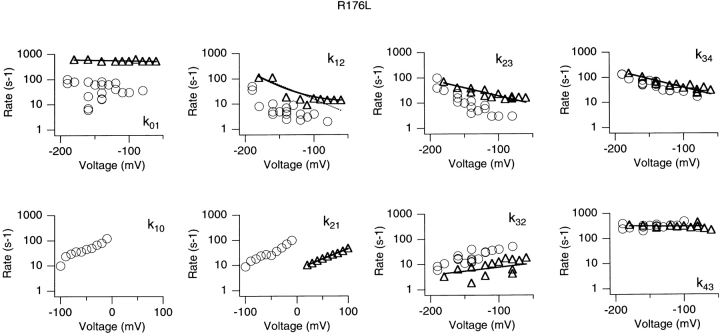
The voltage-dependent gating mechanism of KAT1 inward rectifier potassium channels was studied using single channel current recordings from Xenopus oocytes injected with KAT1 mRNA. The inward rectification properties of KAT1 result from an intrinsic gating mechanism in the KAT1 channel protein, not from pore block by an extrinsic cation species. KAT1 channels activate with hyperpolarizing potentials from -110 through -190 mV with a slow voltage-dependent time course. Transitions before first opening are voltage dependent and account for much of the voltage dependence of activation, while transitions after first opening are only slightly voltage dependent. Using burst analysis, transitions near the open state were analyzed in detail. A kinetic model with multiple closed states before first opening, a single open state, a single closed state after first opening, and a closed-state inactivation pathway accurately describes the single channel and macroscopic data. Two mutations neutralizing charged residues in the S4 region (R177Q and R176L) were introduced, and their effects on single channel gating properties were examined. Both mutations resulted in depolarizing shifts in the steady state conductance-voltage relationship, shortened first latencies to opening, decreased probability of terminating bursts, and increased burst durations. These effects on gating were well described by changes in the rate constants in the kinetic model describing KAT1 channel gating. All transitions before the open state were affected by the mutations, while the transitions after the open state were unaffected, implying that the S4 region contributes to the early steps in gating for KAT1 channels.
利用注射了KAT1信使核糖核酸的非洲爪蟾卵母细胞的单通道电流记录,研究了KAT1内向整流钾通道的电压依赖性门控机制。KAT1的内向整流特性源于KAT1通道蛋白的内在门控机制,而非外在阳离子种类的孔道阻塞。KAT1通道在从-110到-190 mV的超极化电位下激活,具有缓慢的电压依赖性时间进程。首次开放前的转换是电压依赖性的,占激活电压依赖性的大部分,而首次开放后的转换仅略微依赖电压。使用爆发分析详细分析了接近开放状态的转换。一个具有首次开放前多个关闭状态、一个单一开放状态、首次开放后一个单一关闭状态以及一个关闭状态失活途径的动力学模型准确地描述了单通道和宏观数据。引入了两个中和S4区域带电残基的突变(R177Q和R176L),并研究了它们对单通道门控特性的影响。这两个突变均导致稳态电导-电压关系出现去极化偏移,缩短了首次开放潜伏期,降低了终止爆发的概率,并增加了爆发持续时间。动力学模型中描述KAT1通道门控的速率常数变化很好地解释了这些对门控的影响。开放状态之前的所有转换均受突变影响,而开放状态之后的转换未受影响,这意味着S4区域对KAT1通道门控的早期步骤有贡献。