Stern D L
Wellcome/CRC Institute, Cambridge, UK.
Nature. 1998 Dec 3;396(6710):463-6. doi: 10.1038/24863.
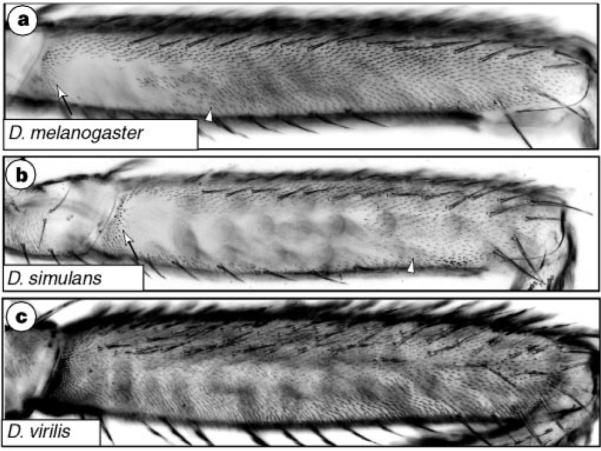
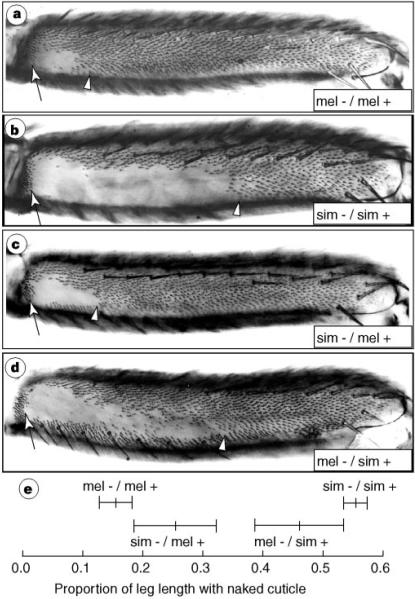
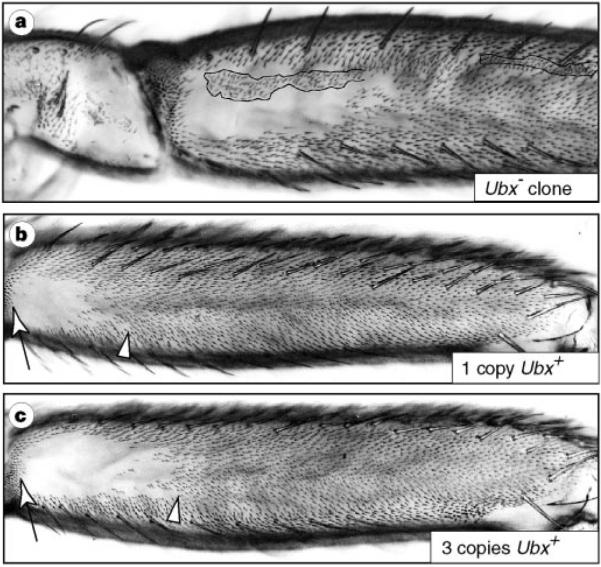
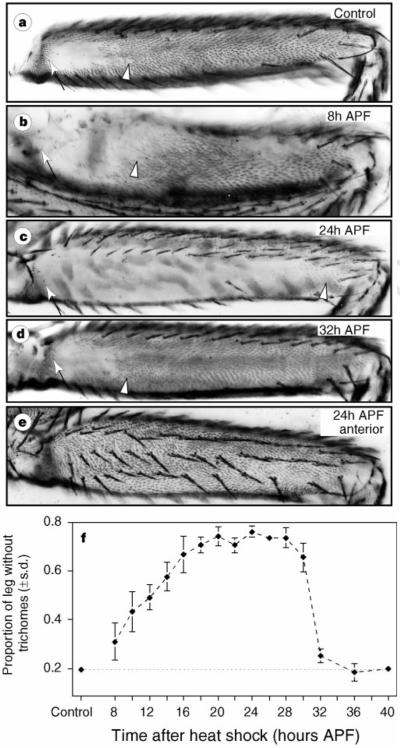
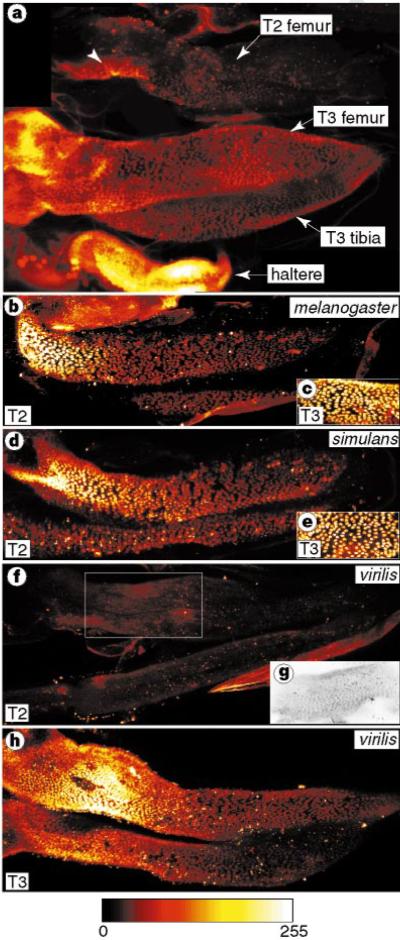
The mechanisms underlying the evolution of morphology are poorly understood. Distantly related taxa sometimes exhibit correlations between morphological differences and patterns of gene expression, but such comparisons cannot establish how mechanisms evolve to generate diverse morphologies. Answers to these questions require resolution of the nature of developmental evolution within and between closely related species. Here I show how the detailed regulation of the Hox gene Ultrabithorax patterns trichomes on the posterior femur of the second leg in Drosophila melanogaster, and that evolution of Ultrabithorax has contributed to divergence of this feature among closely related species. The cis-regulatory regions of Ultrabithorax, and not the protein itself, appear to have evolved. This study provides experimental evidence that cis-regulatory evolution is one way in which conserved proteins have promoted morphological diversity.
形态演化背后的机制目前还知之甚少。亲缘关系较远的分类群有时会表现出形态差异与基因表达模式之间的相关性,但这种比较无法确定机制是如何演化以产生多样形态的。要回答这些问题,需要解决密切相关物种内部和之间发育演化的本质。在这里,我展示了Hox基因超双胸(Ultrabithorax)如何精细调控黑腹果蝇第二腿后股骨上的毛状体,并且超双胸基因的演化促成了这一特征在密切相关物种间的差异。似乎是超双胸基因的顺式调控区域,而非蛋白质本身发生了演化。这项研究提供了实验证据,表明顺式调控演化是保守蛋白质促进形态多样性的一种方式。