Arndt V, Vine M F, Weigle K
Department of Epidemiology, University of Ulm, Ulm, Germany.
Environ Health Perspect. 1999 Oct;107(10):835-41. doi: 10.1289/ehp.99107835.
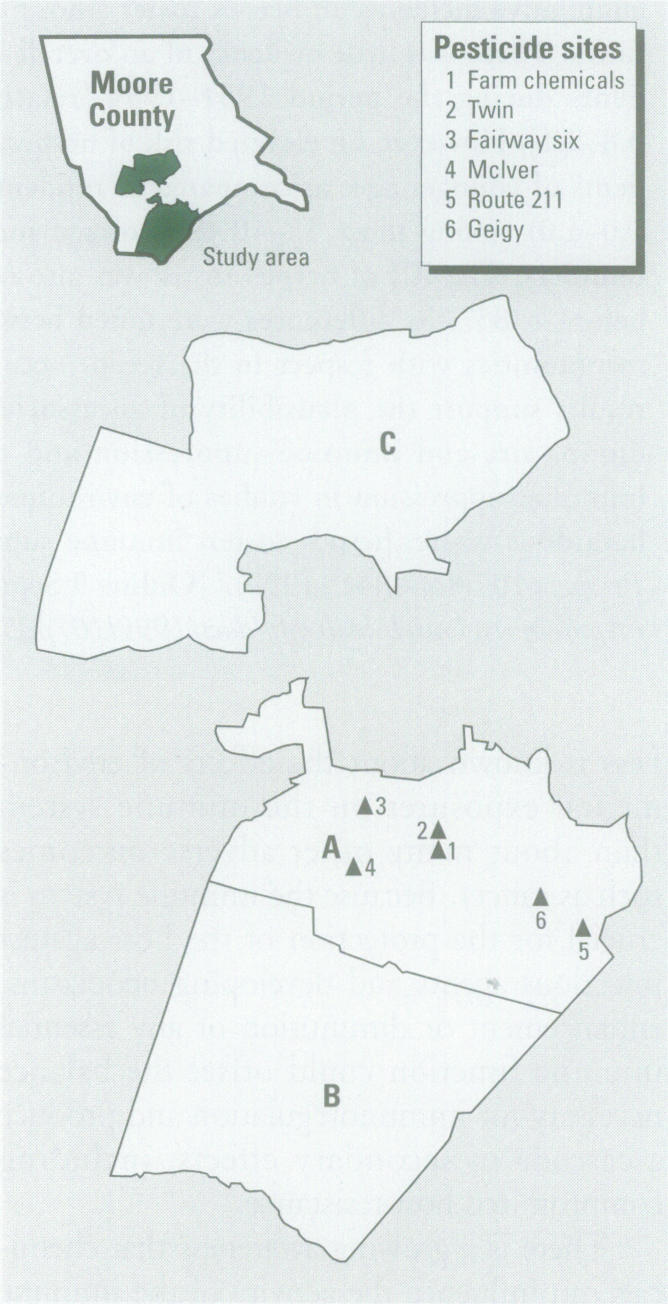
This study investigated whether residence in Aberdeen, North Carolina, the location of the Aberdeen pesticides dumps site (a national priority list Superfund site containing organochlorine pesticides, volatile organic compounds, and metals), is associated with immune suppression as indicated by a higher incidence of herpes zoster and recent occurrences of other common infectious diseases. Study participants included 1,642 residents, 18-64 years of age, who responded to a telephone survey concerning potential occupational and recreational exposures to pesticides and other chemicals, lifetime history of herpes zoster (shingles), and the recent occurrence of other common infectious diseases. Stratified and logistic regression analyses were used to compare the cumulative incidence of herpes zoster among Aberdeen residents and residents of nearby communities. There was little evidence of an overall increased risk of herpes zoster among Aberdeen residents during the period 1951-1994 [relative risk (RR), 1.3; 95% confidence interval (CI), 0.8-2.1]. However, an elevated risk of herpes zoster was noted consistently among Aberdeen residents of younger ages as compared to residents of the nearby communities. The RR was 2.0 (CI, 1.0-4.0) among those 18-40 years of age and was not affected by controlling for potential confounders. The RR of herpes zoster was also consistently elevated in all age groups for the period before 1985. No differences were noted between residents of Aberdeen and those of the nearby communities with respect to the recent occurrence of other common infectious diseases. These results support the plausibility of an association between exposure to the Aberdeen pesticides dumps site and immune suppression and the potential use of herpes zoster as a marker of immune suppression in studies of environmental chemical exposures.
本研究调查了居住在北卡罗来纳州阿伯丁(阿伯丁农药垃圾场所在地,该垃圾场是国家优先处理的超级基金污染场地,含有有机氯农药、挥发性有机化合物和金属)是否与免疫抑制有关,免疫抑制表现为带状疱疹发病率较高以及近期其他常见传染病的发生情况。研究参与者包括1642名年龄在18至64岁之间的居民,他们回应了一项关于潜在职业和娱乐性接触农药及其他化学品、带状疱疹(带状疱疹)的终生病史以及近期其他常见传染病发生情况的电话调查。采用分层和逻辑回归分析来比较阿伯丁居民和附近社区居民中带状疱疹的累积发病率。在1951年至1994年期间,几乎没有证据表明阿伯丁居民患带状疱疹的总体风险增加[相对风险(RR),1.3;95%置信区间(CI),0.8 - 2.1]。然而,与附近社区居民相比,阿伯丁年轻居民中带状疱疹的风险一直较高。18至40岁人群的RR为2.0(CI,1.0 - 4.0),且不受潜在混杂因素控制的影响。在1985年之前的所有年龄组中,带状疱疹的RR也一直升高。在近期其他常见传染病的发生情况方面,阿伯丁居民与附近社区居民之间未发现差异。这些结果支持了接触阿伯丁农药垃圾场与免疫抑制之间存在关联的合理性,以及在环境化学暴露研究中带状疱疹作为免疫抑制标志物的潜在用途。