DiGregorio P J, Ubersax J A, O'Farrell P H
Department of Biochemistry and Biophysics, University of California, San Francisco, California 94143, USA.
J Biol Chem. 2001 Jan 19;276(3):1930-7. doi: 10.1074/jbc.M003911200. Epub 2000 Oct 27.
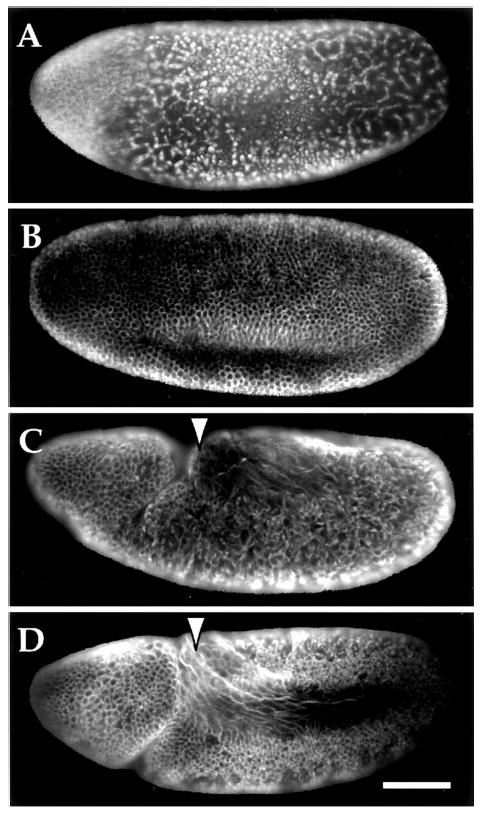
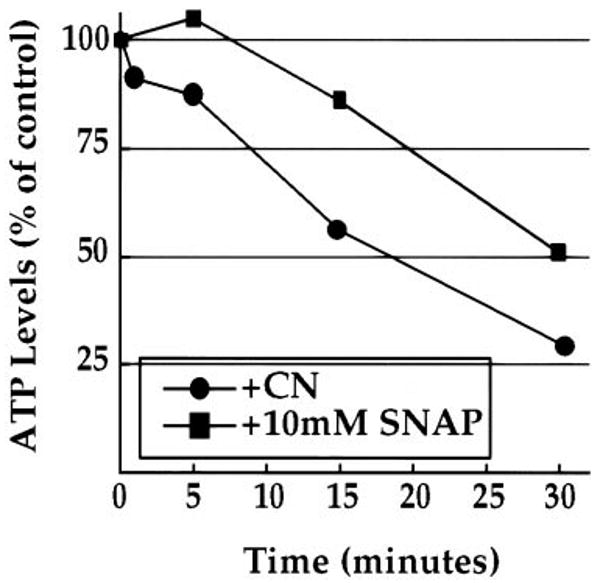
Cells can respond to reductions in oxygen (hypoxia) by metabolic adaptations, quiescence or cell death. The nuclear division cycles of syncytial stage Drosophila melanogaster embryos reversibly arrest upon hypoxia. We examined this rapid arrest in real time using a fusion of green fluorescent protein and histone 2A. In addition to an interphase arrest, mitosis was specifically blocked in metaphase, much like a checkpoint arrest. Nitric oxide, recently proposed as a hypoxia signal in Drosophila, induced a reversible arrest of the nuclear divisions comparable with that induced by hypoxia. Syncytial stage embryos die during prolonged hypoxia, whereas post-gastrulation embryos (cellularized) survive. We examined ATP levels and morphology of syncytial and cellularized embryos arrested by hypoxia, nitric oxide, or cyanide. Upon oxygen deprivation, the ATP levels declined only slightly in cellularized embryos and more substantially in syncytial embryos. Reversal of hypoxia restored ATP levels and relieved the cell cycle and developmental arrests. However, morphological abnormalities suggested that syncytial embryos suffered irreversible disruption of developmental programs. Our results suggest that nitric oxide plays a role in the response of the syncytial embryo to hypoxia but that it is not the sole mediator of these responses.
细胞可通过代谢适应、静止或细胞死亡来应对氧气减少(缺氧)的情况。合胞体阶段的黑腹果蝇胚胎的核分裂周期在缺氧时会可逆性停滞。我们使用绿色荧光蛋白与组蛋白2A的融合蛋白实时检测了这种快速停滞现象。除了间期停滞外,有丝分裂在中期被特异性阻断,这与检查点停滞非常相似。最近有研究提出一氧化氮是果蝇中的一种缺氧信号,它能诱导核分裂出现与缺氧诱导的核分裂相当的可逆性停滞。合胞体阶段的胚胎在长时间缺氧时会死亡,而原肠胚形成后的胚胎(细胞化胚胎)则能存活。我们检测了因缺氧、一氧化氮或氰化物而停滞的合胞体胚胎和细胞化胚胎的ATP水平及形态。在缺氧时,细胞化胚胎中的ATP水平仅略有下降,而合胞体胚胎中的ATP水平下降更为显著。缺氧状态的逆转可恢复ATP水平,并解除细胞周期和发育停滞。然而,形态学异常表明合胞体胚胎的发育程序遭受了不可逆的破坏。我们的结果表明,一氧化氮在合胞体胚胎对缺氧的反应中发挥作用,但它并非这些反应的唯一介导因子。