Culley Fiona J, Pollott Joanne, Openshaw Peter J M
Department of Respiratory Medicine, National Heart and Lung Institute, Faculty of Medicine, Imperial College of Science, Technology, and Medicine, London W2 1PG, United Kingdom.
J Exp Med. 2002 Nov 18;196(10):1381-6. doi: 10.1084/jem.20020943.
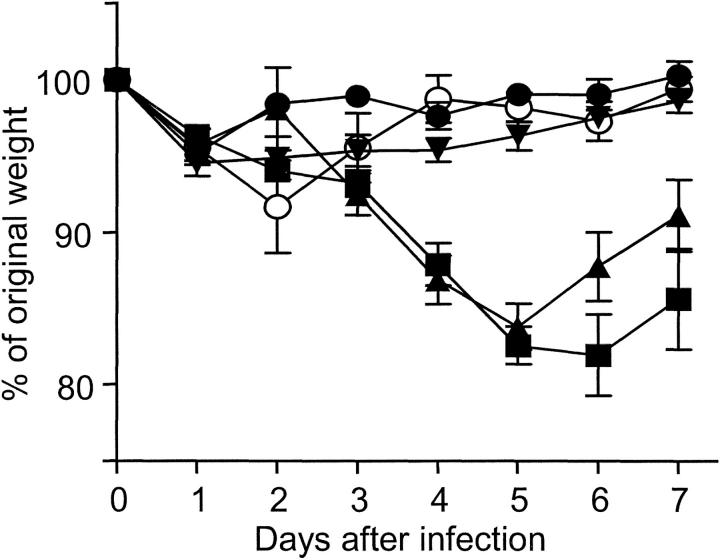
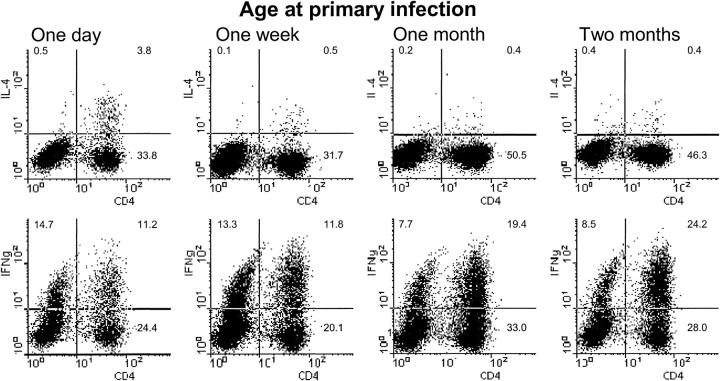
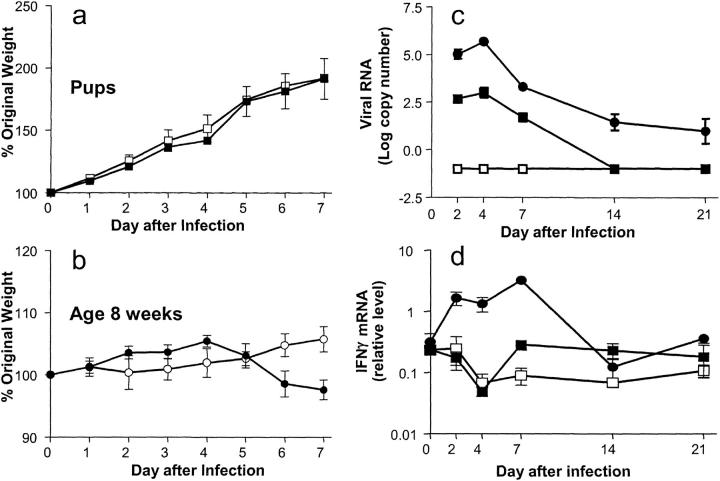
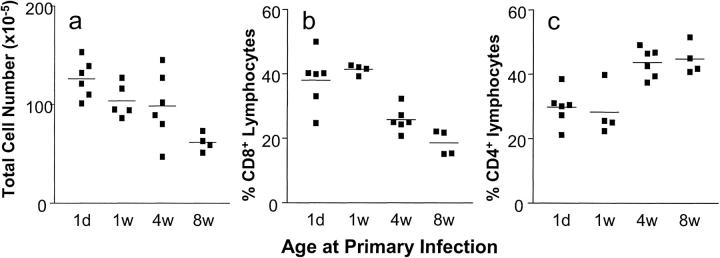
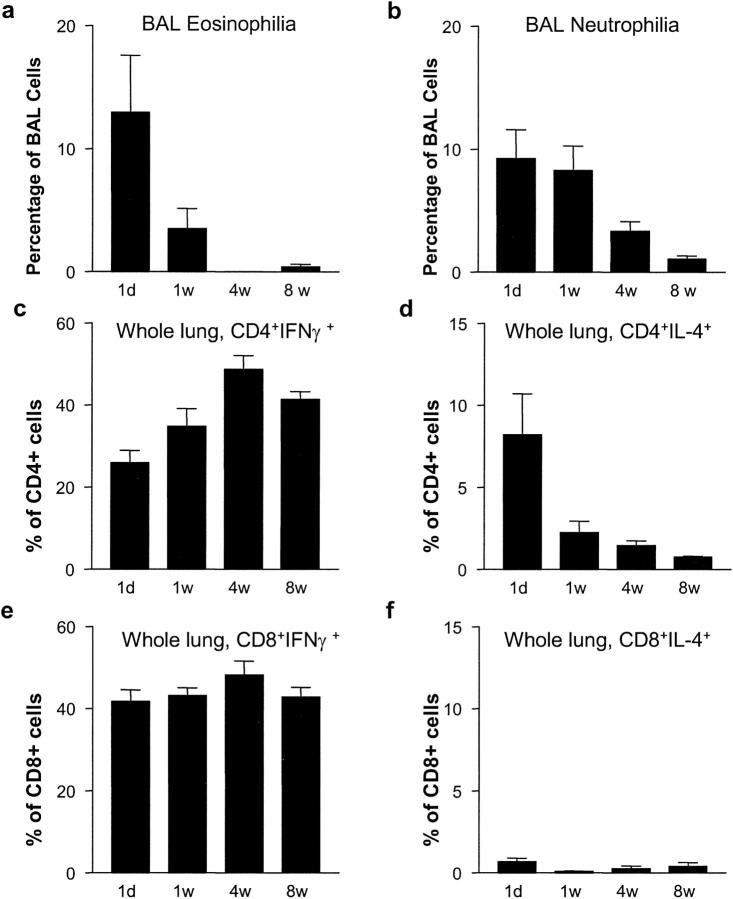
Infants experiencing severe respiratory syncytial virus (RSV) bronchiolitis have an increased frequency of wheeze and asthma in later childhood. Since most severe RSV infections occur between the 8th and 24th postnatal week, we examined whether age at first infection determines the balance of cytokine production and lung pathology during subsequent rechallenge. Primary RSV infection in newborn mice followed the same viral kinetics as in adults but was associated with reduced and delayed IFN-gamma responses. To study rechallenge, mice were infected at 1 day or 1, 4, or 8 weeks of age and reinfected at 12 weeks. Neonatal priming produced more severe weight loss and increased inflammatory cell recruitment (including T helper 2 cells and eosinophils) during reinfection, whereas delayed priming led to enhanced interferon gamma production and less severe disease during reinfection. These results show the crucial importance of age at first infection in determining the outcome of reinfection and suggest that the environment of the neonatal lung is a major determinant of cytokine production and disease patterns in later life. Thus, simply delaying RSV infection beyond infancy might reduce subsequent respiratory morbidity in later childhood.
患有严重呼吸道合胞病毒(RSV)细支气管炎的婴儿在儿童后期出现喘息和哮喘的频率增加。由于大多数严重的RSV感染发生在出生后第8周至第24周之间,我们研究了首次感染时的年龄是否决定了随后再次感染期间细胞因子产生的平衡和肺部病理情况。新生小鼠的原发性RSV感染遵循与成年小鼠相同的病毒动力学,但与IFN-γ反应的降低和延迟有关。为了研究再次感染,小鼠在1日龄或1、4或8周龄时感染,并在12周龄时再次感染。新生儿期初次感染在再次感染期间导致更严重的体重减轻和炎症细胞募集增加(包括辅助性T2细胞和嗜酸性粒细胞),而延迟初次感染则导致再次感染期间干扰素γ产生增加且疾病较轻。这些结果表明首次感染时的年龄在决定再次感染的结果方面至关重要,并表明新生儿肺部环境是后期生命中细胞因子产生和疾病模式的主要决定因素。因此,简单地将RSV感染推迟到婴儿期之后可能会降低儿童后期随后的呼吸道发病率。