Sampathkumar Priya, Temesgen Zelalem, Smith Thomas F, Thompson Rodney L
Division of Infectious Diseases and Internal Medicine, Mayo Clinic, Rochester, Minn 55905, USA.
Mayo Clin Proc. 2003 Jul;78(7):882-90. doi: 10.4065/78.7.882.
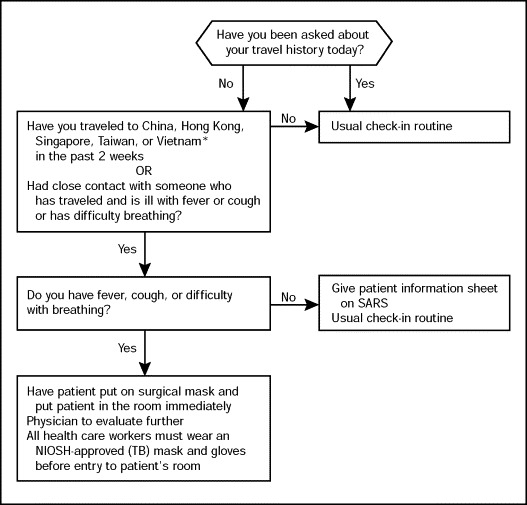
Severe acute respiratory syndrome (SARS) is a recently recognized febrile respiratory illness that first appeared in southern China in November 2002, has since spread to several countries, and has resulted in more than 8000 cases and more than 750 deaths. The disease has been etiologically linked to a novel coronavirus that has been named the SARS-associated coronavirus. It appears to be spread primarily by large droplet transmission. There is no specific therapy, and management consists of supportive care. This article summarizes currently available information regarding the epidemiology, clinical features, etiologic agent, and modes of transmission of the disease, as well as infection control measures appropriate to contain SARS.
严重急性呼吸综合征(SARS)是一种最近才被认识的发热性呼吸道疾病,2002年11月首次出现在中国南方,此后已传播到多个国家,导致8000多例病例和750多人死亡。该疾病在病因上与一种新型冠状病毒有关,这种病毒被命名为SARS相关冠状病毒。它似乎主要通过大飞沫传播。目前尚无特效治疗方法,治疗主要包括支持性护理。本文总结了目前关于该疾病的流行病学、临床特征、病原体、传播方式以及适用于控制SARS的感染控制措施的可用信息。