Bullitt Elizabeth, Gerig Guido, Pizer Stephen M, Lin Weili, Aylward Stephen R
Division of Neurosurgery, University of North Carolina, Chapel Hill, NC 27599, USA.
IEEE Trans Med Imaging. 2003 Sep;22(9):1163-71. doi: 10.1109/TMI.2003.816964.
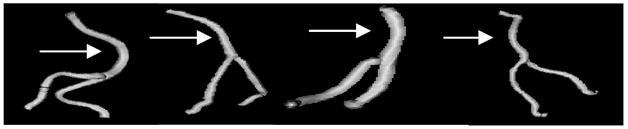
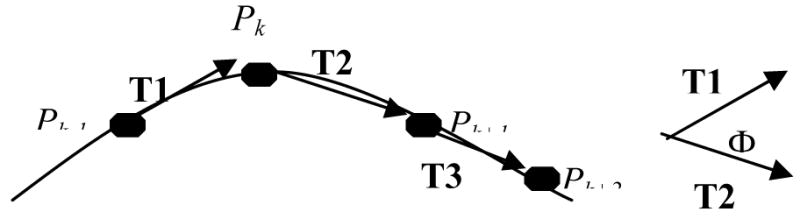
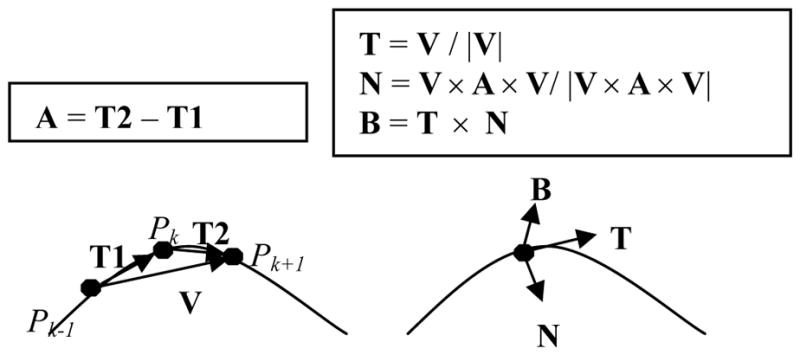
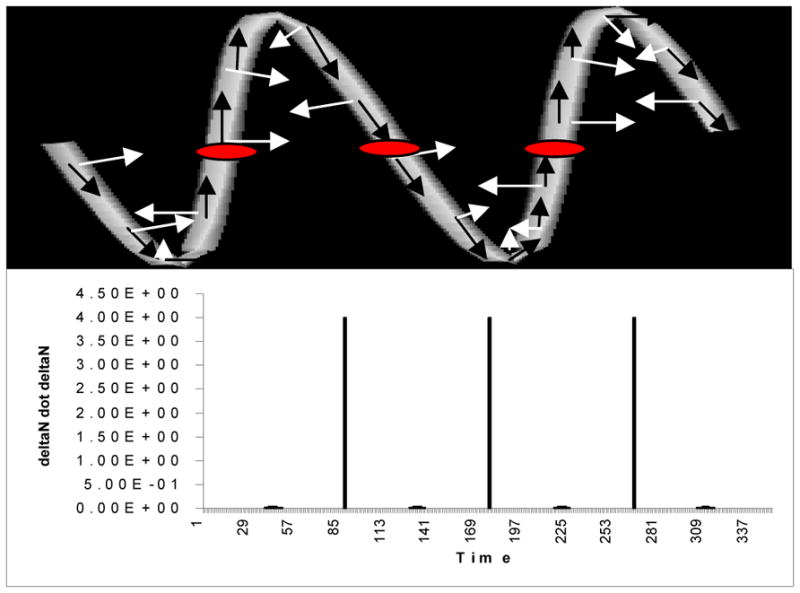
The clinical recognition of abnormal vascular tortuosity, or excessive bending, twisting, and winding, is important to the diagnosis of many diseases. Automated detection and quantitation of abnormal vascular tortuosity from three-dimensional (3-D) medical image data would, therefore, be of value. However, previous research has centered primarily upon two-dimensional (2-D) analysis of the special subset of vessels whose paths are normally close to straight. This report provides the first 3-D tortuosity analysis of clusters of vessels within the normally tortuous intracerebral circulation. We define three different clinical patterns of abnormal tortuosity. We extend into 3-D two tortuosity metrics previously reported as useful in analyzing 2-D images and describe a new metric that incorporates counts of minima of total curvature. We extract vessels from MRA data, map corresponding anatomical regions between sets of normal patients and patients with known pathology, and evaluate the three tortuosity metrics for ability to detect each type of abnormality within the region of interest. We conclude that the new tortuosity metric appears to be the most effective in detecting several types of abnormalities. However, one of the other metrics, based on a sum of curvature magnitudes, may be more effective in recognizing tightly coiled, "corkscrew" vessels associated with malignant tumors.
临床上识别异常血管迂曲,即过度弯曲、扭曲和盘绕,对许多疾病的诊断很重要。因此,从三维(3-D)医学图像数据中自动检测和定量异常血管迂曲具有重要价值。然而,以往的研究主要集中在对路径通常接近直线的血管特殊子集进行二维(2-D)分析。本报告首次对正常迂曲的脑循环内血管簇进行了三维迂曲分析。我们定义了三种不同的异常迂曲临床模式。我们将之前报道的在分析二维图像中有用的两种迂曲度量扩展到三维,并描述了一种结合总曲率最小值计数的新度量。我们从磁共振血管造影(MRA)数据中提取血管,绘制正常患者组和已知病理患者组之间的相应解剖区域,并评估这三种迂曲度量在感兴趣区域内检测每种异常类型的能力。我们得出结论,新的迂曲度量似乎在检测几种异常类型方面最有效。然而,基于曲率大小总和的另一种度量在识别与恶性肿瘤相关的紧密盘绕的“螺旋状”血管方面可能更有效。