Macours Nathalie, Poels Jeroen, Hens Korneel, Francis Carmen, Huybrechts Roger
Laboratory for Developmental Physiology, Genomics and Proteomics, Katholieke Universteit Leuven, Naamsestraat 59, B-3000 Leuven, Belgium.
Int Rev Cytol. 2004;239:47-97. doi: 10.1016/S0074-7696(04)39002-9.
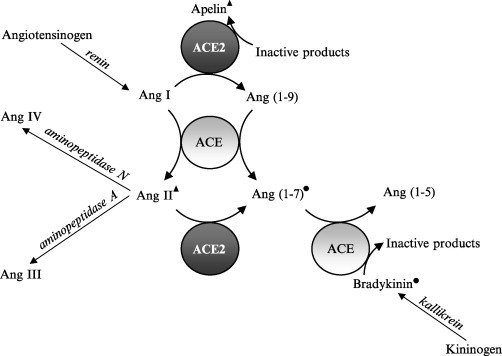
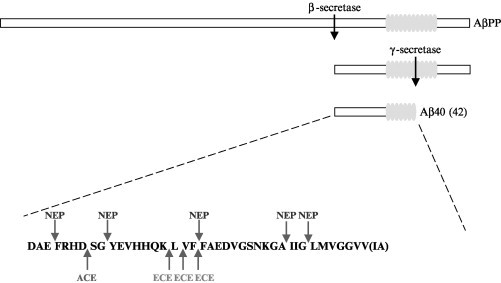
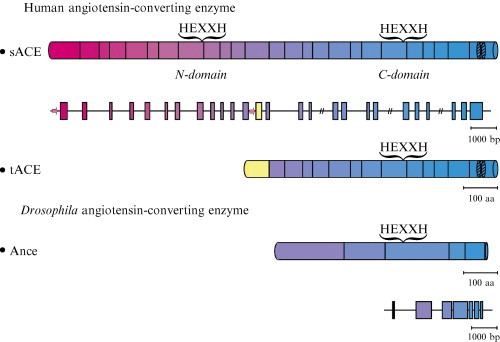
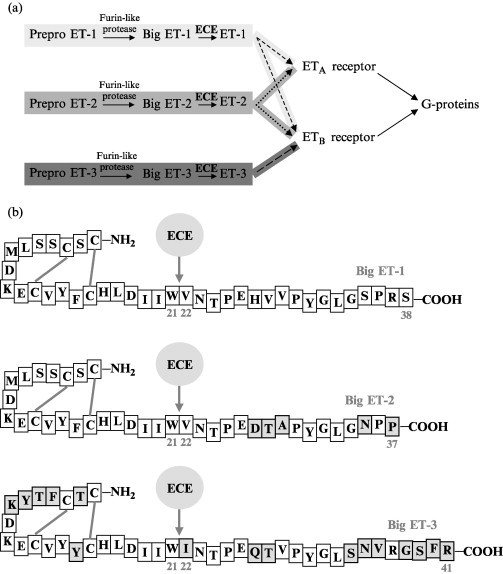
Angiotensin-converting enzyme, a member of the M2 metalloprotease family, and endothelin-converting enzyme, a member of the M13 family, are key components in the regulation of blood pressure and electrolyte balance in mammals. From this point of view, they serve as important drug targets. Recently, the involvement of these enzymes in the development of Alzheimer's disease was discovered. The existence of homologs of these enzymes in invertebrates indicates that these enzyme systems are highly conserved during evolution. Most invertebrates lack a closed circulatory system, which excludes the need for blood pressure regulators. Therefore, these organisms represent excellent targets for gaining new insights and revealing additional physiological roles of these important enzymes. This chapter reviews the structural and functional aspects of ACE and ECE and will particularly focus on these enzyme homologues in invertebrates.
血管紧张素转换酶是M2金属蛋白酶家族的一员,内皮素转换酶是M13家族的一员,它们是哺乳动物血压调节和电解质平衡的关键组成部分。从这一角度来看,它们是重要的药物靶点。最近,人们发现这些酶与阿尔茨海默病的发展有关。这些酶在无脊椎动物中的同源物的存在表明这些酶系统在进化过程中高度保守。大多数无脊椎动物缺乏封闭的循环系统,这就排除了对血压调节因子的需求。因此,这些生物体是获得新见解和揭示这些重要酶的其他生理作用的极佳靶点。本章综述了血管紧张素转换酶(ACE)和内皮素转换酶(ECE)的结构和功能方面,尤其将重点关注无脊椎动物中的这些酶同源物。