Stanyon Clement A, Liu Guozhen, Mangiola Bernardo A, Patel Nishi, Giot Loic, Kuang Bing, Zhang Huamei, Zhong Jinhui, Finley Russell L
Center for Molecular Medicine & Genetics, Wayne State University School of Medicine, 540 E, Canfield Avenue, Detroit, MI 48201, USA.
Genome Biol. 2004;5(12):R96. doi: 10.1186/gb-2004-5-12-r96. Epub 2004 Nov 26.
Maps depicting binary interactions between proteins can be powerful starting points for understanding biological systems. A proven technology for generating such maps is high-throughput yeast two-hybrid screening. In the most extensive screen to date, a Gal4-based two-hybrid system was used recently to detect over 20,000 interactions among Drosophila proteins. Although these data are a valuable resource for insights into protein networks, they cover only a fraction of the expected number of interactions.
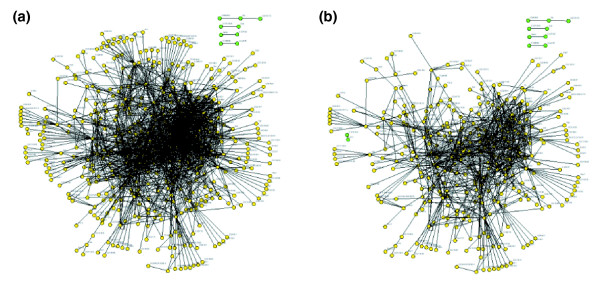
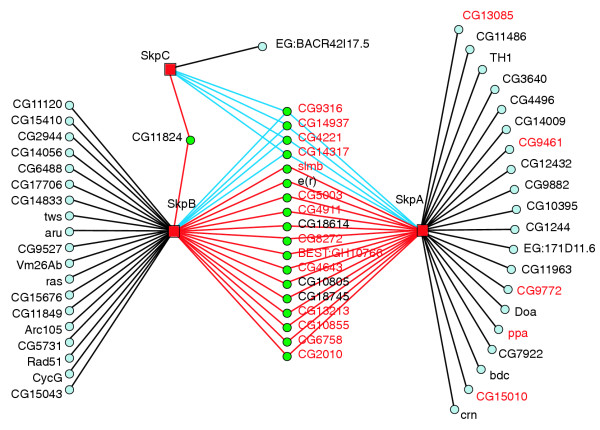
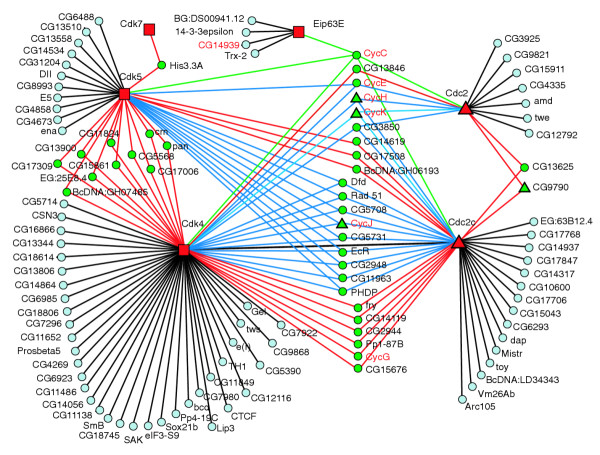
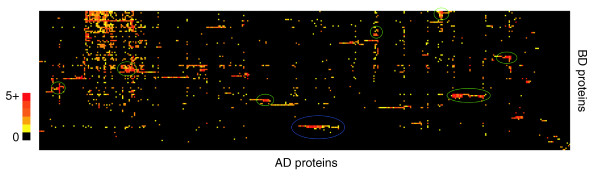
To complement the Gal4-based interaction data, we used the same set of Drosophila open reading frames to construct arrays for a LexA-based two-hybrid system. We screened the arrays using a novel pooled mating approach, initially focusing on proteins related to cell-cycle regulators. We detected 1,814 reproducible interactions among 488 proteins. The map includes a large number of novel interactions with potential biological significance. Informative regions of the map could be highlighted by searching for paralogous interactions and by clustering proteins on the basis of their interaction profiles. Surprisingly, only 28 interactions were found in common between the LexA- and Gal4-based screens, even though they had similar rates of true positives.
The substantial number of new interactions discovered here supports the conclusion that previous interaction mapping studies were far from complete and that many more interactions remain to be found. Our results indicate that different two-hybrid systems and screening approaches applied to the same proteome can generate more comprehensive datasets with more cross-validated interactions. The cell-cycle map provides a guide for further defining important regulatory networks in Drosophila and other organisms.
描绘蛋白质之间二元相互作用的图谱可能是理解生物系统的有力起点。一种用于生成此类图谱的成熟技术是高通量酵母双杂交筛选。在迄今为止最广泛的筛选中,最近使用基于Gal4的双杂交系统检测了果蝇蛋白质之间超过20000种相互作用。尽管这些数据是洞察蛋白质网络的宝贵资源,但它们仅涵盖了预期相互作用数量的一小部分。
为了补充基于Gal4的相互作用数据,我们使用同一组果蝇开放阅读框构建了基于LexA的双杂交系统的阵列。我们使用一种新颖的混合交配方法筛选这些阵列,最初聚焦于与细胞周期调节因子相关的蛋白质。我们在488种蛋白质之间检测到1814种可重复的相互作用。该图谱包括大量具有潜在生物学意义的新相互作用。通过搜索旁系同源相互作用以及根据蛋白质的相互作用谱对蛋白质进行聚类,可以突出显示图谱中的信息丰富区域。令人惊讶的是,基于LexA和基于Gal4的筛选中仅发现28种共同的相互作用,尽管它们的真阳性率相似。
此处发现的大量新相互作用支持以下结论:先前的相互作用图谱研究远未完成,仍有更多相互作用有待发现。我们的结果表明,应用于同一蛋白质组的不同双杂交系统和筛选方法可以生成更全面的数据集,其中有更多经过交叉验证的相互作用。细胞周期图谱为进一步定义果蝇和其他生物体中重要的调控网络提供了指导。