Gualtieri Maurizio, Andrioletti Manuela, Mantecca Paride, Vismara Claudio, Camatini Marina
Department of Environmental Science, University of Milano-Bicocca, P,zza della Scienza 1, 20126 Milano, Italy.
Part Fibre Toxicol. 2005 Mar 24;2(1):1. doi: 10.1186/1743-8977-2-1.
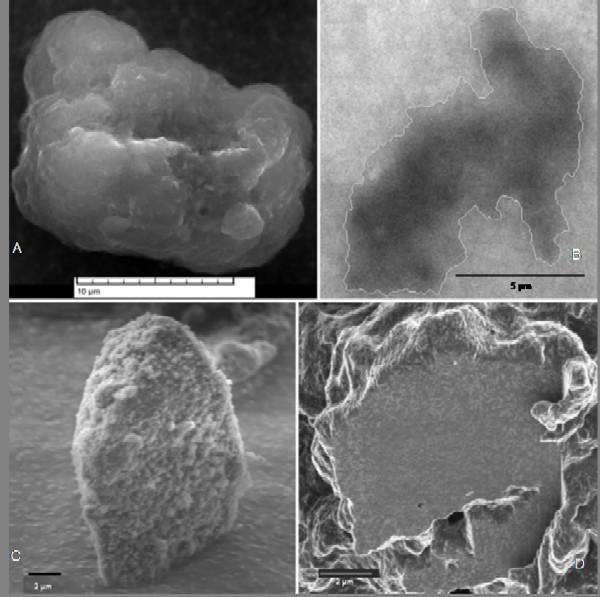
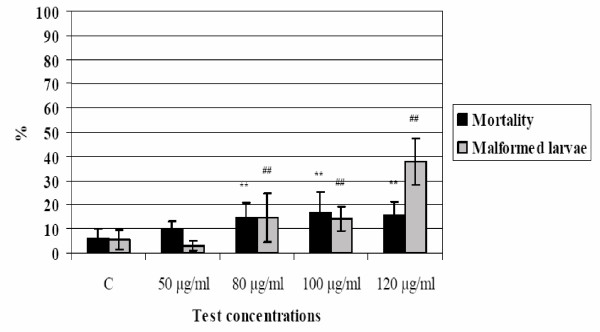
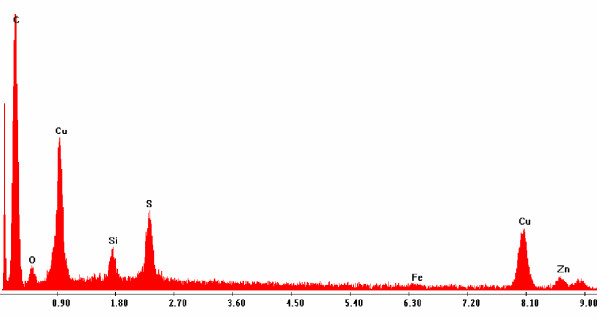
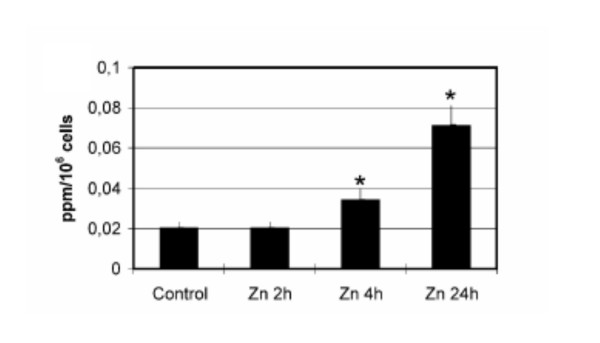
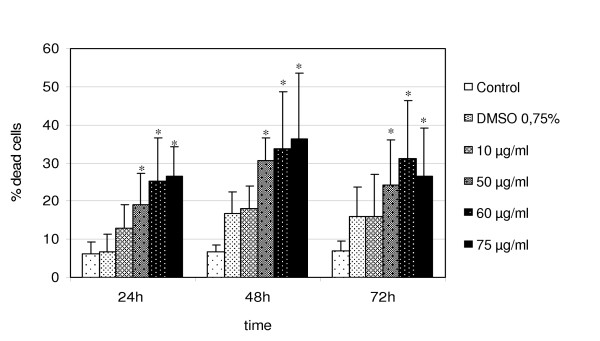
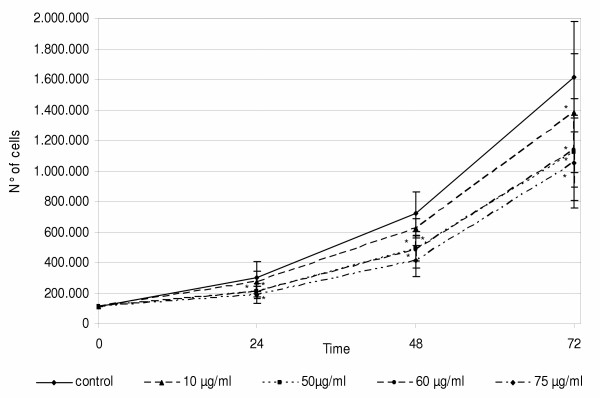
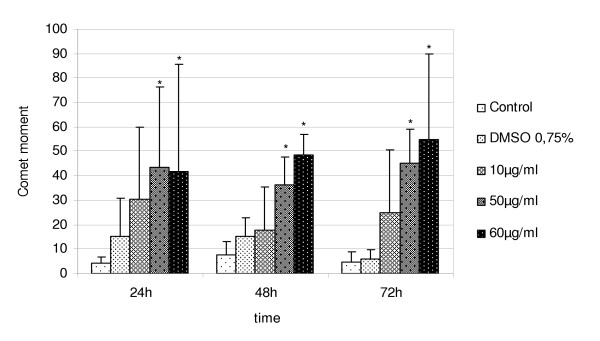
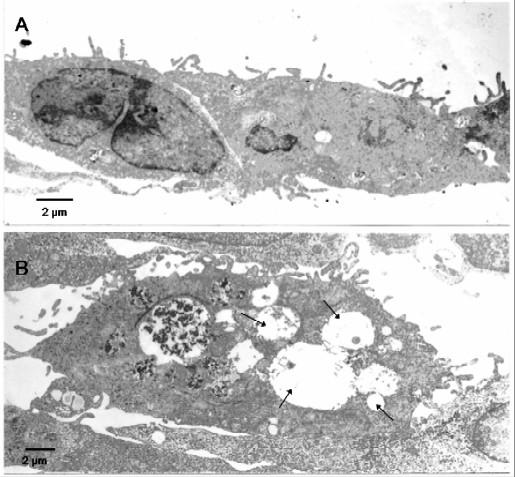
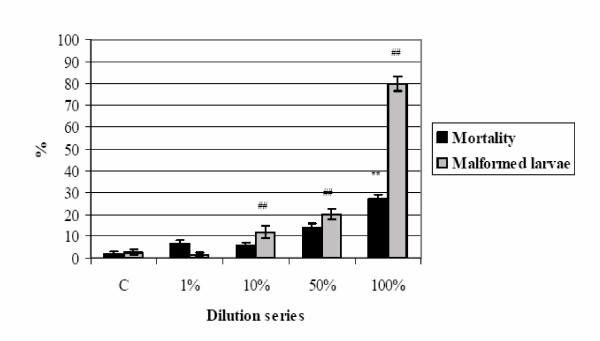
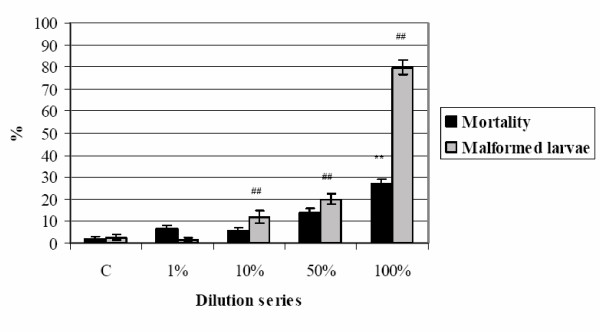
It is estimated that over 80% of respirable particulate matter (PM10) in cities comes from road transport and that tire and brake wear are responsible for the 3-7% emission of it. Data on the indicators of environmental impact of tire debris (TD), originated from the tire abrasion on roads, are extremely scarce, even though TD contains chemicals (zinc and organic compounds) which can be released in the environment. METHODS: TD particle morphology was analysed with SEM, TEM and FIB instruments. TD eluates and TD organic extracts were tested at dilution series on human cell lines and Xenopus laevis embryos. 50 and 100 g/L TD were used for the eluates obtained after 24 h at pH 3 and the quantity of zinc present was measured with a ICP-AES. Eluates diluted to 1%, 10%, 50% in culture media and undiluted were used on X. laevis embryos in the FETAX test. HepG2 cells were exposed for 24 h to 0.05 - 50 mug/ml of zinc salt while A549 cells were exposed for 24, 48 and 72 h to 10, 50, 60, or 75 mug/ml of TD extract. X. laevis embryos were exposed to 50, 80, 100, or 120 mug/ml TD extract. RESULTS: The solution of undiluted 50 g/L TD produced 80.2% mortality (p < 0.01) in X. laevis embryos and this toxic effect was three times greater than that produced by 100 g/L TD. Zn accumulation in HepG2 cells was evident after 4 h exposure. A549 cells exposed to TD organic extract for 72 h presented a modified morphology, a decrease in cell proliferation and an increase in DNA damage as shown by comet assay. The dose 80 mug/ml of TD extract produced 14.6% mortality in X. laevis embryos and 15.9% mortality at 120 mug/ml. Treatment with 80, 100, or 120 mug/ml TD organic extract increased from 14.8% to 37.8% malformed larvae percentages compared to 5.6% in the control. CONCLUSION: Since the amount of Zn leached from TD is related to pH, aggregation of particles and elution process, the quantity of TD present in the environment has to be taken into account. Moreover the atmospheric conditions, which may deeply influence the particle properties, have to be considered. The TD organic fraction was toxic for cells and organisms. Thus, because of its chemical components, TD may have a potential environmental impact and has to be further investigated.
据估计,城市中超过80%的可吸入颗粒物(PM10)来自道路运输,其中轮胎和刹车磨损占其排放量的3-7%。尽管轮胎碎屑(TD)含有可释放到环境中的化学物质(锌和有机化合物),但源自道路上轮胎磨损的TD对环境影响指标的数据极为稀少。方法:用扫描电子显微镜(SEM)、透射电子显微镜(TEM)和聚焦离子束(FIB)仪器分析TD颗粒形态。对TD洗脱液和TD有机提取物进行稀释系列测试,作用于人类细胞系和非洲爪蟾胚胎。在pH值为3的条件下24小时后获得的洗脱液,使用50和100 g/L的TD,并用电感耦合等离子体发射光谱仪(ICP-AES)测量其中锌的含量。在FETAX试验中,将稀释至1%、10%、50%的洗脱液以及未稀释的洗脱液用于非洲爪蟾胚胎。将HepG2细胞暴露于0.05 - 50微克/毫升的锌盐中24小时,而将A549细胞暴露于10、50、60或75微克/毫升的TD提取物中24、48和72小时。将非洲爪蟾胚胎暴露于50、80、100或120微克/毫升的TD提取物中。结果:未稀释的50 g/L TD溶液在非洲爪蟾胚胎中产生了80.2%的死亡率(p < 0.01),这种毒性作用比100 g/L TD产生的毒性作用大三倍。暴露4小时后,HepG2细胞中锌的积累明显。暴露于TD有机提取物72小时的A549细胞呈现出形态改变、细胞增殖减少以及彗星试验显示的DNA损伤增加。80微克/毫升的TD提取物剂量在非洲爪蟾胚胎中产生了14.6%的死亡率,120微克/毫升时死亡率为15.9%。与对照组的5.6%相比,用80、100或120微克/毫升TD有机提取物处理后,畸形幼虫的百分比从14.8%增加到37.8%。结论:由于从TD中浸出的锌量与pH值、颗粒聚集和洗脱过程有关,必须考虑环境中TD的含量。此外,必须考虑可能深刻影响颗粒性质的大气条件。TD有机部分对细胞和生物体有毒。因此,由于其化学成分,TD可能具有潜在的环境影响,必须进一步研究。