Aiello Allison E, Marshall Bonnie, Levy Stuart B, Della-Latta Phyllis, Lin Susan X, Larson Elaine
University of Michigan School of Public Health, Ann Arbor, Michigan 48104-2548, USA.
Emerg Infect Dis. 2005 Oct;11(10):1565-70. doi: 10.3201/eid1110.041276.
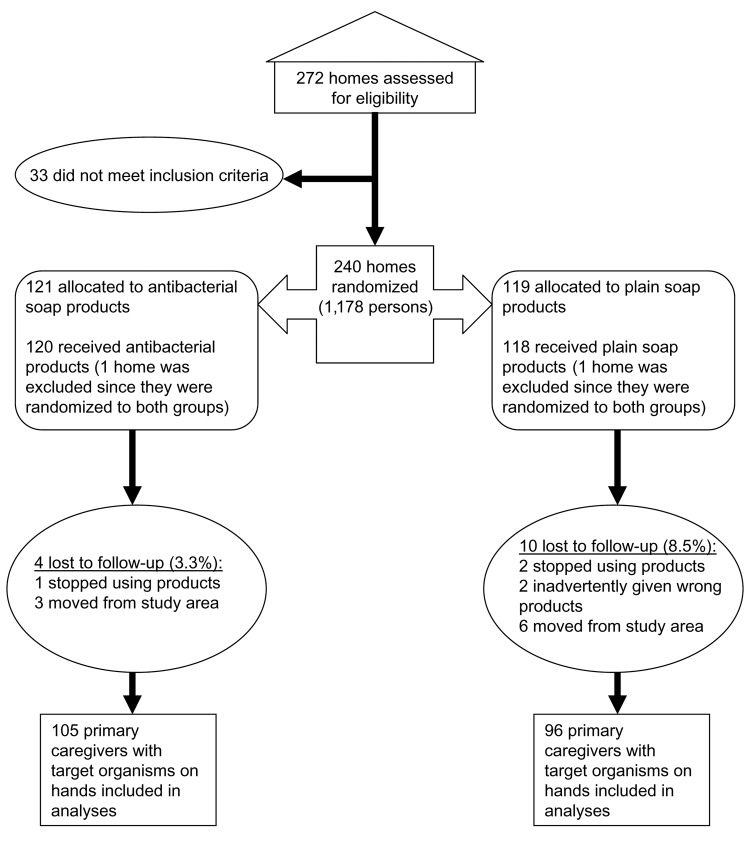
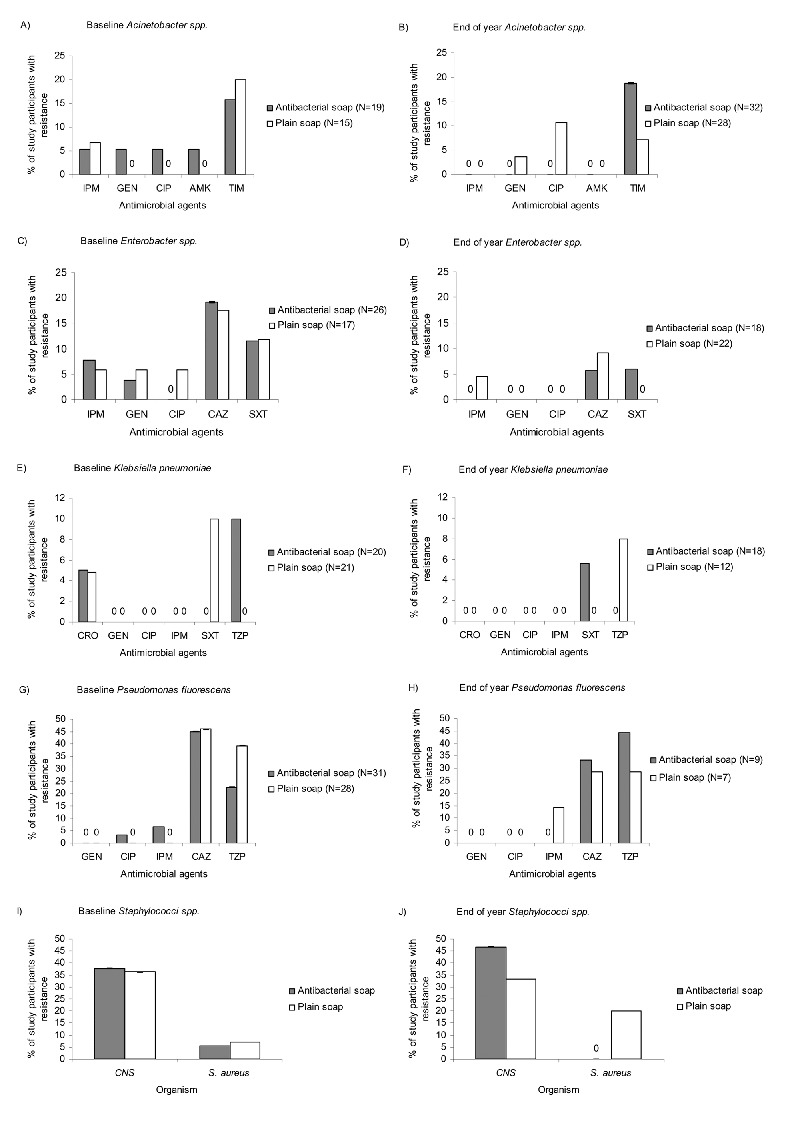
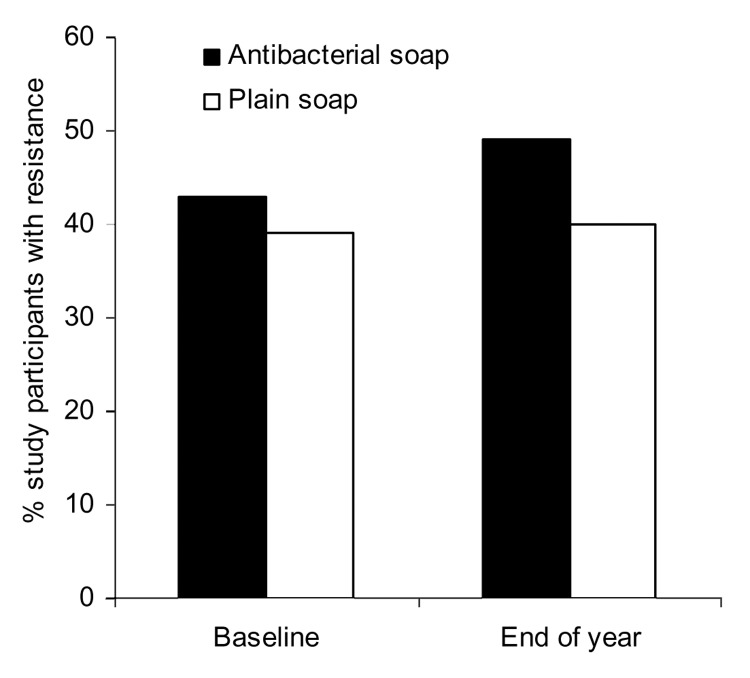
We examined whether household use of antibacterial cleaning and hygiene products is an emerging risk factor for carriage of antimicrobial drug-resistant bacteria on hands of household members. Households (N = 224) were randomized to use of antibacterial or nonantibacterial cleaning and hygiene products for 1 year. Logistic regression was used to assess the influence of antibacterial product use in homes. Antibacterial product use did not lead to a significant increase in antimicrobial drug resistance after 1 year (odds ratio 1.33, 95% confidence interval 0.74-2.41), nor did it have an effect on bacterial susceptibility to triclosan. However, more extensive and longer term use of triclosan might provide a suitable environment for emergence of resistant species. Further research on this issue is needed.
我们研究了家庭使用抗菌清洁和卫生产品是否是家庭成员手上携带抗菌药物耐药菌的一个新出现的风险因素。将224户家庭随机分为使用抗菌或非抗菌清洁和卫生产品,为期1年。采用逻辑回归分析评估家庭中使用抗菌产品的影响。使用抗菌产品1年后,抗菌药物耐药性并未显著增加(优势比1.33,95%置信区间0.74 - 2.41),对细菌对三氯生的敏感性也没有影响。然而,更广泛、更长期地使用三氯生可能为耐药菌的出现提供适宜环境。对此问题需要进一步研究。