Yu Yanan, Breitbart Mya, McNairnie Pat, Rohwer Forest
Department of Biology, San Diego State University, San Diego, CA, USA.
BMC Bioinformatics. 2006 Feb 7;7:57. doi: 10.1186/1471-2105-7-57.
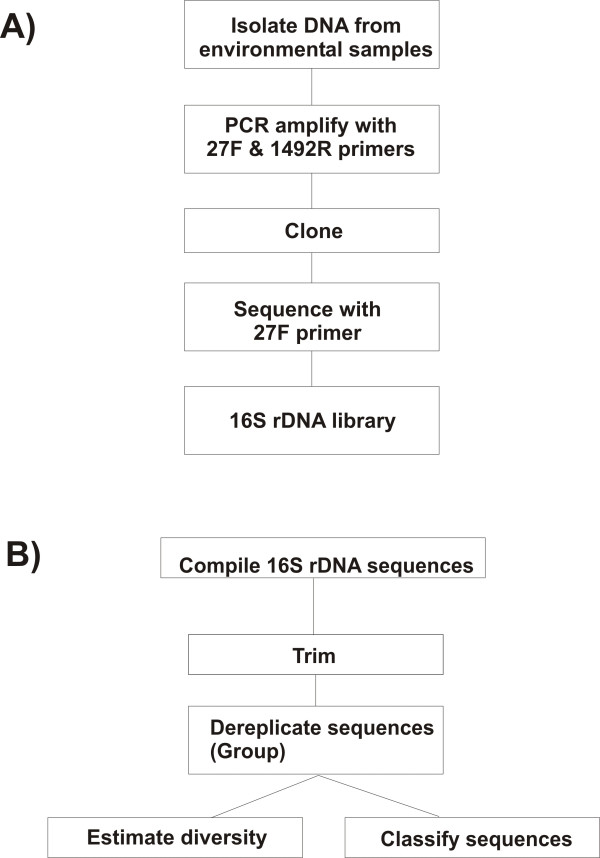
High-throughput sequencing makes it possible to rapidly obtain thousands of 16S rDNA sequences from environmental samples. Bioinformatic tools for the analyses of large 16S rDNA sequence databases are needed to comprehensively describe and compare these datasets.
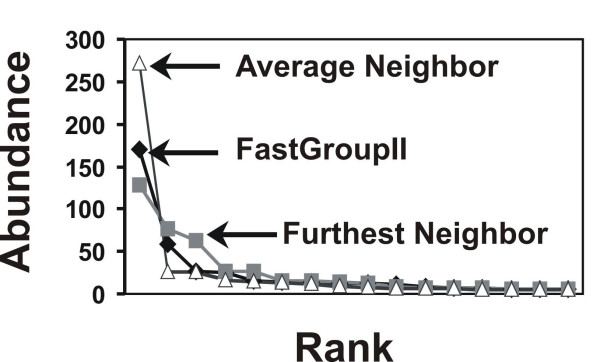
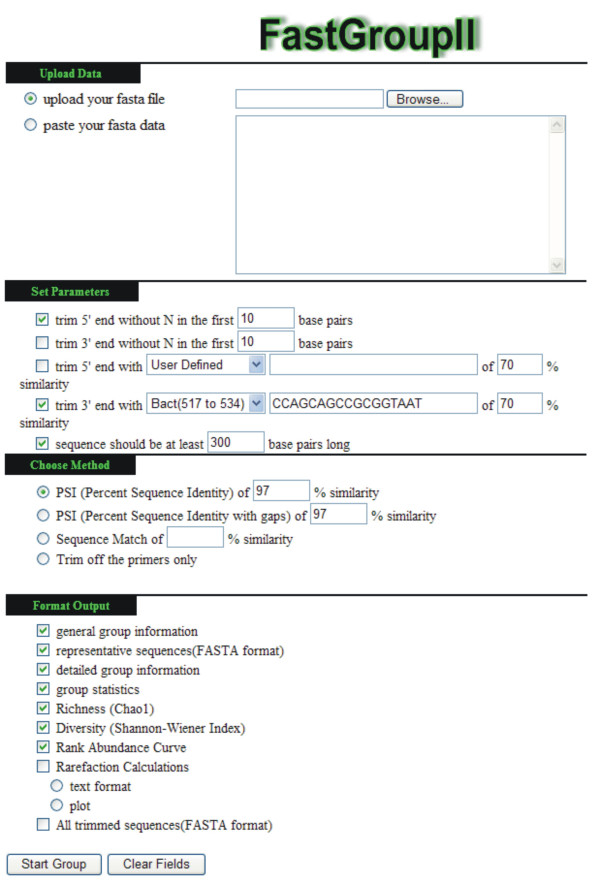
FastGroupII is a web-based bioinformatics platform to dereplicate large 16S rDNA libraries. FastGroupII provides users with the option of four different dereplication methods, performs rarefaction analysis, and automatically calculates the Shannon-Wiener Index and Chao1. FastGroupII was tested on a set of 16S rDNA sequences from coral-associated Bacteria. The different grouping algorithms produced similar, but not identical, results. This suggests that 16S rDNA datasets need to be analyzed in multiple ways when being used for community ecology studies.
FastGroupII is an effective bioinformatics tool for the trimming and dereplication of 16S rDNA sequences. Several standard diversity indices are calculated, and the raw sequences are prepared for downstream analyses.
高通量测序使得从环境样本中快速获取数千条16S rDNA序列成为可能。需要生物信息学工具来分析大型16S rDNA序列数据库,以便全面描述和比较这些数据集。
FastGroupII是一个基于网络的生物信息学平台,用于对大型16S rDNA文库进行去冗余操作。FastGroupII为用户提供了四种不同去冗余方法的选项,执行稀疏分析,并自动计算香农-维纳指数和Chao1指数。在一组来自与珊瑚相关细菌的16S rDNA序列上对FastGroupII进行了测试。不同的分组算法产生了相似但不完全相同的结果。这表明在用于群落生态学研究时,16S rDNA数据集需要用多种方法进行分析。
FastGroupII是一种用于16S rDNA序列修剪和去冗余的有效生物信息学工具。它计算了几个标准的多样性指数,并为下游分析准备了原始序列。