Lane Liane Wardlow, Groisman Michelle, Ferreira Victor S
University of California, San Diego, CA 92093-0109, USA.
Psychol Sci. 2006 Apr;17(4):273-7. doi: 10.1111/j.1467-9280.2006.01697.x.
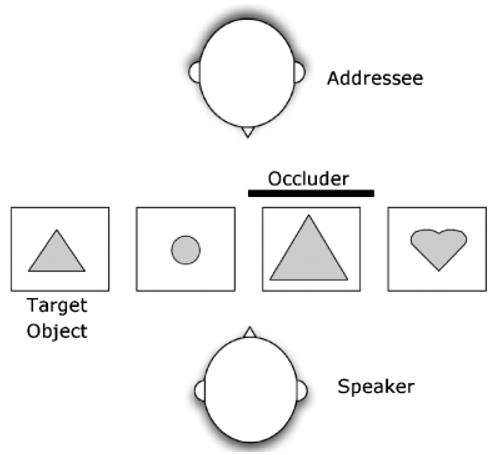
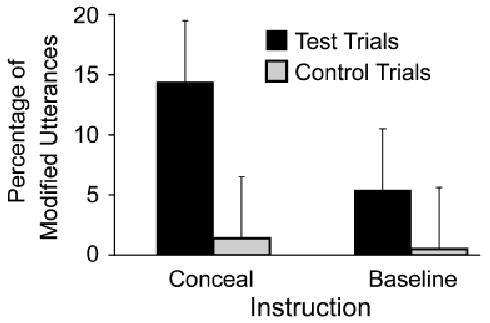
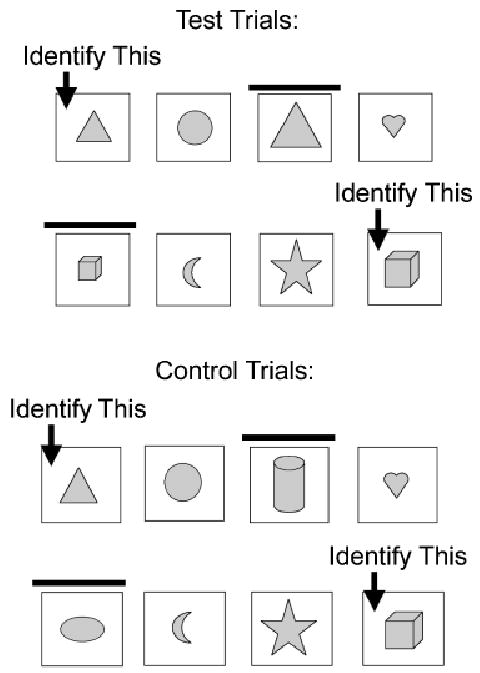
Speakers' descriptions sometimes inappropriately refer to information known only to them, thereby "leaking" knowledge of that private information. We evaluated whether speakers can explicitly control such leakage in light of its communicative consequences. Speakers described mutually known objects (e.g., a triangle) that had size-contrasting matches that were privileged to the speakers (e.g., a larger triangle visible to the speakers only), so that use of a contrasting adjective (e.g., small) involved referring to the privileged information. Half the time, speakers were instructed to conceal the identity of the privileged object. If speakers can control their leaked references to privileged information, this conceal instruction should make such references less likely. Surprisingly, the conceal instruction caused speakers to refer to privileged objects more than they did in the baseline condition. Thus, not only do speakers have difficulty not leaking privileged information, but attempts to avoid such leakage only make it more likely.
说话者的描述有时会不恰当地提及只有他们自己知道的信息,从而“泄露”该私密信息。我们评估了说话者是否能根据其交流后果来明确控制这种泄露。说话者描述了一些双方都知道的物体(比如一个三角形),这些物体有与之大小形成对比的匹配物,而这些匹配物是说话者所特有的(比如只有说话者能看到的一个更大的三角形),这样一来,使用对比性形容词(比如“小”)就涉及到提及这些特有的信息。在一半的时间里,会指示说话者隐瞒特有物体的身份。如果说话者能够控制他们对特有信息的泄露性提及,那么这个隐瞒指示应该会使此类提及的可能性降低。令人惊讶的是,与基线条件相比,隐瞒指示导致说话者更多地提及特有物体。因此,说话者不仅难以不泄露特有信息,而且试图避免这种泄露只会使其更有可能发生。