Tannich E, Burchard G D
Bernhard Nocht Institute for Tropical Medicine, Hamburg, Federal Republic of Germany.
J Clin Microbiol. 1991 Feb;29(2):250-5. doi: 10.1128/jcm.29.2.250-255.1991.
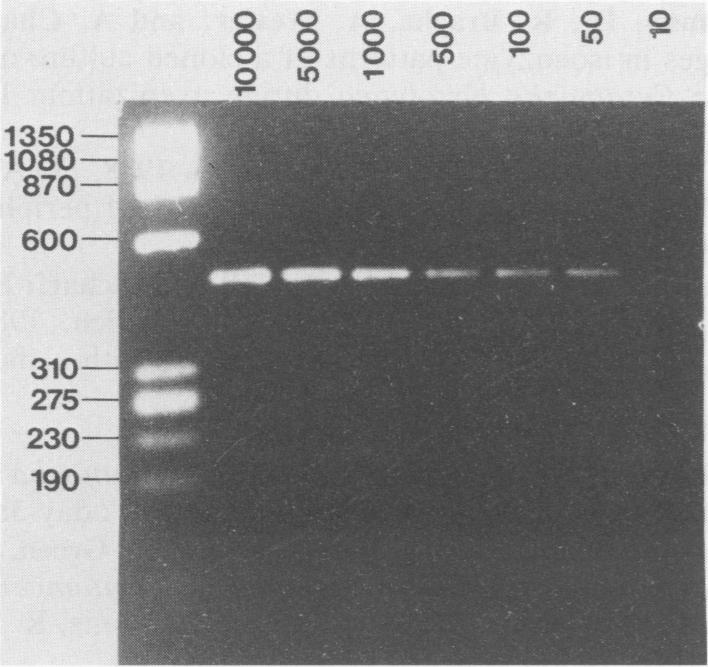
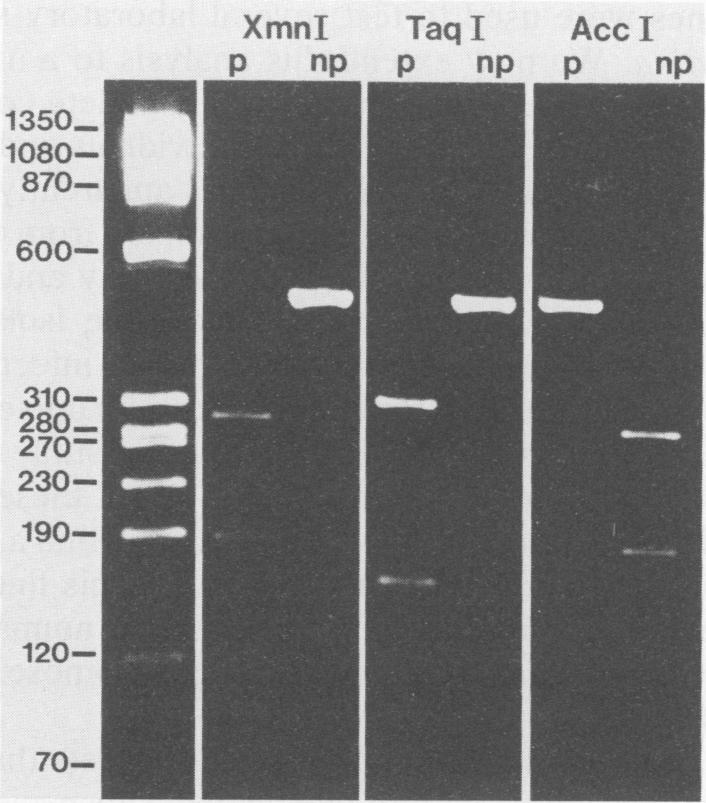
We previously reported the identification of homologous cDNA clones derived from a pathogenic isolate and a nonpathogenic isolate of Entamoeba histolytica, which had been designated cEh-P1 and cEh-NP1, respectively. Sequence analysis of both clones had revealed 10% nucleic acid substitutions, which were dispersed over the entire sequence. This genetic difference had been found to be conserved between all four pathogenic and all five nonpathogenic laboratory strains of E. histolytica tested. On the basis of nucleic acid substitutions, we have now developed a sensitive assay to distinguish pathogenic from nonpathogenic forms of E. histolytica by using fresh clinical isolates. Comparing the sequence of cEh-P1 and cEh-NP1, we identified a 482-bp segment that contained identical 5' and 3' ends but differed in internal cleavage sites for restriction endonucleases. By using oligonucleotide primers corresponding to the 5' and 3' ends of this segment, the corresponding gene was amplified by the polymerase chain reaction. Endonuclease digestion of the amplified DNA yielded restriction fragments that are characteristic for pathogenic and nonpathogenic forms. This assay allows the detection and classification of fewer than 10 amoebae within a few hours. The differentiation of 48 isolates into pathogenic and nonpathogenic strains by using this method corresponded to the clinical status of the infected individuals and to the classification obtained by isoenzyme determination. The results further support the concept that pathogenic and nonpathogenic strains of E. histolytica constitute distinct subspecies.
我们先前报道过,从溶组织内阿米巴的致病分离株和非致病分离株中鉴定出了同源cDNA克隆,分别命名为cEh-P1和cEh-NP1。对这两个克隆的序列分析显示,核酸替换率为10%,这些替换分散在整个序列中。已发现这种遗传差异在所测试的所有4个致病实验室菌株和所有5个非致病实验室菌株之间是保守的。基于核酸替换,我们现在开发了一种灵敏的检测方法,通过使用新鲜的临床分离株来区分溶组织内阿米巴的致病型和非致病型。比较cEh-P1和cEh-NP1的序列,我们鉴定出一个482 bp的片段,其5'端和3'端相同,但限制性内切酶的内部切割位点不同。通过使用与该片段5'端和3'端对应的寡核苷酸引物,通过聚合酶链反应扩增相应的基因。扩增DNA的内切酶消化产生了致病型和非致病型特有的限制性片段。该检测方法能够在几小时内检测并分类少于10个阿米巴。使用该方法将48个分离株区分为致病株和非致病株,这与感染个体的临床状况以及通过同工酶测定获得的分类结果一致。这些结果进一步支持了溶组织内阿米巴的致病株和非致病株构成不同亚种的概念。