Brown James A, Sherlock Gavin, Myers Chad L, Burrows Nicola M, Deng Changchun, Wu H Irene, McCann Kelly E, Troyanskaya Olga G, Brown J Martin
Department of Radiation Oncology, Stanford University School of Medicine, Stanford, CA 94305-5152, USA.
Mol Syst Biol. 2006;2:2006.0001. doi: 10.1038/msb4100043. Epub 2006 Jan 17.
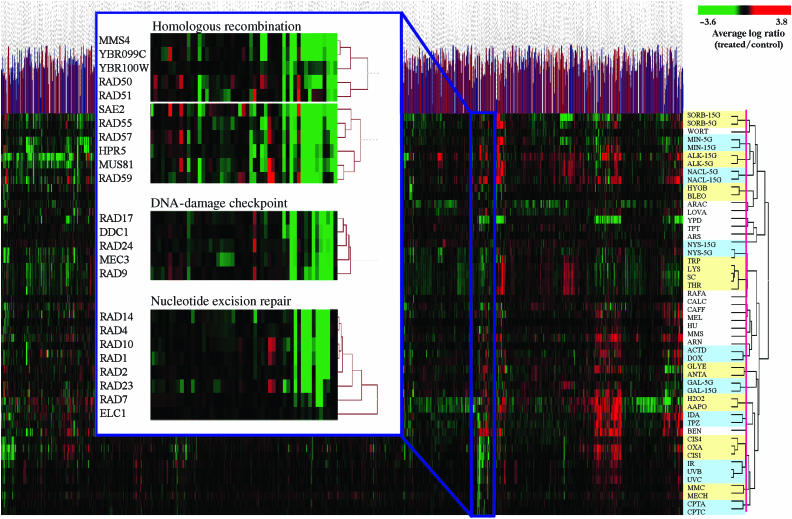
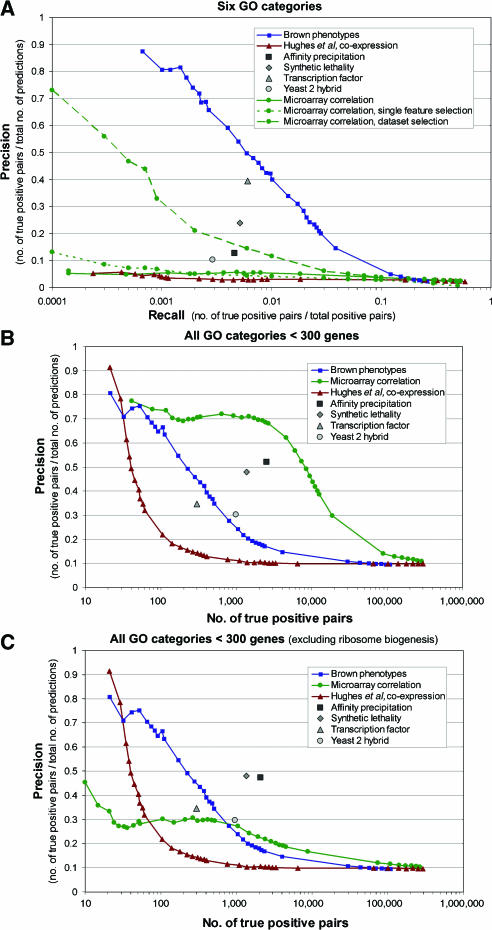
We present a method for the global analysis of the function of genes in budding yeast based on hierarchical clustering of the quantitative sensitivity profiles of the 4756 strains with individual homozygous deletion of nonessential genes to a broad range of cytotoxic or cytostatic agents. This method is superior to other global methods of identifying the function of genes involved in the various DNA repair and damage checkpoint pathways as well as other interrogated functions. Analysis of the phenotypic profiles of the 51 diverse treatments places a total of 860 genes of unknown function in clusters with genes of known function. We demonstrate that this can not only identify the function of unknown genes but can also suggest the mechanism of action of the agents used. This method will be useful when used alone and in conjunction with other global approaches to identify gene function in yeast.
我们提出了一种基于对4756个非必需基因纯合缺失的单倍体酵母菌株针对多种细胞毒性或细胞生长抑制药物的定量敏感性谱进行层次聚类,来对芽殖酵母中的基因功能进行全局分析的方法。该方法优于其他用于鉴定参与各种DNA修复和损伤检查点途径以及其他被研究功能的基因功能的全局方法。对51种不同处理的表型谱分析将总共860个功能未知的基因与功能已知的基因归为簇。我们证明,这不仅可以鉴定未知基因的功能,还可以提示所用药物的作用机制。该方法单独使用或与其他全局方法结合使用时,将有助于鉴定酵母中的基因功能。