Totir Monica A, Helfand Marion S, Carey Marianne P, Sheri Anjaneyulu, Buynak John D, Bonomo Robert A, Carey Paul R
Departments of Biochemistry, Case Western Reserve University, Cleveland, Ohio 44106, USA.
Biochemistry. 2007 Aug 7;46(31):8980-7. doi: 10.1021/bi7006146. Epub 2007 Jul 13.
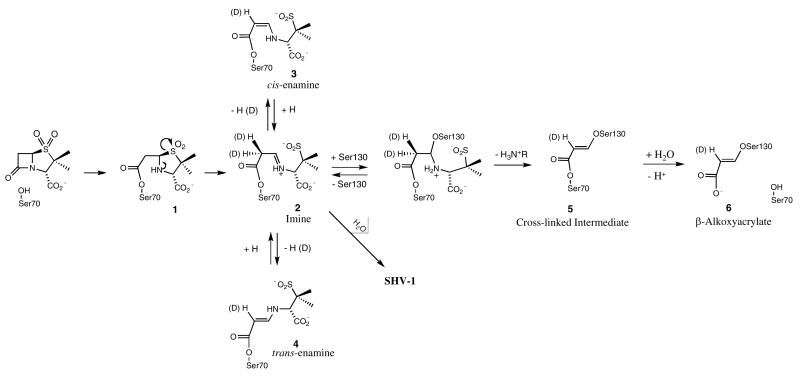
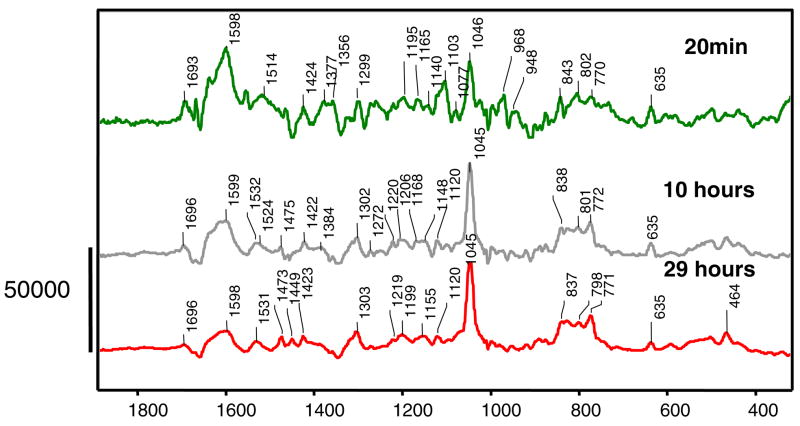
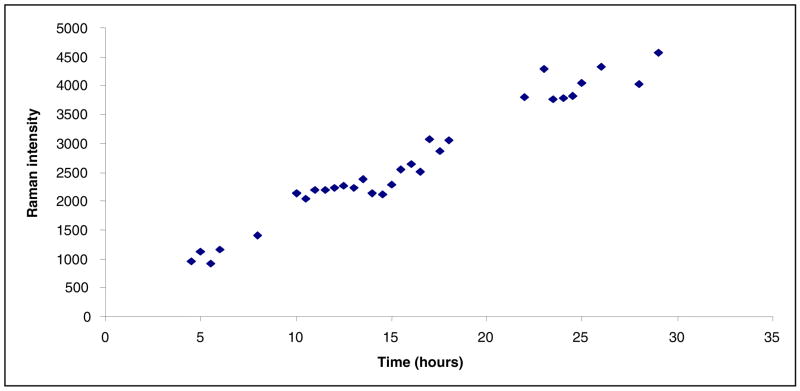
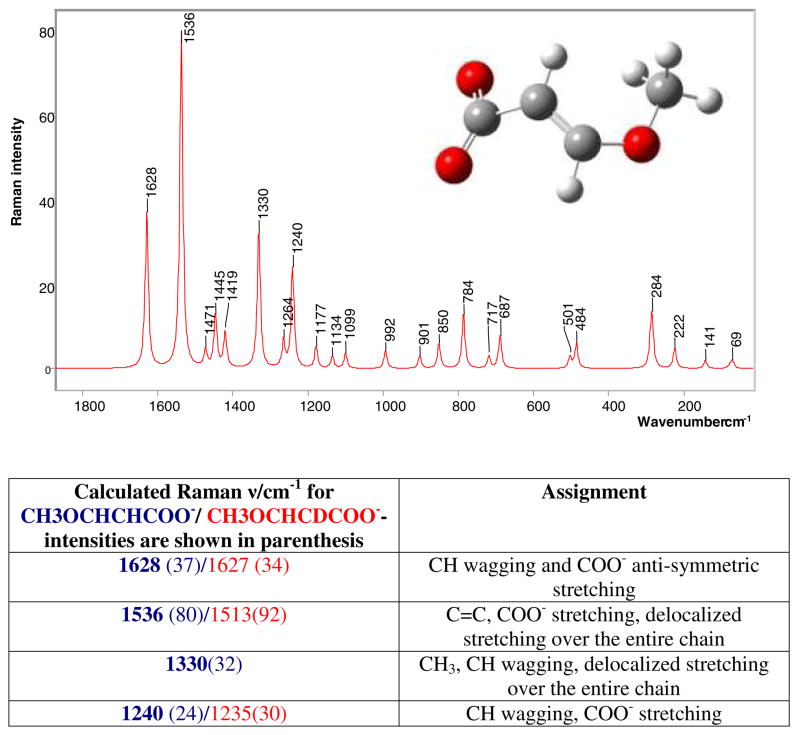
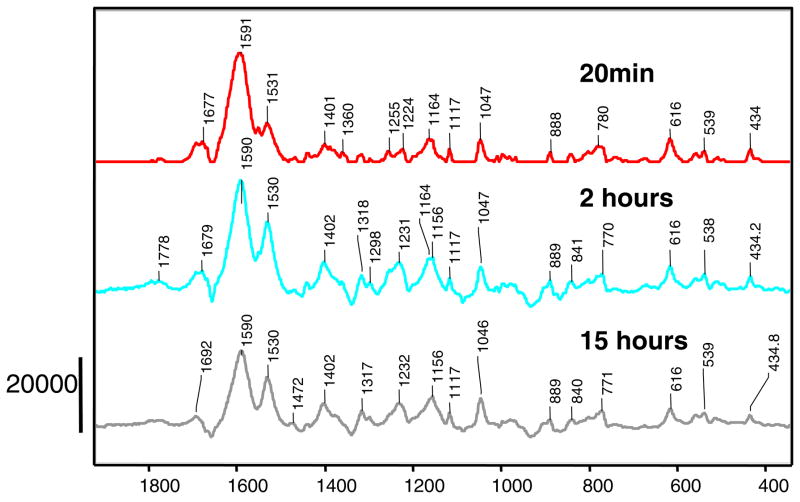
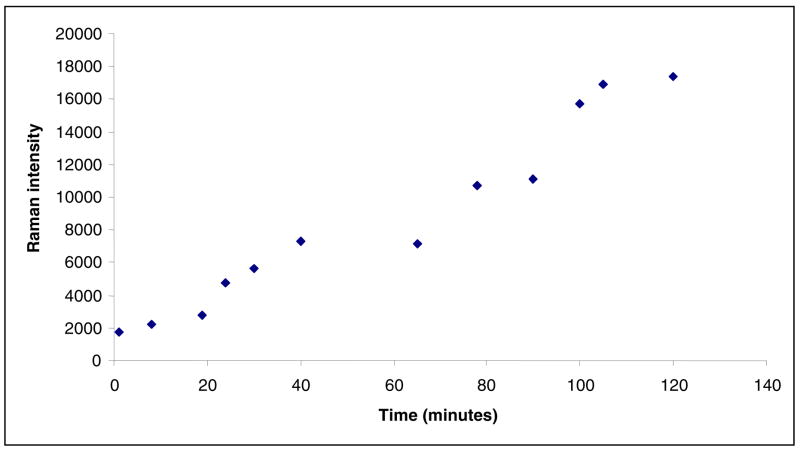
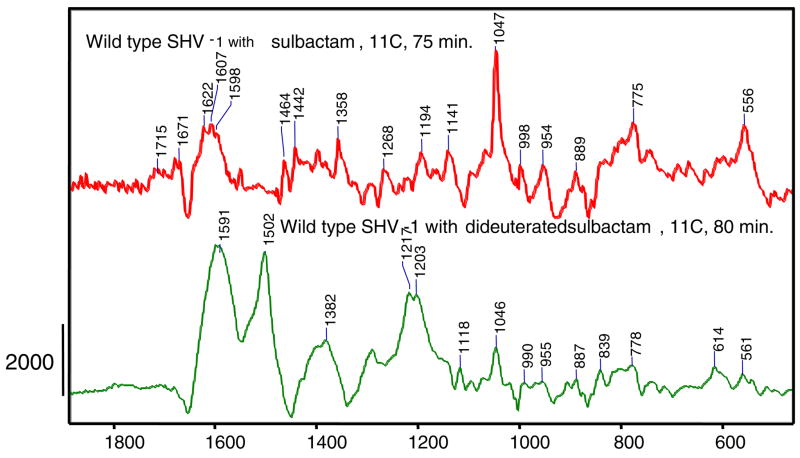
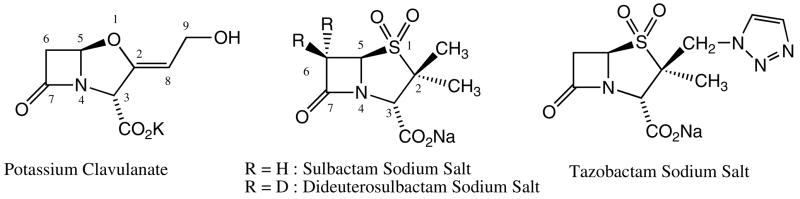
Sulbactam is a mechanism-based inhibitor of beta-lactamase enzymes used in clinical practice. It undergoes a complex series of chemical reactions in the active site that have been studied extensively in the past three decades. However, the actual species that gives rise to inhibition in a clinical setting has not been established. Recent studies by our group, using Raman microscopy and X-ray crystallography, have found that large quantities of enamine-based acyl-enzyme species are present within minutes in single crystals of SHV-1 beta-lactamases which can lead to significant inhibition. The enamines are formed by breakdown of the cyclic beta-lactam structures with further transformations leading to imine formation and subsequent isomerization to cis and/or trans enamines. Another favored form of inhibition arises from attack on the imine by a second nucleophilic amino acid side chain, e.g., from serine 130, to form a cross-linked species in the active site that can degrade to an acrylate-like species irreversibly bound to the enzyme. Thus, the imine is at a branch point on the reaction pathway. Using sulbactam and 6,6-dideuterated sulbactam we follow these alternate paths in WT and E166A SHV-1 beta-lactamase by means of Raman microscopic studies on single enzyme crystals. For the unlabeled sulbactam, the Raman data show the presence of an acrylate-like species, probably 3-serine acrylate, several hours after the reaction is started in the crystal. However, for the 6,6-dideutero analogue the acrylate signature appears on the time scale of minutes. The Raman signatures, principally an intense feature near 1530 cm-1, are assigned based on quantum mechanical calculations on model compounds that mimic acrylate species in the active site. The different time scales observed for acrylate-like product formation are ascribed to different rates of reaction involving the imine intermediate. It is proposed that for the unsubstituted sulbactam the conversion from imine to enamine, which involves breaking a C-H bond, is aided by quantum mechanical tunneling. For the 6,6-dideutero-sulbactam the same step involves breaking a C-D bond, which has little or no assistance from tunneling. Consequently the conversion to enamines is slower, and a higher population of imine results, presenting the opportunity for the competing reaction with the second nucleophile, serine 130 being the prime candidate. The hydrolysis of the resulting cross-linked intermediate leads to the observed rapid buildup of the acrylate product in the Raman spectra from the dideutero analogue. The protocol used here, essentially running the reactions with the two forms of sulbactam in parallel, provides an element of control and enables us to conclude that, for the unsubstituted sulbactam, the formation of the cross-linked intermediate and the final irreversible acrylate product is not a significant route to inhibition of SHV-1.
舒巴坦是临床实践中使用的一种基于机制的β-内酰胺酶抑制剂。它在活性位点经历一系列复杂的化学反应,过去三十年对此进行了广泛研究。然而,在临床环境中产生抑制作用的实际物种尚未确定。我们小组最近利用拉曼显微镜和X射线晶体学进行的研究发现,在SHV-1β-内酰胺酶的单晶中,几分钟内就会出现大量基于烯胺的酰基酶物种,这可能导致显著的抑制作用。烯胺是由环状β-内酰胺结构分解形成的,进一步转化导致亚胺形成,随后异构化为顺式和/或反式烯胺。另一种常见的抑制形式是由第二个亲核氨基酸侧链(例如丝氨酸130)攻击亚胺,在活性位点形成交联物种,该物种可降解为与酶不可逆结合的类似丙烯酸酯的物种。因此,亚胺处于反应途径的分支点。通过对单个酶晶体进行拉曼显微镜研究,我们使用舒巴坦和6,6-二氘代舒巴坦追踪野生型和E166A SHV-1β-内酰胺酶中的这些替代途径。对于未标记的舒巴坦,拉曼数据显示在晶体中反应开始数小时后存在一种类似丙烯酸酯的物种,可能是3-丝氨酸丙烯酸酯。然而,对于6,6-二氘代类似物,丙烯酸酯特征在几分钟的时间尺度上出现。拉曼特征主要是1530 cm-1附近的一个强峰,基于对模拟活性位点中丙烯酸酯物种的模型化合物的量子力学计算进行归属。观察到的类似丙烯酸酯产物形成的不同时间尺度归因于涉及亚胺中间体的不同反应速率。有人提出,对于未取代的舒巴坦,从亚胺到烯胺的转化涉及打破C-H键,这受到量子力学隧穿的帮助。对于6,6-二氘代舒巴坦,相同步骤涉及打破C-D键,这几乎没有或没有隧穿的帮助。因此,向烯胺的转化较慢,亚胺的含量较高,这为与第二个亲核试剂(丝氨酸130是主要候选者)发生竞争反应提供了机会。所得交联中间体的水解导致在二氘代类似物的拉曼光谱中观察到丙烯酸酯产物的快速积累。这里使用的方案,基本上是同时用两种形式的舒巴坦进行反应,提供了一种控制因素,使我们能够得出结论,对于未取代的舒巴坦,交联中间体和最终不可逆丙烯酸酯产物的形成不是抑制SHV-1的重要途径。