Faager Gun, Söderlund Karin, Sköld Carl Magnus, Rundgren Siw, Tollbäck Anna, Jakobsson Per
Department of Neurobiology, Care Sciences and Society, Division of Physiotherapy, Karolinska Institutet, Department of Physiotherapy, Karolinska University Hospital, Solna, Sweden.
Int J Chron Obstruct Pulmon Dis. 2006;1(4):445-53. doi: 10.2147/copd.2006.1.4.445.
Patients with chronic obstructive pulmonary disease (COPD) have low exercise capacity and low content of high energetic phosphates in their skeletal muscles. The aim of the present study was to investigate whether creatine supplementation together with exercise training may increase physical performance compared with exercise training in patients with COPD.
In a randomized, double-blind, placebo-controlled study, 23 patients with COPD (forced expiratory volume in one second [FEV1] < 70% of predicted) were randomized to oral creatine (n = 13) or placebo (n = 10) supplementation during an 8-week rehabilitation programme including exercise training. Physical performance was assessed by Endurance Shuttle Walking Test (ESWT), dyspnea and leg fatigue with Borg CR- 10, quality of life with St George's Respiratory Questionnaire (SGRQ). In addition, lung function test, artery blood gases, grip strength test, muscle strength and fatigue in knee extensors were measured.
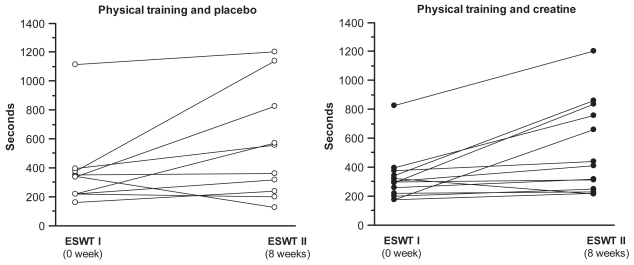
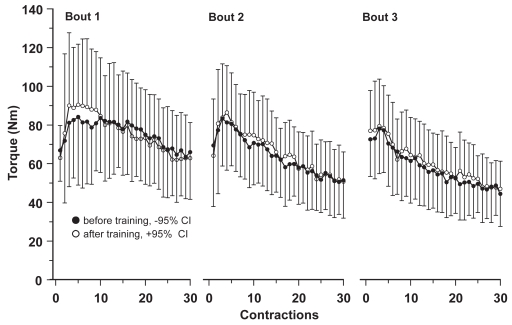
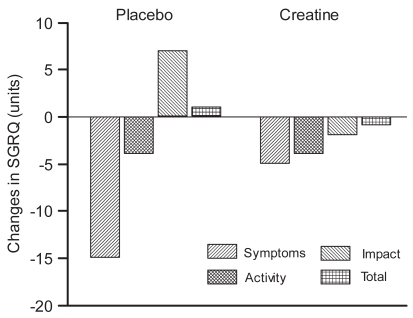
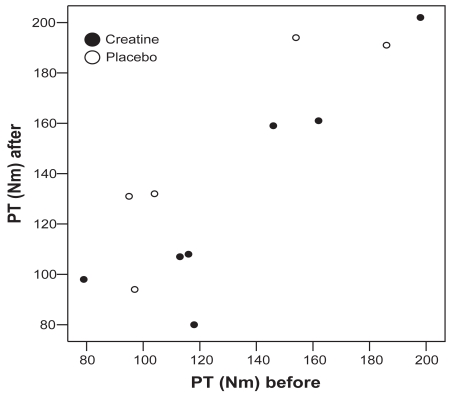
COPD patients receiving creatine supplementation increased their average walking time by 61% (ESWT) (p < 0.05) after the training period compared with 48% (p = 0.07) in the placebo group. Rated dyspnea directly after the ESWT decreased significantly from 7 to 5 (p < 0.05) in the creatine group. However, the difference between the groups was not statistically significant neither in walking time nor in rated dyspnea. Creatine supplementation did not increase the health related quality of life, lung function, artery blood gases, grip strength and knee extensor strength/fatigue.
Oral creatine supplementation in combination with exercise training showed no significant improvement in physical performance, measured as ESWT, in patients with COPD compared with exercise training alone.
慢性阻塞性肺疾病(COPD)患者运动能力较低,且骨骼肌中高能磷酸盐含量较低。本研究的目的是调查与单纯运动训练相比,补充肌酸联合运动训练是否能提高COPD患者的身体机能。
在一项随机、双盲、安慰剂对照研究中,23例COPD患者(一秒用力呼气容积[FEV1]<预测值的70%)在为期8周的包括运动训练的康复计划中被随机分为口服肌酸组(n = 13)或安慰剂组(n = 10)。通过耐力穿梭步行试验(ESWT)评估身体机能,用Borg CR-10评估呼吸困难和腿部疲劳,用圣乔治呼吸问卷(SGRQ)评估生活质量。此外,还测量了肺功能测试、动脉血气、握力测试、膝关节伸肌的肌肉力量和疲劳情况。
训练期后,补充肌酸的COPD患者平均步行时间增加了61%(ESWT)(p < 0.05),而安慰剂组增加了48%(p = 0.07)。肌酸组ESWT后直接评定的呼吸困难程度从7显著降至5(p < 0.05)。然而,两组在步行时间和评定的呼吸困难方面差异均无统计学意义。补充肌酸并未提高与健康相关的生活质量、肺功能、动脉血气、握力以及膝关节伸肌力量/疲劳。
与单纯运动训练相比,COPD患者补充口服肌酸联合运动训练在以ESWT衡量的身体机能方面没有显著改善。