Baker Erin Shammel, Tang Keqi, Danielson William F, Prior David C, Smith Richard D
Biological Sciences Division and Environmental Molecular Sciences Laboratory, Pacific Northwest National Laboratory, Richland, Washington 99352, USA.
J Am Soc Mass Spectrom. 2008 Mar;19(3):411-9. doi: 10.1016/j.jasms.2007.11.018. Epub 2007 Dec 4.
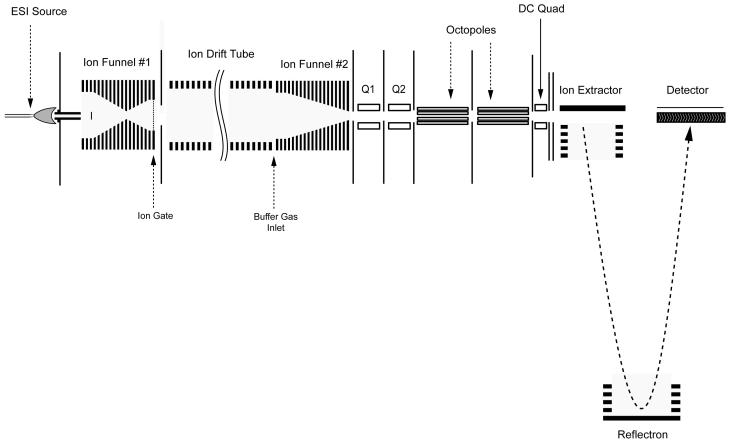
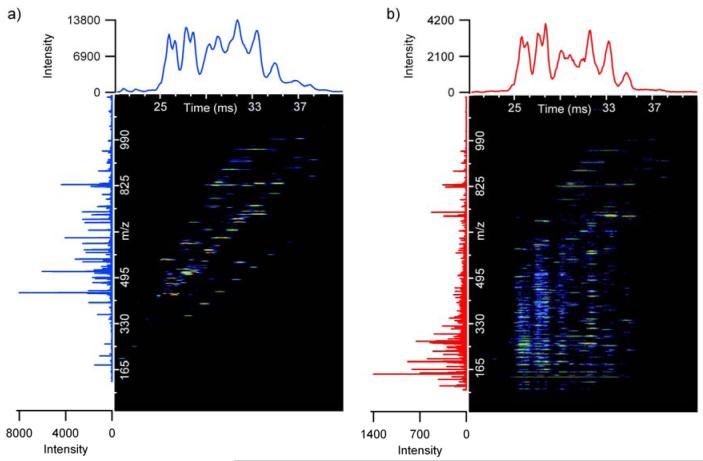
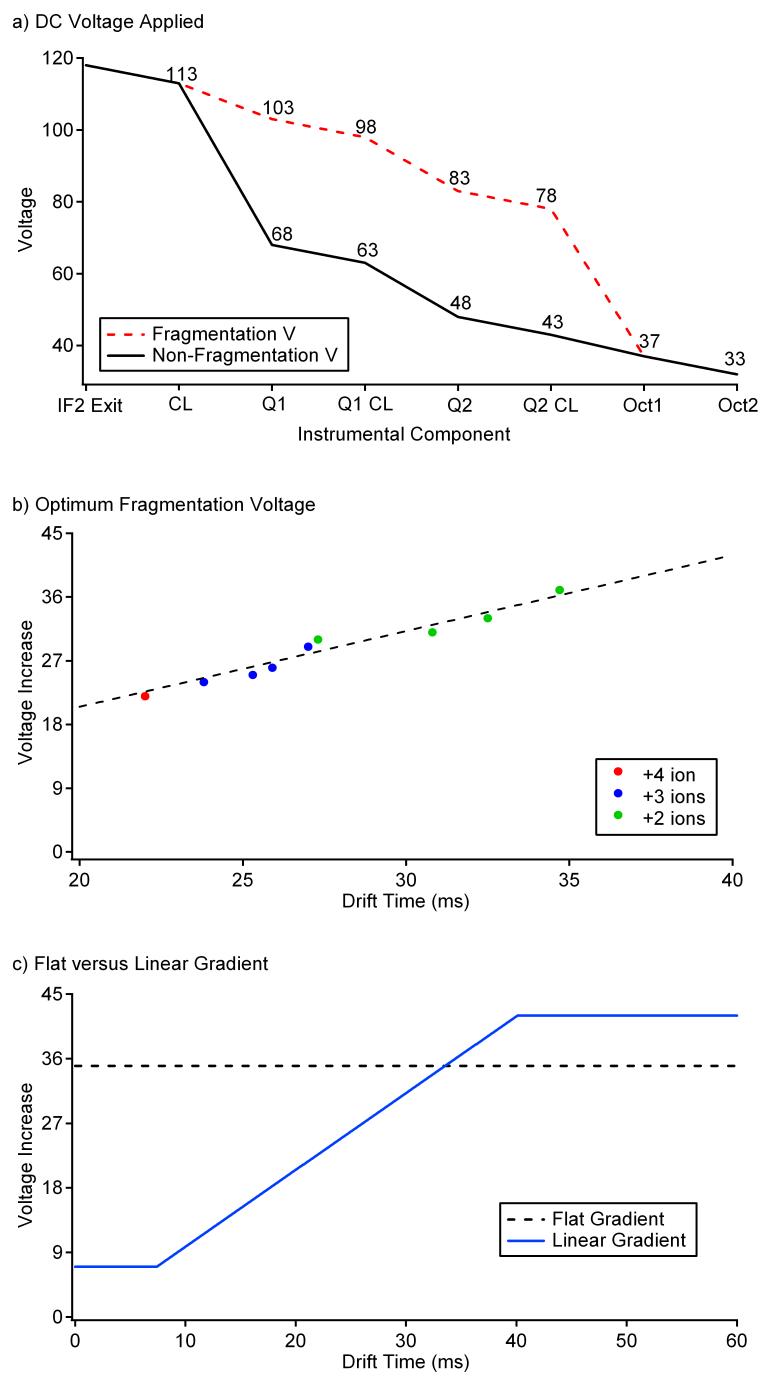
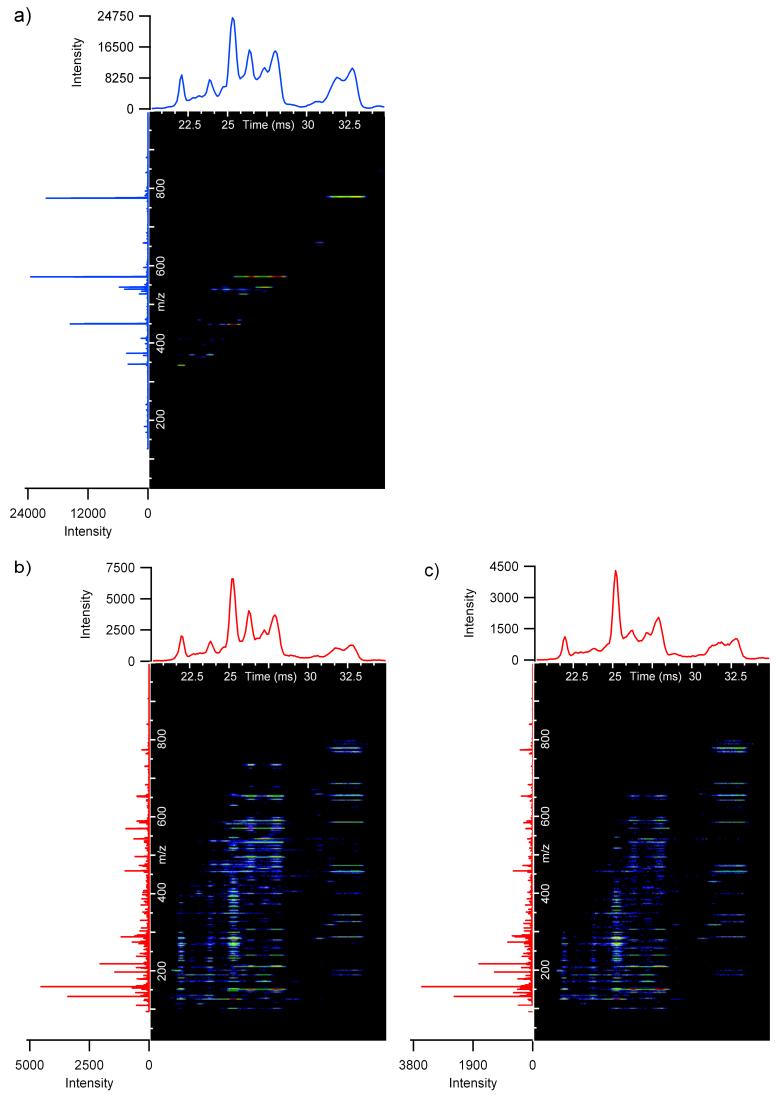
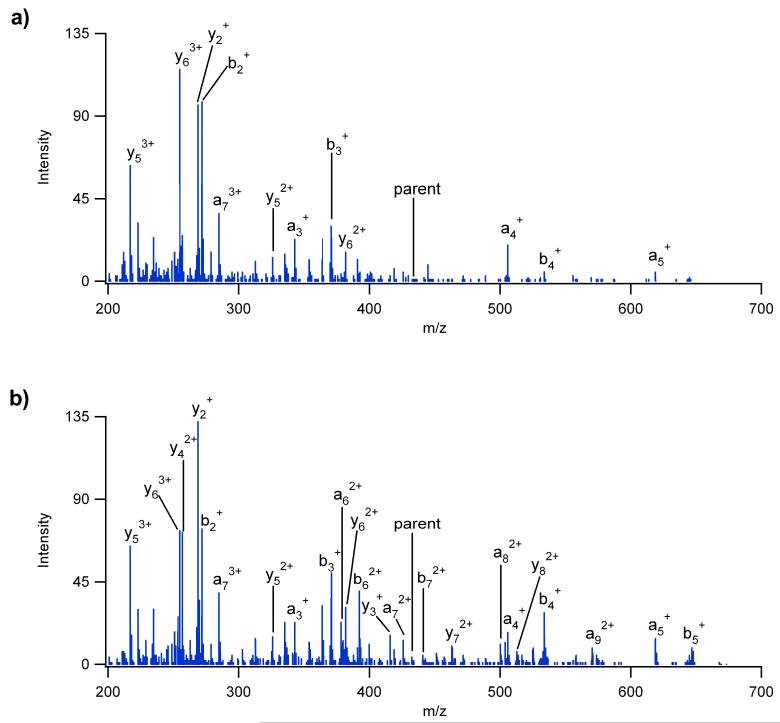
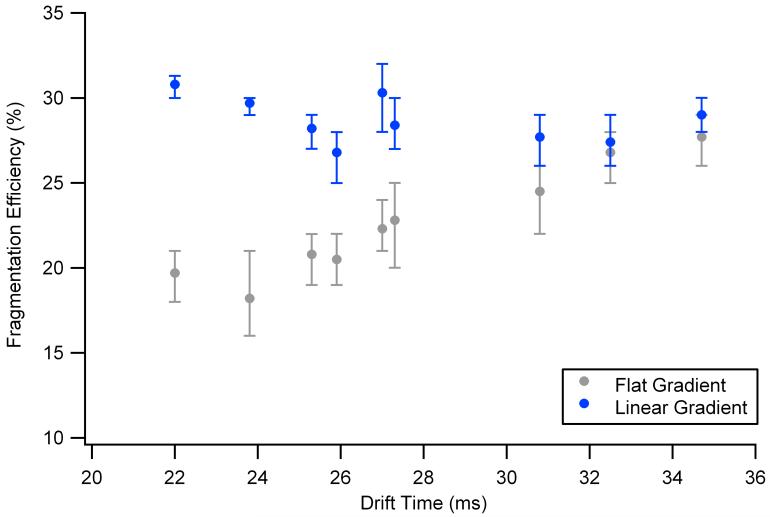
Ion mobility spectrometry coupled with mass spectrometry (IMS-MS) was utilized to evaluate an ion collision energy ramping technique that simultaneously fragments a variety of species. To evaluate this technique, the fragmentation patterns of a mixture of ions ranging in mass, charge state, and drift time were analyzed to determine their optimal fragmentation conditions. The precursor ions were pulsed into the IMS-MS instrument and separated in the IMS drift cell based on mobility differences. Two differentially pumped short quadrupoles were used to focus the ions exiting the drift cell, and fragmentation was induced by collision induced dissociation (CID) between the conductance limiting orifice behind the second short quadrupole and before the first octopole in the mass spectrometer. To explore the fragmentation spectrum of each precursor ion, the bias voltages for the short quadrupoles and conductance limiting orifices were increased from 0 to 50 V above nonfragmentation voltage settings. An approximately linear correlation was observed between the optimal fragmentation voltage for each ion and its specific drift time, so a linear voltage gradient was employed to supply less collision energy to high mobility ions (e.g., small conformations or higher charge state ions) and more to low mobility ions. Fragmentation efficiencies were found to be similar for different ions when the fragmentation voltage was linearly ramped with drift time, but varied drastically when only a single voltage was used.
将离子淌度谱与质谱联用(IMS-MS),以评估一种能同时使多种物质碎片化的离子碰撞能量递增技术。为评估该技术,对质量、电荷态和漂移时间各异的离子混合物的碎片化模式进行分析,以确定其最佳碎片化条件。将前体离子脉冲注入IMS-MS仪器,并基于淌度差异在IMS漂移池中进行分离。使用两个差分抽气的短四极杆来聚焦从漂移池出来的离子,通过质谱仪中第二个短四极杆后面和第一个八极杆前面的电导限制孔之间的碰撞诱导解离(CID)来诱导碎片化。为探究每个前体离子的碎片化谱,将短四极杆和电导限制孔的偏置电压从非碎片化电压设置以上的0增加到50 V。观察到每个离子的最佳碎片化电压与其特定漂移时间之间存在近似线性相关性,因此采用线性电压梯度,为高淌度离子(如小构象或高电荷态离子)提供较少的碰撞能量,为低淌度离子提供较多的碰撞能量。当碎片化电压随漂移时间线性递增时,发现不同离子的碎片化效率相似,但仅使用单个电压时,碎片化效率变化很大。