Vente M A D, Nijsen J F W, de Wit T C, Seppenwoolde J H, Krijger G C, Seevinck P R, Huisman A, Zonnenberg B A, van den Ingh T S G A M, van het Schip A D
Department of Nuclear Medicine, University Medical Center Utrecht, P.O. Box 85500, 3508 GA Utrecht, The Netherlands.
Eur J Nucl Med Mol Imaging. 2008 Jul;35(7):1259-71. doi: 10.1007/s00259-008-0747-8. Epub 2008 Mar 11.
The aim of this study is to evaluate the toxicity of holmium-166 poly(L-lactic acid) microspheres administered into the hepatic artery in pigs.
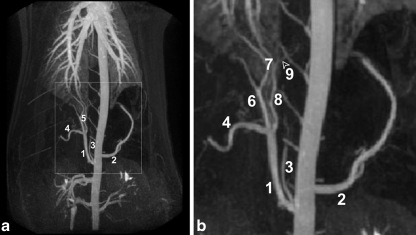
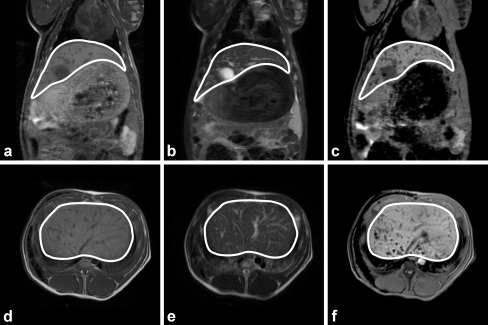
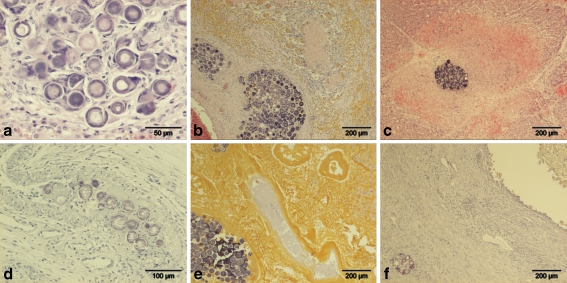
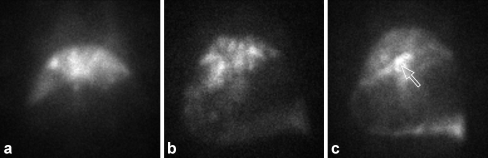
Healthy pigs (20-30 kg) were injected into the hepatic artery with holmium-165-loaded microspheres ((165)HoMS; n=5) or with holmium-166-loaded microspheres ((166)HoMS; n=13). The microspheres' biodistribution was assessed by single-photon emission computed tomography and/or MRI. The animals were monitored clinically, biochemically, and ((166)HoMS group only) hematologically over a period of 1 month ((165)HoMS group) or over 1 or 2 months ((166)HoMS group). Finally, a pathological examination was undertaken.
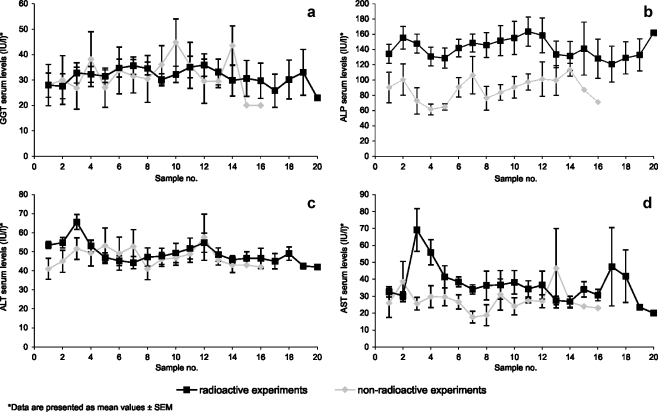
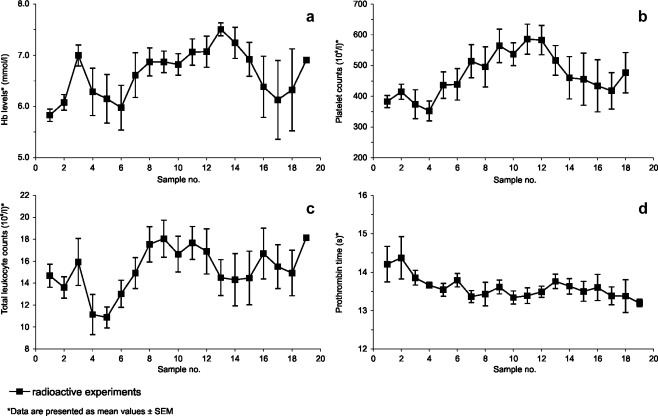
After microsphere administration, some animals exhibited a slightly diminished level of consciousness and a dip in appetite, both of which were transient. Four lethal adverse events occurred in the (166)HoMS group due either to incorrect administration or comorbidity: inadvertent delivery of microspheres into the gastric wall (n=2), preexisting gastric ulceration (n=1), and endocarditis (n=1). AST levels were transitorily elevated post-(166)HoMS administration. In the other blood parameters, no abnormalities were observed. Nuclear scans were acquired from all animals from the (166)HoMS group, and MRI scans were performed if available. In pigs from the (166)HoMS group, atrophy of one or more liver lobes was frequently observed. The actual radioactivity distribution was assessed through ex vivo (166m)Ho measurements.
It can be concluded that the toxicity profile of HoMS is low. In pigs, hepatic arterial embolization with (166)HoMS in amounts corresponding with liver-absorbed doses of over 100 Gy, if correctly administered, is not associated with clinically relevant side effects. This result offers a good perspective for upcoming patient trials.
本研究旨在评估经肝动脉注射钬 - 166聚(L - 乳酸)微球对猪的毒性。
将健康猪(20 - 30千克)经肝动脉注射载有钬 - 165的微球((165)HoMS;n = 5)或载有钬 - 166的微球((166)HoMS;n = 13)。通过单光子发射计算机断层扫描和/或磁共振成像评估微球的生物分布。对动物进行为期1个月((165)HoMS组)或1或2个月((166)HoMS组)的临床、生化及(仅(166)HoMS组)血液学监测。最后进行病理检查。
注射微球后,部分动物出现意识水平略有下降和食欲减退,均为一过性。(166)HoMS组发生4例致死性不良事件,原因分别为给药错误或合并症:微球意外注入胃壁(n = 2)、既往胃溃疡(n = 1)和心内膜炎(n = 1)。(166)HoMS给药后谷草转氨酶水平短暂升高。其他血液参数未见异常。对(166)HoMS组所有动物进行了核扫描,如有条件则进行磁共振成像扫描。在(166)HoMS组的猪中,经常观察到一个或多个肝叶萎缩。通过离体(166m)Ho测量评估实际放射性分布。
可以得出结论,HoMS的毒性较低。在猪中,以对应肝脏吸收剂量超过100 Gy的量经肝动脉栓塞(166)HoMS,若给药正确,与临床相关副作用无关。这一结果为即将开展的患者试验提供了良好前景。