González Pérez Abel D, González González Evelyn, Espinosa Angarica Vladimir, Vasconcelos Ana Tereza R, Collado-Vides Julio
Centro Nacional de Bioinformática. Industria y San José, Capitolio Nacional, CP. 10200, Habana Vieja, Ciudad de la Habana, Cuba.
BMC Genomics. 2008 Mar 17;9:128. doi: 10.1186/1471-2164-9-128.
In the past years, several studies begun to unravel the structure, dynamical properties, and evolution of transcriptional regulatory networks. However, even those comparative studies that focus on a group of closely related organisms are limited by the rather scarce knowledge on regulatory interactions outside a few model organisms, such as E. coli among the prokaryotes.
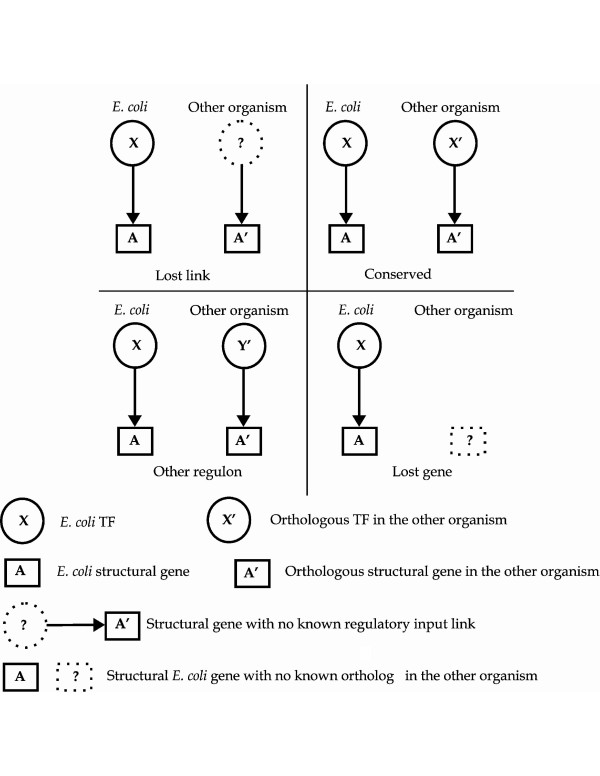
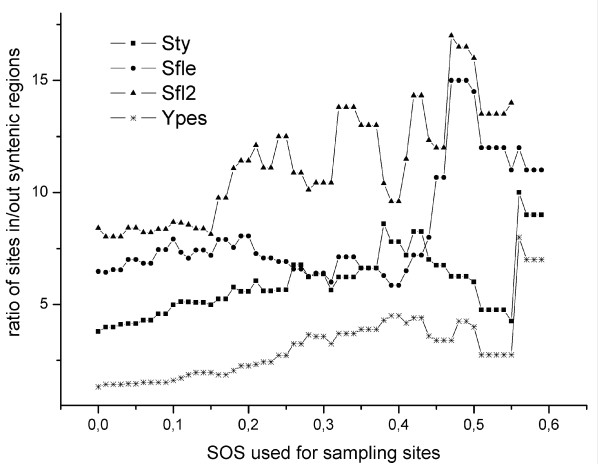
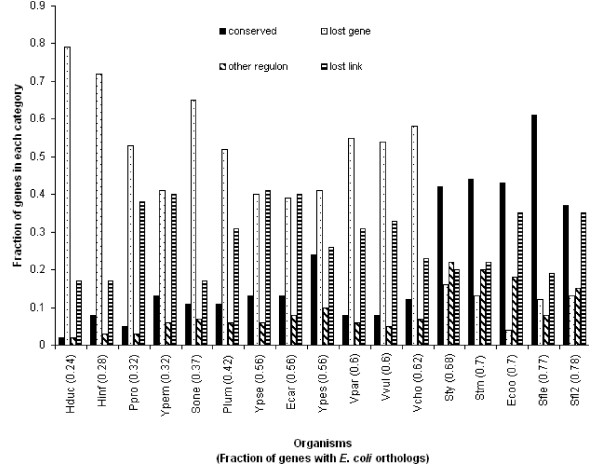
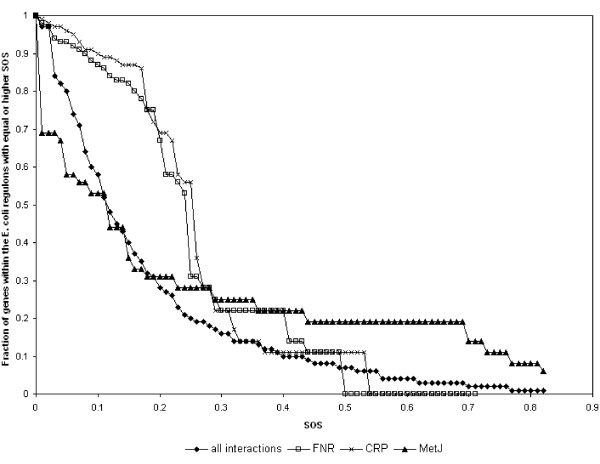
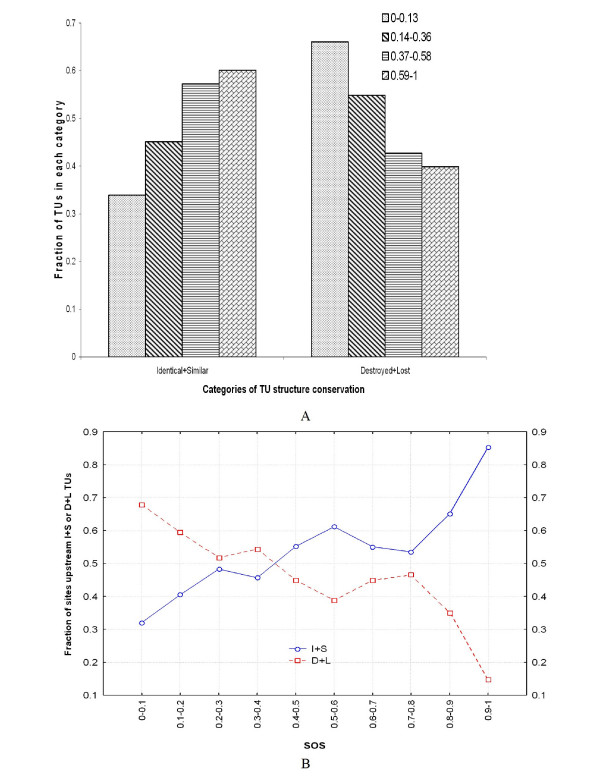
In this paper we used the information annotated in Tractor_DB (a database of regulatory networks in gamma-proteobacteria) to calculate a normalized Site Orthology Score (SOS) that quantifies the conservation of a regulatory link across thirty genomes of this subclass. Then we used this SOS to assess how regulatory connections have evolved in this group, and how the variation of basic regulatory connection is reflected on the structure of the chromosome. We found that individual regulatory interactions shift between different organisms, a process that may be described as rewiring the network. At this evolutionary scale (the gamma-proteobacteria subclass) this rewiring process may be an important source of variation of regulatory incoming interactions for individual networks. We also noticed that the regulatory links that form feed forward motifs are conserved in a better correlated manner than triads of random regulatory interactions or pairs of co-regulated genes. Furthermore, the rewiring process that takes place at the most basic level of the regulatory network may be linked to rearrangements of genetic material within bacterial chromosomes, which change the structure of Transcription Units and therefore the regulatory connections between Transcription Factors and structural genes.
The rearrangements that occur in bacterial chromosomes-mostly inversion or horizontal gene transfer events - are important sources of variation of gene regulation at this evolutionary scale.
在过去几年中,多项研究开始揭示转录调控网络的结构、动态特性和进化情况。然而,即使是那些聚焦于一组密切相关生物体的比较研究,也受到了除少数模式生物(如原核生物中的大肠杆菌)之外,关于调控相互作用的知识相当匮乏的限制。
在本文中,我们利用Tractor_DB(γ-变形菌纲调控网络数据库)中注释的信息,计算了一个标准化的位点直系同源性得分(SOS),该得分量化了跨该亚类30个基因组的调控链接的保守性。然后,我们使用这个SOS来评估该组中调控连接是如何进化的,以及基本调控连接的变化是如何反映在染色体结构上的。我们发现,个体调控相互作用在不同生物体之间发生转移,这一过程可被描述为网络重连。在这个进化尺度(γ-变形菌纲亚类)上,这种重连过程可能是个体网络调控输入相互作用变异的一个重要来源。我们还注意到,形成前馈基序的调控链接比随机调控相互作用的三元组或共调控基因对的保守性更好。此外,在调控网络最基本层面发生的重连过程可能与细菌染色体内遗传物质的重排有关,这会改变转录单元的结构,从而改变转录因子与结构基因之间的调控连接。
细菌染色体内发生的重排——主要是倒位或水平基因转移事件——是这个进化尺度上基因调控变异的重要来源。