Department of Genetics, Forestry and Agricultural Biotechnology Institute (FABI), University of Pretoria, Pretoria 0002, South Africa.
Stud Mycol. 2006;55:133-46. doi: 10.3114/sim.55.1.133.
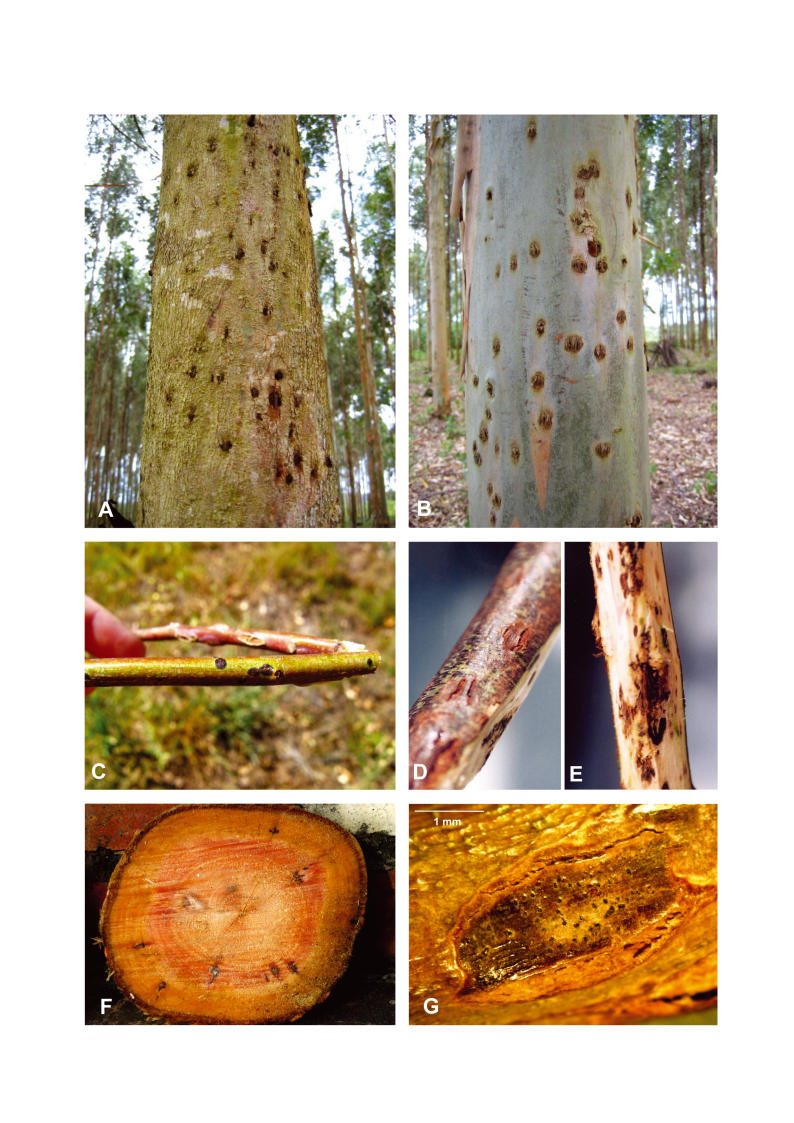
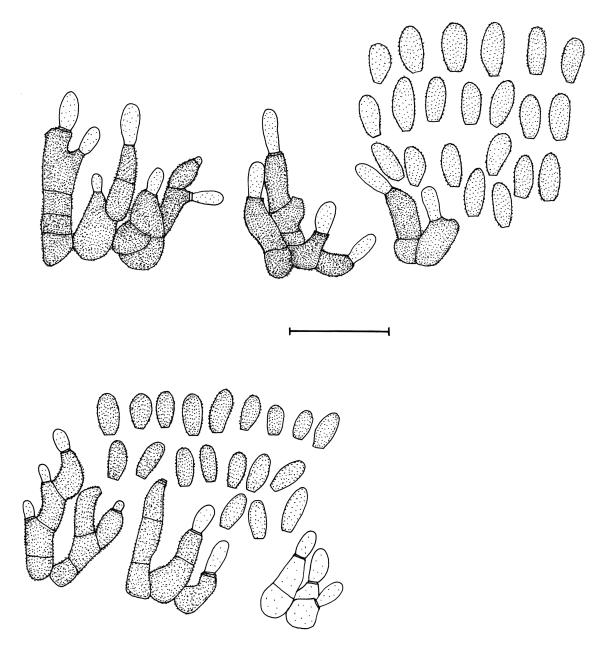
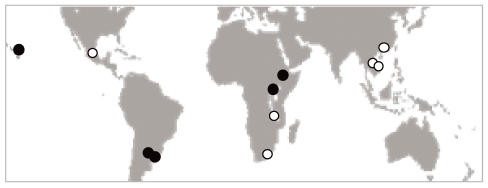
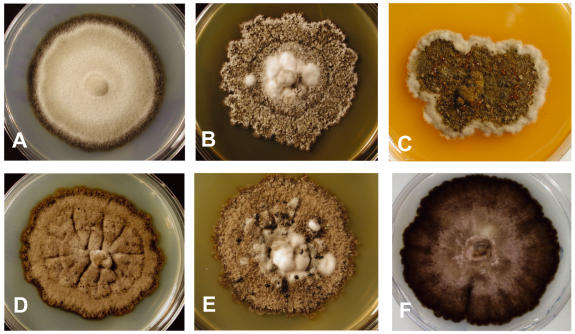
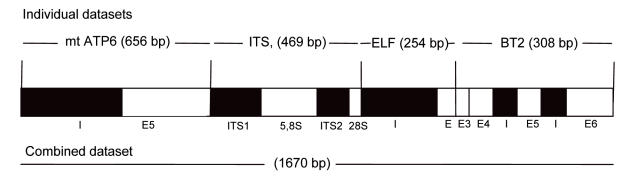
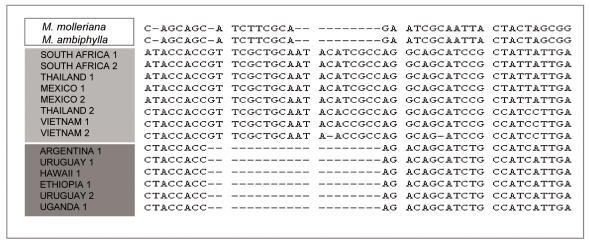
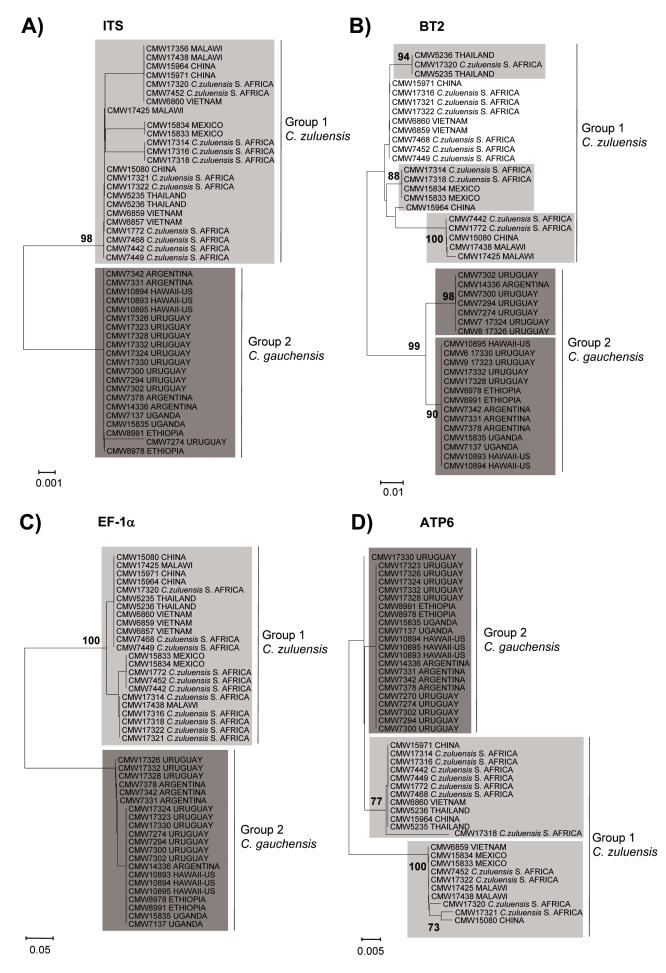
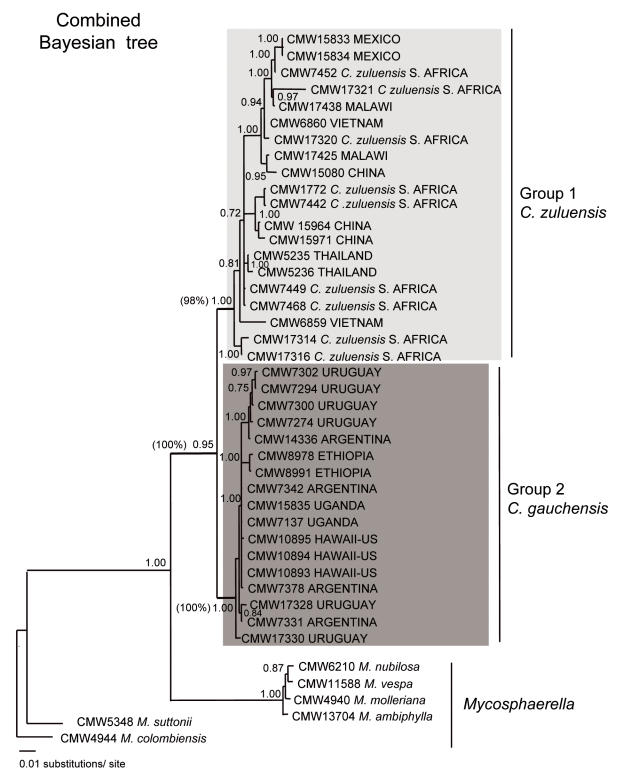
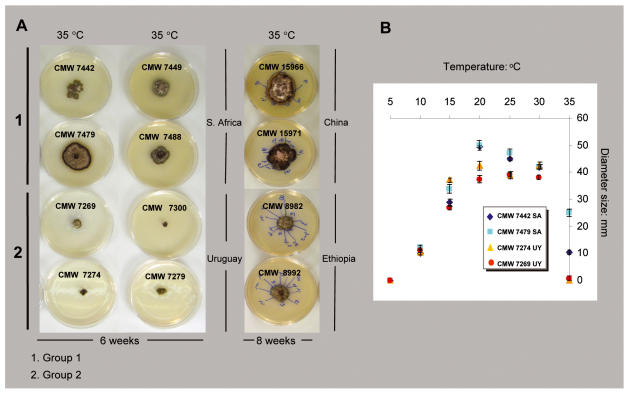
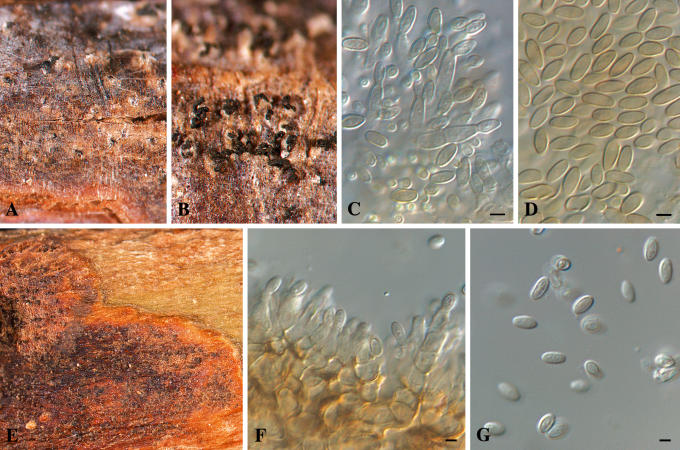
Colletogloeopsis zuluensis, previously known as Coniothyrium zuluense, causes a serious stem canker disease on Eucalyptus spp. grown as non-natives in many tropical and sub-tropical countries. This stem canker disease was first reported from South Africa and it has subsequently been found on various species and hybrids of Eucalyptus in other African countries as well as in countries of South America and South-East Asia. In previous studies, phylogenetic analyses based on DNA sequence data of the ITS region suggested that all material of C. zuluensis was monophyletic. However, the occurrence of the fungus in a greater number of countries, and analyses of DNA sequences with additional isolates has challenged the notion that a single species is involved with Coniothyrium canker. The aim of this study was to consider the phylogenetic relationships amongst C. zuluensis isolates from all available locations and to support these analyses with phenotypic and morphological comparisons. Individual and combined phylogenies were constructed using DNA sequences from the ITS region, exons 3 through 6 of the beta-tubulin gene, the intron of the translation elongation factor 1-alpha gene, and a partial sequence of the mitochondrial ATPase 6 gene. Both phylogenetic data and morphological characteristics showed clearly that isolates of C. zuluensis represent at least two taxa. One of these is C. zuluensis as it was originally described from South Africa, and we provide an epitype for it. The second species occurs in Argentina and Uruguay, and is newly described as C. gauchensis. Both fungi are serious pathogens resulting in identical symptoms. Recognising them as different species has important quarantine consequences.
祖鲁胶孢 Colletogloeopsis zuluensis,以前称为锥状壳孢 Coniothyrium zuluense,可引起在许多热带和亚热带国家作为非本地树种种植的桉树属植物的严重茎溃疡病。这种茎溃疡病最初是在南非报道的,随后在其他非洲国家以及南美洲和东南亚国家的各种桉树属物种和杂交种上也发现了这种病。在以前的研究中,基于 ITS 区 DNA 序列数据的系统发育分析表明,所有 C. zuluensis 材料都是单系的。然而,由于该真菌在更多国家的出现,以及对额外分离物的 DNA 序列分析,这挑战了涉及 Coniothyrium 溃疡的单一物种的观点。本研究的目的是考虑来自所有可用地点的 C. zuluensis 分离物的系统发育关系,并通过表型和形态比较来支持这些分析。使用 ITS 区、β-微管蛋白基因的外显子 3 至 6、翻译延伸因子 1-α 基因的内含子和线粒体 ATP 合酶 6 基因的部分序列的 DNA 序列构建了单独和组合的系统发育树。系统发育数据和形态特征都清楚地表明,C. zuluensis 的分离物代表至少两个分类群。其中之一是最初从南非描述的 C. zuluensis,我们为其提供了一个副模式标本。第二个物种发生在阿根廷和乌拉圭,被新描述为 C. gauchensis。这两种真菌都是严重的病原体,导致相同的症状。将它们识别为不同的物种具有重要的检疫意义。