Selesniemi Kaisa, Lee Ho-Joon, Tilly Jonathan L
Vincent Center for Reproductive Biology, Vincent OB/GYN Service, Massachusetts General Hospital/Harvard Medical School, Boston, MA 02114, USA.
Aging Cell. 2008 Oct;7(5):622-9. doi: 10.1111/j.1474-9726.2008.00409.x. Epub 2008 Jul 24.
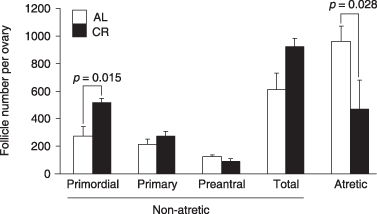
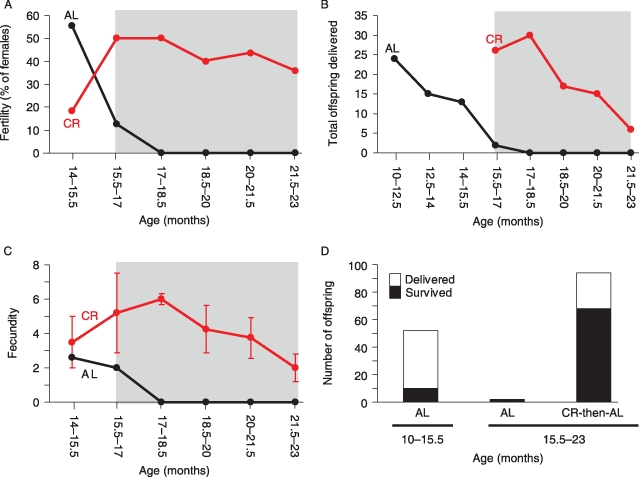
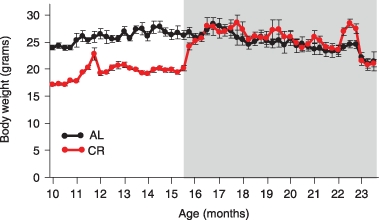
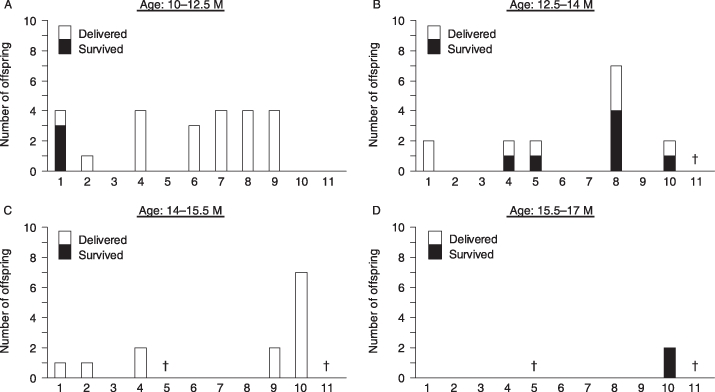
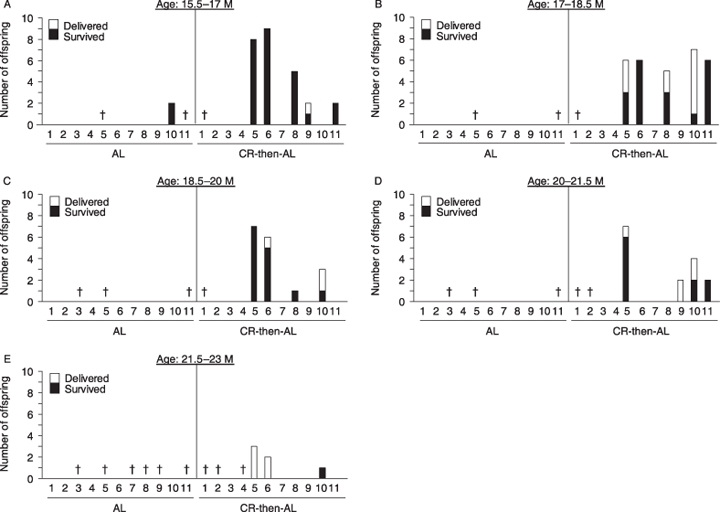
Age-related ovarian failure in women heralds the transition into postmenopausal life, which is characterized by a loss of fertility and increased risk for cardiovascular disease, osteoporosis and cognitive dysfunction. Unfortunately, there are no options available for delaying loss of ovarian function with age in humans. Rodent studies have shown that caloric restriction (CR) can extend female fertile lifespan; however, much of this work initiated CR at weaning, which causes stunted adolescent growth and a delayed onset of sexual maturation. Herein we tested in mice if CR initiated in adulthood could delay reproductive aging. After 4 months of CR, the ovarian follicle reserve was doubled compared to ad libitum (AL)-fed age-matched controls, which in mating trials exhibited a loss of fertility by 15.5 months of age. In CR females returned to AL feeding at 15.5 months of age, approximately one-half remained fertile for 6 additional months and one-third continued to deliver offspring through 23 months of age. Notably, fecundity of CR-then-AL-fed females and postnatal offspring survival rates were dramatically improved compared with aging AL-fed controls. For example, between 10 and 23 months of age, only 22% of the 54 offspring delivered by AL-fed females survived. In contrast, over 73% of the 94 pups delivered by 15.5- to 23-month-old CR-then-AL-fed mice survived without any overt complications. These data indicate that in mice adult-onset CR maintains function of the female reproductive axis into advanced age and dramatically improves postnatal survival of offspring delivered by aged females.
女性与年龄相关的卵巢功能衰竭预示着进入绝经后生活,其特征是生育能力丧失以及心血管疾病、骨质疏松症和认知功能障碍的风险增加。不幸的是,在人类中没有办法延缓卵巢功能随年龄的衰退。啮齿动物研究表明,热量限制(CR)可以延长雌性的可育寿命;然而,这项工作大多在断奶时开始进行热量限制,这会导致青春期生长发育迟缓以及性成熟延迟。在此,我们在小鼠中测试了成年后开始的热量限制是否能延缓生殖衰老。经过4个月的热量限制后,与自由采食(AL)的年龄匹配对照组相比,卵巢卵泡储备增加了一倍,在交配试验中,自由采食组在15.5月龄时出现生育能力丧失。在15.5月龄时恢复自由采食的热量限制组雌性小鼠中,约一半在接下来的6个月内仍保持生育能力,三分之一一直能产仔到23月龄。值得注意的是,与衰老的自由采食对照组相比,先进行热量限制然后自由采食的雌性小鼠的繁殖力和产后子代存活率显著提高。例如,在10至23月龄期间,自由采食组雌性小鼠所产的54只子代中只有22%存活。相比之下,15.5至23月龄的先进行热量限制然后自由采食的小鼠所产的94只幼崽中,超过73%存活且没有任何明显并发症。这些数据表明,在小鼠中成年后开始的热量限制可使雌性生殖轴功能维持到高龄,并显著提高老龄雌性所产后代的出生后存活率。